Skip to content

Real answers from WarriorBabe's coaches

Ask WarriorBabe

Straight answers to what women over 40 ask about fat loss, menopause, protein and lifting, drawn from every video and episode. Tap play on any question to hear our coaches and guests answer it.

Page 7

  • The Scale & Tracking Progress

    When should I avoid stepping on the scale?

    Nikkiey says to skip the scale after a high-sodium night, after a leg or back day, after a bad night's sleep, and after traveling. Those all push the number around, and on those days it hits harder emotionally and can send you into a spiral. She also avoids weighing at the end of the day.

    Read the answer →

  • Menopause & Perimenopause Weight Loss

    Why does stress feel harder to handle in menopause?

    Maggie explains that estrogen acts as a natural buffer against cortisol spikes, and after menopause that buffer is gone. Without it, everything can feel heavier and more stressful, and things you used to shrug off tend to sit and fester. It's a hormonal shift, not a personal failing, and evening habits can help.

    Read the answer →

  • Consistency & Mindset

    How do I stop negative self-talk about my body?

    Start by noticing the voice, then interrupt it. On Ep. 212, Jennifer Joy Jimenez says to find an internal pause button and ask whether you'd say those words to your child or best friend. Nikkiey adds rewriting the belief into an "I am" statement and changing the words you use about your effort.

    Read the answer →

  • Strength Training for Women

    What are the different ways to do progressive overload?

    Nikkiey's progressive overload methods are adding weight, adding reps or sets, shortening rest between sets, changing tempo, switching equipment, varying exercises with techniques like drop sets, and eccentric training with more time under tension. Her advice is to add them one at a time, starting with weight, rather than changing everything at once.

    Read the answer →

  • Macros & Macro Tracking

    How do I stop tracking macros without regaining weight?

    Ease off gradually rather than quitting all at once. Nikkiey suggests tracking your core meals while leaving one meal, usually dinner, flexible, then swapping one structured meal a week, staying structured about 80% of the time, keeping protein the priority, and returning to tracking for a week whenever you feel off.

    Read the answer →

  • Metabolism, Eating More & Reverse Dieting

    Should I eat less if an injury stops me from working out?

    Maybe a little, but not much, and never by forgetting to eat. On The WarriorBabe Show, Nikkiey may trim carbs by about 100 to 150 calories and adjust fats slightly while you heal. Some clients she leaves at maintenance. Under-eating can slow recovery, so make this call with your coach.

    Read the answer →

  • Diets, Fasting & Diet Culture

    Is OMAD a good way for women over 40 to lose weight?

    One WarriorBabe coach says no. In her ranking of six popular weight loss methods for women over 40, OMAD came last, scoring 7 out of 30. One meal gives you one shot at muscle protein synthesis instead of three or four, 20-plus hours without food is a big cortisol trigger, and almost no one can sustain it.

    Read the answer →

  • Protein for Women

    How much protein should a woman over 60 eat?

    The WarriorBabe Show doesn't give one number for every woman over 60, but Ep. 242 shows what a real target looked like. Linda, 63, was eating about 45 grams of protein a day. Her coach set her at roughly 125 to 130 grams and told her that reaching 70 still wasn't enough.

    Read the answer →

  • Fat Loss After 40

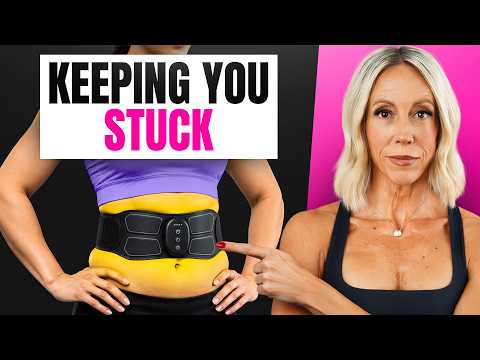
    Do vibration plates and waist trainers actually help you lose fat?

    No. Maggie explains that vibration plates jiggle your muscles without enough mechanical tension to build muscle or drive fat loss. Waist trainers only make you sweat water, which comes right back when you drink. Fat leaves the body through the liver and lungs, not sweat. Dumbbells, protein and proper nutrition do the real work.

    Read the answer →

  • The Scale & Tracking Progress

    Why does the scale go up during a stressful week?

    A stressful week usually pushes the scale up because of water, not fat. On Ep. 287 of The WarriorBabe Show, Nikkiey explains that stress correlates with water weight, and water shows up on the scale. The number can't tell fat from water, sodium, muscle or your period, so a jump isn't real fat gain.

    Read the answer →

  • Consistency & Mindset

    How long should I give a fitness plan before deciding it isn't working?

    Give it about three months. On Ep. 390, Nikkiey says four or six weeks isn't enough time for a plan to tell you anything, and changing your numbers every few days or weeks just creates chaos instead of data. Judge it by photos, how your clothes fit and your performance, not one week of scale weight.

    Read the answer →

  • Strength Training for Women

    What can I do if I can't do a full push-up?

    Start with a modified push-up. Do them against a wall, counter or sturdy table, or with your knees on the floor instead of a full plank. WarriorBabe's coaches favor incline push-ups for women over 40 because they ease wrist and shoulder strain while working the same muscles. Lower the incline as you get stronger.

    Read the answer →

  • Macros & Macro Tracking

    How many calories are in a gram of protein, carbs and fat?

    Protein and carbs each have about 4 calories per gram, and fat has about 9, more than twice as much. Nikkiey also flags alcohol: it isn't a macronutrient, but it carries about 7 calories per gram, which is why drinks can hold far more calories than their nutrition labels seem to show.

    Read the answer →

  • Metabolism, Eating More & Reverse Dieting

    What happens if I increase calories too fast when reverse dieting?

    Increasing too fast can backfire. Nikkiey explains that a chronically underfed body isn't yet equipped to use a sudden jump in calories efficiently, so the excess tends to get stored as fat. One WarriorBabe coach has felt it herself: one week she raised calories too quickly and was bloated and sluggish for days. Slow, structured increases are the point.

    Read the answer →

  • Diets, Fasting & Diet Culture

    Where did the 1,200-calorie diet come from?

    The 1,200-calorie diet traces back to 1918, when physician Lulu Hunt Peters published one of the first popular diet books and told women to eat about 1,200 calories a day. One WarriorBabe coach explains it was a round number, not metabolic research. Medical guidelines later used 1,200 as a supervision floor, and that floor got repackaged as a target.

    Read the answer →

  • Protein for Women

    How much protein should I eat if I'm insulin resistant?

    On Ep. 159, Dr. Morgan Nolte recommends about one gram of protein per pound of ideal body weight, not current weight, spread through the day in doses of at least 30 grams of high-quality protein per meal. She pairs it with good sleep and hydration, which she says naturally lowers carbohydrate cravings.

    Read the answer →

  • Fat Loss After 40

    How do I cut back on cardio without panicking about gaining weight?

    Ease out gradually instead of quitting. On Ep. 294, Nikkiey suggests replacing one cardio session a week with strength training, then swapping a run for a walk. Watch your recovery, sleep, hunger, energy and mood rather than calories burned. You don't have to give up cardio. It just shouldn't be your main fat loss tool.

    Read the answer →

  • The Scale & Tracking Progress

    Why does the scale go up on days I under-eat?

    Nikkiey explains that under-eating stresses your body, which she says can raise cortisol and make you hold on to water. It can also trigger metabolic adaptations that slow how you process food and drink. So the number climbs even though you ate less. It's a daily fluctuation driven by stress and water, not proof you're failing.

    Read the answer →

  • Consistency & Mindset

    How many healthy habits should I change at once?

    Start with one habit, or at most a few, not ten. Nikkiey says trying to overhaul everything at once leads to overwhelm and quitting. Pick one elevated standard, such as hitting your protein daily or training three times a week, hold it for about three weeks, then layer in the next change.

    Read the answer →

  • Strength Training for Women

    What is time under tension in weight training?

    Time under tension is how long your muscle is working during a set. You increase it by slowing each rep down, especially the lowering portion. Nikkiey explains that taking 45 seconds instead of 30 to finish 12 reps maximizes muscle breakdown, which builds muscle when you follow it with good eating and recovery.

    Read the answer →

  • Macros & Macro Tracking

    Should I weigh meat raw or cooked when tracking macros?

    On The WarriorBabe Show, one WarriorBabe coach weighs her meat after it's cooked. She cooks the chicken, puts it on a food scale in ounces, then logs that exact weight in MyFitnessPal. The point is to log exactly what you're eating instead of guessing. The episodes don't compare raw and cooked weights directly.

    Read the answer →
  • Metabolism, Eating More & Reverse Dieting

    What is a metabolism retrain phase?

    A metabolism retrain phase is a deliberate, gradual, tracked increase in calories and macros over time, designed to wake up a metabolism that has adapted to years of dieting. Instead of jumping straight to maintenance or a surplus, Nikkiey has you raise intake week by week until your body stabilizes at a true maintenance level.

    Read the answer →
  • Diets, Fasting & Diet Culture

    Why do I get brain fog when I cut carbs?

    On Ep. 86, Nikkiey explains that carbs break down into glucose, the fuel your cells and especially your brain run on. Cut carbs hard and that supply drops, so brain fog follows. It isn't a willpower problem; it's a plan that underfuels your brain. Her fix is balance: enough protein, plus enough carbs and fat.

    Read the answer →

  • Protein for Women

    Should I eat less protein on rest days?

    No. Nikkiey explains that your muscles don't rebuild during your workout. They rebuild in the 24 to 48 hours after it. Rest days are when your body uses protein as raw material for repair, so eating less then works against you. Keep your protein target the same every day of the week.

    Read the answer →

  • Fat Loss After 40

    How do I get rid of love handles after 40?

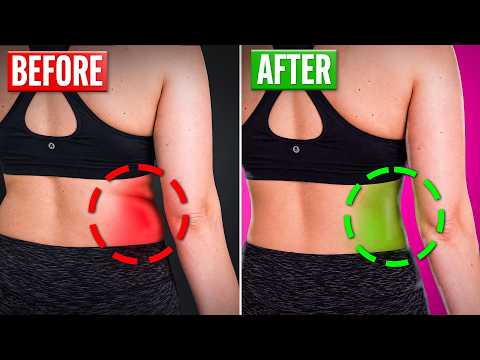
    One WarriorBabe coach says love handles after 40 are a hormone problem more than an exercise problem, so the fix is nutrition first and training second. Eat enough protein and calories, lift with compound movements, add anti-rotation core work, and stop relying on side bends, Russian twists and endless cardio, which can raise cortisol.

    Read the answer →
  • Consistency & Mindset

    What is the difference between motivation and discipline?

    Motivation is a feeling, and discipline is an action. Nikkiey describes motivation as a fleeting emotion that ebbs and flows and runs dry at the worst times. Discipline is showing up to do the work you planned even when you don't feel like it. She credits 99.9 percent of her own success to discipline.

    Read the answer →
  • Strength Training for Women

    What should training to failure feel like?

    Training to failure should feel like you physically cannot complete another rep with control. One WarriorBabe coach describes it as the last rep or two of a set, when you can't pull, push or keep control of the movement. It shouldn't look pretty. If you can breeze through the set, the weight is too light.

    Read the answer →
  • Macros & Macro Tracking

    Why do I always go over my macros at the end of the day?

    You usually go over because you're tracking as you go. Nikkiey explains that logging meals as you eat them leaves you at night with leftover protein, carbs and fats and no meal that fits. Planning and logging your food the night before, or the morning of, lets you nail your numbers before the day starts.

    Read the answer →

  • Metabolism, Eating More & Reverse Dieting

    What is reverse dieting?

    Reverse dieting is the intentional, gradual increase of calories over time, usually after a fat loss phase or years of under-eating. Nikkiey explains that the goal isn't weight gain. It's bringing your metabolism back up, improving energy, mood and sleep, and keeping your results so your next fat loss phase starts from more food.

    Read the answer →
  • Diets, Fasting & Diet Culture

    Why is it so hard to stop dieting after years of trying to lose weight?

    After years of dieting, it stops being something you do and becomes who you are. Nikkiey explains that the structure felt safe, productive and protective, even though it was built on restriction, so walking away can feel like losing part of your identity. Add the fear of losing control, and letting go feels like jumping off a cliff.

    Read the answer →
  • Protein for Women

    What foods are high in protein but low in fat?

    Lean protein sources are high in protein and low in fat. Nikkiey recommends cottage cheese, Greek yogurt, egg whites, hard-boiled eggs, beef jerky, protein shakes, chicken, and higher-percentage lean ground beef and ground turkey. She says protein bars and processed protein foods are usually what push your fats and carbs over your daily numbers.

    Read the answer →

  • Fat Loss After 40

    Is weight loss more about diet or exercise?

    On The WarriorBabe Show, Nikkiey Stott puts nutrition well ahead of exercise: she breaks fitness results down as 50% nutrition, 10% exercise and 40% managing your emotions. Workouts are the easy part. The harder work is eating well when you're tired, stressed or overwhelmed, and that comes down to emotional resilience.

    Read the answer →
  • Consistency & Mindset

    Why do I feel nothing after reaching my goal weight?

    Because the feeling you were chasing was never in the number. Nikkiey explains that your brain adapts fast, so the body you worked for becomes your new normal almost immediately, and normal doesn't feel like anything. Many women are also grieving the journey and the structure it gave them, not just confused by the destination.

    Read the answer →
  • Strength Training for Women

    Will deadlifts hurt my lower back?

    Done with good form and the right weight, deadlifts shouldn't hurt your lower back. Maggie explains they build your glutes, hamstrings, back and core, the chain that protects your spine. A weak posterior chain causes the stiffness and pain. If you feel deadlifts in your lower back, lower the weight, slow down and keep your back flat.

    Read the answer →

  • Macros & Macro Tracking

    Does 'if it fits your macros' mean I can eat anything?

    No. On The WarriorBabe Show, Nikkiey explains that 'if it fits your macros' still means 80 to 85 percent of your food should be wholesome whole foods. Only about 10 to 15 percent should come from treats like chocolate, cookies or pizza. That small share for treats keeps you sane without making them the whole plan.

    Read the answer →
  • Metabolism, Eating More & Reverse Dieting

    Why is my weight going up during maintenance?

    Your weight usually rises in maintenance because your daily calorie burn shifts with activity, sleep, stress and your cycle, and because you're likely building muscle. Nikkiey says your maintenance weight is your two-to-four-week average, not one morning's number, and a rise of around three pounds, up to about seven at most, isn't all fat.

    Read the answer →
  • Diets, Fasting & Diet Culture

    Will eating fruit make me gain fat?

    No. Nikkiey's position is that you won't get fat from eating fruit. Fat gain comes from eating too much of the food that's clearly bad for you, not from the sugar in fruit. She says sugar is fine before and after workouts, and throughout the day too, as long as your overall choices are good.

    Read the answer →

  • Protein for Women

    What is leucine and why does it matter for building muscle?

    Leucine is the amino acid most responsible for switching on muscle protein synthesis. On Ep. 404, Nikkiey calls it the key that starts the engine: you need roughly 2 to 3 grams per meal to fully trigger the muscle-building response. Animal proteins, especially whey, are rich in it, while plant proteins are much lower.

    Read the answer →

  • Fat Loss After 40

    Should I work out extra to burn off a big meal?

    No. On Ep. 112 of The WarriorBabe Show, the guest says trying to burn off a big meal doesn't work. She was 20 pounds heavier back when she was canceling out calories on the elliptical. Instead, get back to normal, add protein or a salad, and treat exercise as something you get to do.

    Read the answer →

  • Consistency & Mindset

    How do I rebuild self-trust after breaking promises to myself?

    Rebuild self-trust by keeping small promises to yourself, every time, especially when it's inconvenient or hard. Nikkiey says integrity, character and self-trust can all be rebuilt: if you say you'll walk, drink the water or log your food, do it. Each kept promise strengthens the identity of a woman who finishes.

    Read the answer →

  • Strength Training for Women

    Do I need to stop doing cardio to build muscle?

    No. WarriorBabe's coaches say you shouldn't cut cardio completely, because your heart is a muscle and needs it too. What works against muscle is too much cardio, especially when you aren't eating enough. Do more strength training than cardio, keep cardio sessions shorter and balanced, and eat enough protein and food to fuel both.

    Read the answer →

  • Macros & Macro Tracking

    Does tracking macros work if I overeat instead of undereat?

    Yes. Nikkiey says macros work for overeaters just as powerfully as for under-eaters. The fix usually isn't eating less, it's eating differently: raise protein dramatically and bring carbs and fats into a structured range. When your body finally gets real fullness signals, total calories often come down on their own.

    Read the answer →

  • Metabolism, Eating More & Reverse Dieting

    Can not eating enough cause bloating and constipation?

    Yes, according to The WarriorBabe Show. On Ep. 308, Nikkiey Stott explains that when you chronically under-eat, your body slows digestion to conserve energy, leaving you bloated, gassy and constipated even on clean food. On Ep. 70 she shares that eating only 14 grams of fat a day left her so constipated she ended up in the hospital.

    Read the answer →

  • Protein for Women

    What protein powder should I use if whey makes me bloated?

    If whey leaves you bloated, try a plant-based protein. Nikkiey says whey and dairy-based powders sometimes upset her stomach, so she uses 1st Phorm's Vegan Power Pro, which she finds easy on the stomach. If whey doesn't bother you, she suggests their whey isolate, Phormula-1, especially around your workout.

    Read the answer →

  • Fat Loss After 40

    What heart rate zone should I be in for cardio?

    For cardio, aim for zone two. That's 60 to 70 percent of your max heart rate, where you're working but could still hold a good conversation. Nikkiey says it's the zone to focus on for treadmill walking, jogging, cycling, swimming or the elliptical, and it's where she usually sits during her own cardio.

    Read the answer →

  • Consistency & Mindset

    How do I stop all-or-nothing thinking with diet and exercise?

    Stop all-or-nothing thinking by planning for imperfection before you need it. Nikkiey says to go into any program accepting that not every week will be perfect, count a 70% week as a win, and start at a pace you can sustain. Consistency most of the time beats perfect every single time.

    Read the answer →

  • Strength Training for Women

    How can I check my lifting form without a trainer?

    Record yourself lifting and send the video to a coach who can tell you what to fix. On The WarriorBabe Show, clients Debbie, Michelle and Jodi describe filming their sets, rewatching exercise demo videos as often as they need, and messaging their coach from the gym. A trainer doesn't need to stand beside you.

    Read the answer →

  • Macros & Macro Tracking

    How should I balance protein, carbs and fat at each meal?

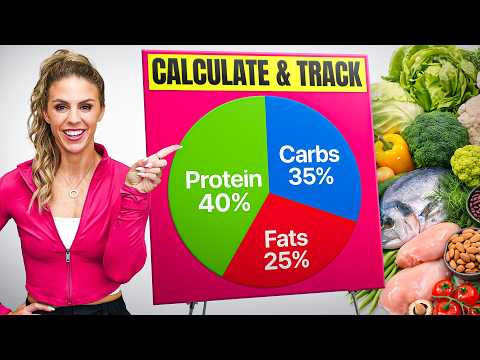
    Maggie splits each meal into roughly 35 to 40 grams of protein, about the same amount of carbohydrates, and around 15 to 20 grams of fat. She says this balance keeps her satisfied, gives her the energy to push hard in her workouts and keeps her blood sugar regulated.

    Read the answer →

  • Metabolism, Eating More & Reverse Dieting

    Do I need a calorie deficit to lose the last 5 to 10 pounds?

    Usually not. Nikkiey says most women with only 5 to 10 pounds to lose are skinny fat, and they don't need a calorie deficit at the start. Instead she recommends a maintenance phase: hold your weight, eat enough to build muscle and let body fat come down. That's where she says body composition changes happen.

    Read the answer →

  • Fat Loss After 40

    When should I lower my calories during a fat loss phase?

    Lower your calories only after a true plateau of around eight weeks, when your adherence is genuinely good, your tracking is accurate and honest, your movement is consistent and your recovery is reasonable. Nikkiey explains that even then, the change should be small and intentional, and sometimes a slight increase in movement is the better adjustment.

    Read the answer →

  • Consistency & Mindset

    How do I stop tying my self-worth to my weight?

    Start by believing you are worthy right now, not after the next 10 pounds. On Ep. 223, Nikkiey suggests changing "I'll feel good when..." to "I am enough now, and I'm becoming stronger, healthier and more confident because I deserve it." Then celebrate the process, visualize your higher self daily and surround yourself with supportive people.

    Read the answer →

  • Strength Training for Women

    How do I fix a strength imbalance between my left and right side?

    Train each side on its own. The fix is unilateral work. Start with your weaker side, using a weight it can handle that still challenges it. Then do the same weight and reps on your stronger side. The strong side will find it easy, and that's the point. It gives the weaker side room to catch up.

    Read the answer →

  • Macros & Macro Tracking

    How strict should I be with my macros during maintenance?

    Nikkiey suggests aiming to hit your macros about 80% of the time during maintenance. After the precision of fat loss, this is the phase to pull back and allow more flexibility while keeping the habits that got you there. The goal is a stable weight and a calm relationship with food, not perfect tracking.

    Read the answer →

  • Metabolism, Eating More & Reverse Dieting

    Is a maintenance phase a waste of time if I want to lose weight?

    No. Nikkiey says a maintenance phase is just as important as a fat loss phase, if not more so. It's the foundation that helps your results stick, and after a long calorie deficit it helps reverse some of the metabolic slowdown. Skipping it and cutting again keeps the lose-and-regain cycle going.

    Read the answer →

  • Fat Loss After 40

    Why can't I lift as much weight when I'm in a calorie deficit?

    You're eating less food, so you have less energy, and it's normal to push less weight than when you were eating more. Nikkiey says a lift like a 130-pound chest press can drop a few weeks into a cut. That isn't failure or lost progress. It's an expected part of being in a deficit.

    Read the answer →

  • Consistency & Mindset

    What is habit stacking?

    Habit stacking means adding one new habit on top of one you've already locked in, instead of overhauling everything at once. Nikkiey borrows the idea from James Clear's book Atomic Habits: master one thing, like 10K steps a day, for a couple of weeks until it's automatic, then stack the next, like drinking more water.

    Read the answer →

  • Strength Training for Women

    Should I do cardio before or after lifting weights?

    Lift first. One WarriorBabe coach explains that doing cardio before weights burns through your pre-workout meal and leaves you depleted for the most demanding part of the workout, so cardio goes last. On Ep. 291, Maggie Topham goes further: keep them separate, and if you only have time for one, choose strength training and walk later.

    Read the answer →

  • Macros & Macro Tracking

    Should I track macros in grams or percentages?

    Track in grams. Nikkiey explains that percentage goals shift whenever your total calories shift. A 40% protein goal is a different amount on a 1,600-calorie day than on a 2,100-calorie day. Fixed gram targets, like 150 grams of protein, give you a stable number to build meals around, measure progress against and troubleshoot.

    Read the answer →

  • Metabolism, Eating More & Reverse Dieting

    Is it normal to feel like I'm eating too much when I start eating more?

    Yes, it's normal. On The WarriorBabe Show, women who spent years under-eating describe the same reaction when they started eating more: this can't be right. Kristi wondered if she really had to eat that much, and Erin hit the end of the day still needing carbs. Both trusted the process, and both say it paid off.

    Read the answer →

  • Fat Loss After 40

    Why does the same cardio workout burn fewer calories over time?

    Because your body adapts, which one WarriorBabe coach calls the adaptive response. When you do a lot of the same cardio, your body pares down muscle and becomes more efficient at that workout, so each session burns fewer calories. That's why cardio-heavy routines stall and push you to keep adding time or intensity.

    Read the answer →

Browse questions by topic