

From 3 episodes
Should I eat less if an injury stops me from working out?
Answered by Nikkiey Stott · Updated
The short answer
Maybe a little, but not much, and never by forgetting to eat. On The WarriorBabe Show, Nikkiey may trim carbs by about 100 to 150 calories and adjust fats slightly while you heal. Some clients she leaves at maintenance. Under-eating can slow recovery, so make this call with your coach.
Hear it answered
Tap play to start right where it's answered. It keeps playing while you browse.
Nikkiey on exactly how she trims carbs and fats when a client is injured
Plays from 17:37 · Ep. 205: What to Eat to Heal an Injury Faster After 40
Leynise kept her macros the same before knee surgery and didn't gain a pound
Plays from 13:08 · Ep. 341: How to Rebuild Your Body After 50 When You're Under-Eating
Andrea on cutting from 2,400 to 1,700 calories while non-weight bearing
Plays from 29:51 · Ep. 217: How a Busy Mom of 4 Built Muscle and Got Lean With Macros
Nikkiey on why forgetting to eat while injured can slow your healing
Plays from 3:47 · Ep. 205: What to Eat to Heal an Injury Faster After 40
The full answer
On Ep. 205, Nikkiey explains that her overarching principle is simple: you're burning fewer calories than usual, so there's no need to overeat. Her adjustments are small, though. She might pull carbs back by roughly 100 to 150 calories and pull fats back about 5 to 7 grams. Or she might do the opposite with fats and add a little to support recovery. She also mentions increasing protein as part of the strategy. Some clients she simply leaves at maintenance. It's individual, which is why she recommends talking it through with your coach.
What she warns against is drifting into eating too little. She has seen healing take much longer in women who almost forget to eat because they're out of their usual routine of tracking and training. Her message: keep tracking your macros, eat enough of the right foods to help your body repair, and you can still hold onto your progress while you heal.
The guests show how different this can look in practice:
- On Ep. 217, Andrea Simulis went from about 2,400 calories to 1,700 while she was non-weight bearing for 16 weeks. She says that was still above her BMR and enough to recover her bones. She kept her macros balanced with smaller portions and made a point of not turning to food emotionally.
- On Ep. 341, Leynise expected her coach to lower her macros during three mostly inactive months before knee surgery. Her coach kept them the same, and she didn't gain a pound.
So the episodes don't give one number. Andrea made a larger cut because her intake had been built around a lot of exercise. Leynise held steady and maintained. Nikkiey sits in between with modest trims. If your injury involves surgery or a medical condition, loop in your doctor too. The common thread is that a sharp crash diet isn't the answer. Your body needs fuel to heal.
From WarriorBabe's coaches (how we write our answers). For education, not medical advice: talk to your doctor about your own health.
Women also ask
More on Metabolism, Eating More & Reverse Dieting →
Metabolism, Eating More & Reverse Dieting
How do I know if I'm not eating enough?
Nikkiey points to five signs: constant fatigue, irritability or anxiety, bloating and constipation, poor sleep and recovery, and stalled fat loss or weight gain while eating less. Not feeling hungry on very little food is another red flag. The only way to know for sure is to weigh and track what you eat for a week.
Read the answer →
Metabolism, Eating More & Reverse Dieting
Why am I not hungry even though I barely eat all day?
On The WarriorBabe Show, the explanation is metabolic adaptation: after a long stretch of eating very little, your body adapts to that low intake and stops expecting food, so hunger fades. The coaches see low hunger as a sign of an unhealthy metabolism, not discipline, and say appetite returns as food is increased gradually.
Read the answer →
Metabolism, Eating More & Reverse Dieting
Should I lose fat first or build muscle first?
It depends on where you're starting. Nikkiey Stott says that if you have a significant amount of fat to lose, or decent muscle already under it, you should cut first, reverse your calories up, then build. If you have little to lose or are skinny fat, sit at maintenance and slowly move into a surplus to build.
Read the answer →

Metabolism, Eating More & Reverse Dieting
What happens if I increase calories too fast when reverse dieting?
Increasing too fast can backfire. Nikkiey explains that a chronically underfed body isn't yet equipped to use a sudden jump in calories efficiently, so the excess tends to get stored as fat. One WarriorBabe coach has felt it herself: one week she raised calories too quickly and was bloated and sluggish for days. Slow, structured increases are the point.
Read the answer →
Metabolism, Eating More & Reverse Dieting
What is a refeed day?
A refeed day is a planned, temporary increase in calories, mostly from extra carbs and fats, that you still track before going right back into your deficit. Nikkiey uses refeeds to relieve the stress of dieting and support your metabolism. It's a strategy, not permission to eat whatever you want.
Read the answer →
Metabolism, Eating More & Reverse Dieting
Will I gain weight when I start eating more?
Probably a little, and that's expected. Nikkiey explains that when you start eating more during a retrain or reverse diet, your weight will usually fluctuate about two to five pounds from water, glycogen, food volume and salt, not fat. If the gain keeps climbing or holds around five pounds, the increase was likely too fast.
Read the answer →
Watch or listen in full
More on this topic → 42 min
How a Busy Mom of 4 Built Muscle and Got Lean With Macros
With Andrea Simulis
 17 min
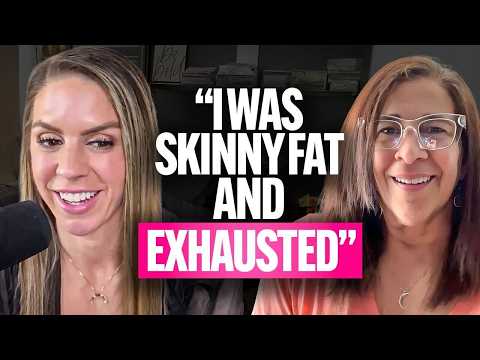
How to Rebuild Your Body After 50 When You're Under-Eating
Episode 341 · Mar 2, 2026
 26 min
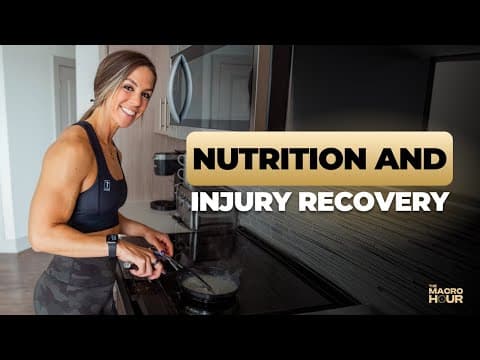
What to Eat to Heal an Injury Faster After 40
Episode 205 · Nov 8, 2024