

The short answer
No. Nikkiey explains that your muscles don't rebuild during your workout. They rebuild in the 24 to 48 hours after it. Rest days are when your body uses protein as raw material for repair, so eating less then works against you. Keep your protein target the same every day of the week.
Hear it answered
Tap play to start right where it's answered. It keeps playing while you browse.
Nikkiey on why muscle rebuilds after training and what that means for rest days
Plays from 16:49 · Ep. 404: 5 Protein Mistakes Holding Women Over 40 Back
Why protein is recovery fuel, and why your target stays the same on rest days
Plays from 17:35 · Ep. 404: 5 Protein Mistakes Holding Women Over 40 Back
Keeping protein steady every day, including travel, holidays and injury recovery
Plays from 18:03 · Ep. 404: 5 Protein Mistakes Holding Women Over 40 Back
The full answer
On Ep. 404 of The WarriorBabe Show, Nikkiey lists cutting protein on rest days as one of the five most common protein mistakes she sees in women over 40. The logic many women follow seems sensible: you weren't active, so you eat lighter. But that treats protein as workout fuel. Nikkiey's point is that it's recovery fuel, and recovery happens on the days you rest.
Here is how she breaks it down. Training creates the signal. The rebuilding happens afterward, during recovery and sleep, over the next 24 to 48 hours. That rebuilding needs protein as its raw material. In her words, cutting back on a rest day removes the material at the exact moment your body is trying to use it. So rest days are actually when your body needs that protein most.
The fix is simple. Your protein number doesn't change based on what you did that day. She lists the days it applies to:
- Training days and rest days
- Travel days and holidays
- Days when you're recovering from an injury or surgery
On injury and surgery, Nikkiey notes that protein also helps with repairing wounds, so she says to keep your daily intake steady during recovery too. If you're healing from a procedure or managing a medical condition, follow your doctor's guidance alongside this.
She ties it to the other four mistakes. Eat enough protein, spread it across every meal instead of loading it at dinner, anchor meals around complete protein sources, and pay attention to leucine. When you do all five consistently, she says protein can finally do its job: protect your muscle, support your metabolism, and produce the body composition change you've been working for. If you've been trimming protein on off days, that isn't a willpower problem. It's a plan problem, and it's an easy one to fix.
From WarriorBabe's coaches (how we write our answers). For education, not medical advice: talk to your doctor about your own health.
Women also ask
More on Protein for Women →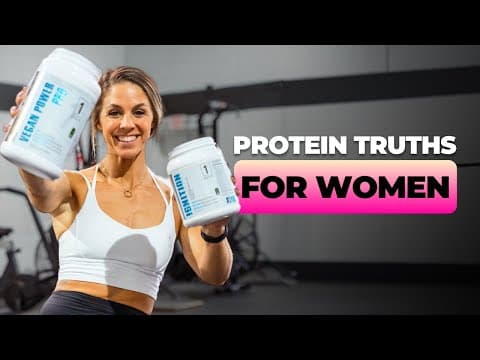
Protein for Women
Is it bad to eat most of my protein at dinner?
Nikkiey says yes, it works against you. Your body can only use roughly 30 to 40 grams of protein per meal to trigger muscle protein synthesis, so a big protein-heavy dinner triggers it once, while the excess is used for energy or excreted. Spreading the same total across four or more meals triggers it several times a day.
Read the answer →

Protein for Women
How much protein do women over 40 need?
Most guidance on The WarriorBabe Show lands at about 1 gram of protein per pound of body weight per day for women over 40, based on goal weight if you have a lot to lose. Nikkiey says strength-training women may need 1.2 or even 1.3. Some episodes and guests cite 0.7 grams as the floor.
Read the answer →
Protein for Women
What is the difference between complete and incomplete protein?
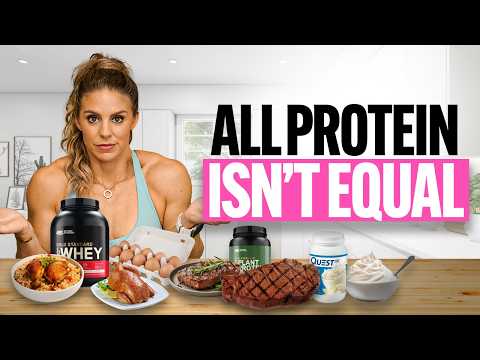
A complete protein contains all nine essential amino acids, the ones your body can't make and must get from food. An incomplete protein is missing one or more. Complete sources are mostly animal-based, like chicken, eggs, fish, Greek yogurt and whey. Incomplete sources are mostly plant-based, like nuts, beans, lentils and oats.
Read the answer →
Protein for Women
What is leucine and why does it matter for building muscle?
Leucine is the amino acid most responsible for switching on muscle protein synthesis. On Ep. 404, Nikkiey calls it the key that starts the engine: you need roughly 2 to 3 grams per meal to fully trigger the muscle-building response. Animal proteins, especially whey, are rich in it, while plant proteins are much lower.
Read the answer →

Protein for Women
Is a high-protein diet bad for your kidneys?
For healthy women with no existing kidney condition, Nikkiey says the research does not support high protein causing kidney damage. The worry came from studies of people whose kidneys were already compromised. If you have a known kidney condition, she says to work with your doctor or a nutritionist on your protein intake.
Read the answer →

Protein for Women
How much protein should a woman eat a day to lose weight?
Most WarriorBabe guidance lands at roughly 0.7 to 1 gram of protein per pound of body weight, with 100 grams a day as the floor. Nikkiey Stott's rule is about your body weight in grams, or your goal weight if you have a lot to lose. Spread it across meals and build up gradually.
Read the answer →
Watch or listen in full
More on this topic → 20 min
5 Protein Mistakes Holding Women Over 40 Back
Episode 404 · Oct 12, 2026