Skip to content

Real answers from WarriorBabe's coaches

Ask WarriorBabe

Straight answers to what women over 40 ask about fat loss, menopause, protein and lifting, drawn from every video and episode. Tap play on any question to hear our coaches and guests answer it.

Page 8

  • Consistency & Mindset

    Why do I keep self-sabotaging every time I start a diet?

    You keep self-sabotaging because the behavior is coming from somewhere: your beliefs about yourself, the process, and who you think you are. On The WarriorBabe Show, Mike Millner adds that after restarting so many times, you can expect failure and quit before you begin. It's not a willpower problem; it's a belief problem you can change.

    Read the answer →
  • Strength Training for Women

    Should women use lifting straps?

    Yes, Nikkiey is for lifting straps. She sees them as a help, not a crutch, because they let you lift heavier while keeping good form. The trade-off is that they don't build forearm strength, so the advice is to do your first set without them and strap up once your grip fatigues.

    Read the answer →

  • Metabolism, Eating More & Reverse Dieting

    What is BMR and how can I increase it?

    BMR, or basal metabolic rate, is the calories your body needs at rest for basic functions like breathing, circulating blood and repairing cells. Nikkiey explains that the way to raise it is to build muscle through strength training, because muscle is more metabolically active than fat and burns more calories at rest.

    Read the answer →

  • Fat Loss After 40

    Why is it so hard to lose fat on my legs?

    Leg fat is usually the last to go. On Ep. 13, Nikkiey explains that for most women, fat loss tends to happen from the head down, with the lower half last. Fat storage patterns vary, but if you're seeing changes everywhere else, your plan is likely working. Your legs just take longer.

    Read the answer →

  • Strength Training for Women

    What is the best exercise to build glutes after 40?

    One WarriorBabe coach names the hip thrust as the best glute exercise after 40: nothing else activates the glutes as much under the same load. She ranks Bulgarian split squats alongside it in the top tier. Start with 3 sets of 10 to 12 reps, feeling it in your glutes, not your lower back.

    Read the answer →

  • Metabolism, Eating More & Reverse Dieting

    What is NEAT and why does it matter for fat loss?

    NEAT, non-exercise activity thermogenesis, is the energy you burn through everyday movement outside planned workouts: walking, standing, cleaning, even fidgeting. One WarriorBabe coach explains it matters because it varies hugely from person to person, and small habits like taking the stairs or parking further away add up to a meaningful increase in your total daily calorie burn.

    Read the answer →

  • Strength Training for Women

    What is the mind-muscle connection?

    The mind-muscle connection is your ability to tune into the specific muscle you're training, feel it working, and consciously engage it through the whole movement. Nikkiey compares it to focusing on one voice in a noisy room. She says feeling the muscle contract can be more transformative than chasing heavier weights.

    Read the answer →

  • Metabolism, Eating More & Reverse Dieting

    What is TDEE?

    TDEE stands for total daily energy expenditure: the total calories your body burns in a day. Nikkiey explains it adds up your BMR, NEAT, TEF (digesting food) and EAT (exercise). It's essentially your maintenance number, the calories that keep your weight where it is, which tells you how much to eat to lose, maintain or gain.

    Read the answer →

  • Strength Training for Women

    Are squats bad for your knees after 40?

    No. Maggie explains that knees usually hurt because the muscles around them are weak, and the squat is the single best exercise for strengthening the quads, glutes and the whole chain that supports the knee. Avoiding squats doesn't protect your knees; it lets them get worse. Her own knee pain eased within weeks of goblet squatting.

    Read the answer →

  • Metabolism, Eating More & Reverse Dieting

    Why didn't my reverse diet work?

    Nikkiey says it most likely did work. You just didn't stay in it long enough for your body to heal. Many women try a reverse diet for two to six weeks, panic when the scale goes up, and jump back into a deficit. If you've dieted for years, she says repair can take 6 to 12 months.

    Read the answer →

  • Strength Training for Women

    Can I strength train with chronic back pain?

    Yes, according to The WarriorBabe Show, many women can, if they start in the right place. On Ep. 243, client Paige describes how her coach began with light, back-safe exercises and built her core first, until she could deadlift without pain. Nikkiey adds stretching rather than cutting back. Check with your doctor first.

    Read the answer →

  • Metabolism, Eating More & Reverse Dieting

    Why is maintenance so hard after losing weight?

    Maintenance is hard because it stops rewarding you the way fat loss did. Nikkiey explains that the scale holds steady, photos barely change, workouts feel repetitive and compliments slow down, so the regular dopamine hit disappears. Eating more can also feel scary. The fix is to give yourself new goals, not to keep dieting.

    Read the answer →

  • Strength Training for Women

    Do I have to sweat for a workout to be effective?

    No. Nikkiey explains that sweat is your body regulating its temperature, not a measure of how effective your workout was. She barely sweats herself and still trains effectively. A good session is one where you executed with intention, challenged your muscles, and walked away feeling it was sustainable, not drenched or wrecked.

    Read the answer →

  • Metabolism, Eating More & Reverse Dieting

    Do my maintenance calories change over time?

    Yes. Nikkiey explains that your maintenance calories are not a fixed number. After a fat loss phase you start at the low end of your maintenance threshold, then slowly raise your macros weekly or biweekly while your weight and leanness hold. Over time, and as you build muscle, your body can handle much more food.

    Read the answer →

  • Strength Training for Women

    Does barre build muscle?

    Not on its own, according to the women on The WarriorBabe Show. On Ep. 242, Linda explains that barre breaks muscle down and you need enough protein to build it back. On Ep. 312, Melissa did Pure Barre for three years without her body changing; weight training and eating more with a coach did it.

    Read the answer →

  • Metabolism, Eating More & Reverse Dieting

    What is survival mode and how do I get my body out of it?

    Survival mode is what Nikkiey calls your body adapting when it senses an unsafe environment. Chronic under-eating, overtraining and stress signal it to slow your metabolism and hold on to fat. To get out, she says to feed it protein, carbs and healthy fats, sleep around eight hours, strength train instead of overtraining, and manage stress.

    Read the answer →

  • Strength Training for Women

    How do I break through a strength plateau in the gym?

    Usually the fix is to train harder on the plan you already have, not to switch programs. Nikkiey explains that a few weeks in, you've likely just learned the exercises. Track your lifts, push the last three reps of each set, go heavier when you can, and look honestly at your recovery and how much you're eating.

    Read the answer →

  • Metabolism, Eating More & Reverse Dieting

    Why am I so sore after workouts when I'm eating very little?

    Nikkiey explains that when you eat very little and still push hard in your workouts, your body doesn't have what it needs to heal and recover, so you end up insanely sore. Too few calories means too few vitamins and nutrients for your muscles, and cutting carbs removes a key fuel for muscle recovery.

    Read the answer →

  • Strength Training for Women

    Should I do compound or isolation exercises first in my workout?

    Do your compound exercises first. One WarriorBabe coach explains that tiring out smaller muscles with isolation work before the big lifts means you lift lighter and do fewer reps on the movements that build the most strength and muscle. Save isolation exercises for afterward, when they can target specific muscles and finish them off.

    Read the answer →

  • Strength Training for Women

    What are the best strength exercises for women over 50?

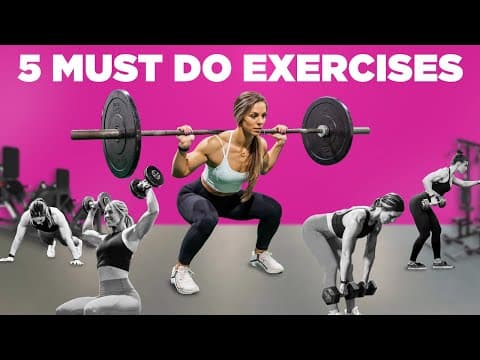
    One WarriorBabe coach's top five for women over 50 are squats, push-ups, dumbbell deadlifts, standing shoulder presses, and lat pulldowns or dumbbell rows. These compound moves work multiple muscles at once to support muscle, bone density, balance and everyday strength. The key is getting progressively stronger at them, not just going through the motions.

    Read the answer →

  • Strength Training for Women

    What is a back-friendly alternative to sit-ups?

    The dead bug is a back-friendly alternative to sit-ups. One WarriorBabe coach explains that sit-ups aren't the most back-friendly move as we get older. Dead bugs train your core to resist movement, which supports spinal health, posture and strength. She says they help if you've dealt with lower back pain, and you only need a mat.

    Read the answer →

  • Strength Training for Women

    What should I do during a deload week?

    During a deload week, keep training but do noticeably less. Cut your volume by roughly 40 to 60 percent with similar weights, or lower the weight and keep reps higher. Keep protein and calories steady, prioritize sleep, and stick to light movement like walking or yoga. Then rest without guilt.

    Read the answer →

  • Strength Training for Women

    Why am I sore after some workouts and not others?

    Soreness varies because of what you did and how ready you were. Nikkiey explains that new exercises, a new training block, and more intensity (heavier weights, more reps, shorter rest) make soreness more likely, while sleep, hydration, yesterday's macros and your period affect recovery. Not being sore doesn't mean the workout didn't work.

    Read the answer →

  • Strength Training for Women

    How can I fix rounded shoulders and bad posture after 40?

    Train your back directly. Maggie recommends the bent-over row because the back muscles control your posture, pull your shoulders open and lift your chest. Most women over 40 skip them because they can't see them in the mirror. When she started rowing with real weight, her shoulders stopped rounding forward within weeks.

    Read the answer →

  • Strength Training for Women

    How can I tell muscle soreness from joint pain?

    Muscle soreness is a dull ache in the middle of the muscle that shows up a day or two after training and fades within a couple of days. Joint pain is sharp, sits in or around the joint and usually hits during the movement. Maggie's rule: soreness means you're fine; joint pain means stop, modify or swap the exercise.

    Read the answer →

  • Strength Training for Women

    How do I know if my strength training program is working?

    Your program is working if you're getting stronger, progressing your weights, improving your form, recovering well, consistently hitting your protein and noticing your clothes fit differently. Nikkiey Stott also asks how long you've truly been consistent, and whether the plan is failing or your body is simply changing more slowly than you expected.

    Read the answer →

  • Strength Training for Women

    How do I make a home workout harder without a gym?

    Make it harder by adding two to three reps or a few extra seconds each week, shortening your rest between sets, and slowing every movement down. When that starts to feel too easy, one WarriorBabe coach suggests adding light dumbbells or resistance bands. You don't need a gym or heavy weights to keep progressing.

    Read the answer →

  • Strength Training for Women

    How often should I train glutes after 40?

    Train glutes twice a week. One WarriorBabe coach explains that two sessions are enough to stimulate growth and still allow recovery, and that's where most women start. As you advance you can move to three, but two well-executed sessions will always beat three sloppy ones. Progressive load, sleep and protein matter as much as frequency.

    Read the answer →

  • Strength Training for Women

    What is the difference between exercising and training?

    Exercise is any movement: walking, running, a class at your gym, or a fun workout you found on Instagram. Training has intention behind it. On The WarriorBabe Show, Nikkiey explains that training means working toward a specific adaptation, like building muscle, and measuring whether that adaptation is actually happening over time.

    Read the answer →

  • Strength Training for Women

    Will squats give me bulky legs?

    In one WarriorBabe coach's experience, no. She once feared bulky legs too, until she noticed the women with the bodies she admired were squatting heavy. Squats changed her body more than any other exercise, and building that muscle is what reshapes body composition after 40, especially as estrogen drops and muscle gets harder to keep.

    Read the answer →

Browse questions by topic