

From 2 episodes and 1 video
How long should I give a fitness plan before deciding it isn't working?
Answered by Nikkiey Stott and WarriorBabe's coaches · Updated
The short answer
Give it about three months. On Ep. 390, Nikkiey says four or six weeks isn't enough time for a plan to tell you anything, and changing your numbers every few days or weeks just creates chaos instead of data. Judge it by photos, how your clothes fit and your performance, not one week of scale weight.
Hear it answered
Tap play to start right where it's answered. It keeps playing while you browse.
Nikkiey on giving a plan three months, not four or six weeks
Plays from 19:36 · Ep. 390: Why Eating Less Isn't Helping You Lose Fat After 40

Cheryl on committing to 12 to 18 months before judging a program
Plays from 18:53 · Video: Building Muscle at 57 Eating 435g of Carbs: Cheryl's Story
Nikkiey on giving your body time to adjust after plateau changes
Plays from 9:25 · Ep. 188: How to Break Through a Fitness Plateau After 40
Why quitting four days or four weeks in over the scale is a mistake
Plays from 17:17 · Ep. 390: Why Eating Less Isn't Helping You Lose Fat After 40
The full answer
Nikkiey's point on Ep. 390 is that the scale is noisy. Water, carbs, your menstrual cycle, food volume, bowel movements, stress, travel and even a hard leg day can all move it. She describes the woman who weighs in Monday, sees nothing by Tuesday, is up two pounds Wednesday and texts her coach Thursday saying it isn't working, four days into the plan. Or four weeks in, quitting right before things start to shift. One week without scale movement does not mean fat loss has stopped. She also reminds you that where you are today took five, ten or twenty years to build, so expecting change in four days isn't fair to yourself.
There is some nuance across episodes. On Ep. 390, Nikkiey says lowering calories can make sense after a true plateau of multiple weeks, around eight, with nothing changing, but only if your adherence has actually been there. On Ep. 188, talking about plateaus after you've already made changes, she won't put a timestamp on it because everyone's journey is different. Her advice is to make the adjustments, ideally with your coach, give your body time to adapt, and keep perspective: two weeks stuck is small next to a year of progress. Jumping to a shiny new program usually just gives you the same thing in a different wrapper.
In the member story with Cheryl, she told herself before joining that she had to give it 12 to 18 months before saying it wasn't working. Her coach points out that many women expect results in 21 or 30 days because that's how programs are marketed online. Cheryl called that realistic timeline a mindset game changer. The takeaway: if it hasn't worked yet, you may not have given it the time to.
From WarriorBabe's coaches (how we write our answers). For education, not medical advice: talk to your doctor about your own health.
Women also ask
More on Consistency & Mindset →
Consistency & Mindset
Should I wait until January to start getting in shape?
No. Nikkiey's answer is to start now. She calls January 1st a date with cultural permission attached, not a reset button. Women who start in the fall or keep moving through the holidays walk into January with months of habits and momentum, while those who wait often start from a deficit and quit by mid-January.
Read the answer →

Consistency & Mindset
How many healthy habits should I change at once?
Start with one habit, or at most a few, not ten. Nikkiey says trying to overhaul everything at once leads to overwhelm and quitting. Pick one elevated standard, such as hitting your protein daily or training three times a week, hold it for about three weeks, then layer in the next change.
Read the answer →
Consistency & Mindset
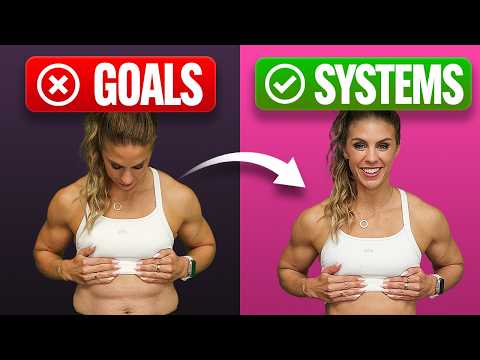
What is the difference between a goal and a system?
A goal is the result you want, like losing 20 pounds. A system is the daily process that gets you there. Nikkiey explains that hitting your protein, scheduling your lifts, planning meals, drinking water, getting steps and going to bed on time are the system, and a goal without one is just wishful thinking.
Read the answer →

Consistency & Mindset
What should I do when my family doesn't support my fitness goals?
Stop trying to win their approval. Nikkiey says it isn't your job to convince anyone, because how people react to your growth says more about them than about you. Have an honest conversation with the people closest to you, create distance from the negativity, find a supportive tribe, and keep showing up for yourself.
Read the answer →

Consistency & Mindset
What should I look for in an online fitness coach?
Look for a coach who earns your respect rather than your friendship, problem-solves your real schedule with you, teaches you the why behind your macros instead of handing you a rigid meal plan, and builds habits before promising timelines. On The WarriorBabe Show, Nikkiey Stott says that is what separates real coaching from a generic program.
Read the answer →

Consistency & Mindset
How do I find time to work out when I'm busy?
You don't need more hours; you need to put yourself on the schedule you already have. Nikkiey suggests checking your phone's screen time and giving an hour of scrolling or TV to a 30-minute workout or meal planning, then blocking workouts on your calendar and adjusting the number of days until it sticks.
Read the answer →
Watch or listen in full
More on this topic → 30 min
Why Eating Less Isn't Helping You Lose Fat After 40
Episode 390 · Aug 24, 2026
 34 min
Building Muscle at 57 Eating 435g of Carbs: Cheryl's Story
Video · Dec 8, 2020
How to Break Through a Fitness Plateau After 40
Episode 188 · Sep 9, 2024