

From 1 video
Why can't I lift as much weight when I'm in a calorie deficit?
Answered by Nikkiey Stott and her guests · Updated
The short answer
You're eating less food, so you have less energy, and it's normal to push less weight than when you were eating more. Nikkiey says a lift like a 130-pound chest press can drop a few weeks into a cut. That isn't failure or lost progress. It's an expected part of being in a deficit.
Hear Nikkiey answer it
Tap play to start right where it's answered. It keeps playing while you browse.
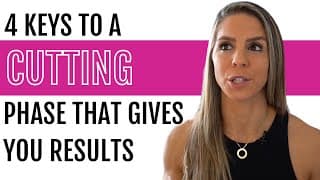
Nikkiey on why your bench press drops a few weeks into a calorie deficit
Plays from 7:32 · Video: What to Expect in a Cutting Phase: Hunger, Energy, Strength
How to tell normal low energy in a cut from being truly exhausted
Plays from 8:50 · Video: What to Expect in a Cutting Phase: Hunger, Energy, Strength
The real goal of a cut: drop body fat while preserving lean muscle
Plays from 1:33 · Video: What to Expect in a Cutting Phase: Hunger, Energy, Strength
The full answer
In her video on what to expect in a cutting phase, Nikkiey is direct: when you pull back on calories, a dip in energy is natural, and so is a dip in how much you can move in the gym. Her example is chest pressing 130 pounds, cutting calories, and finding a couple of weeks later that you can't push that much on the bench. She says she points this out ahead of time so you don't beat yourself up over it. It varies for everybody, but it's normal.
She also wants you to keep the goal in view. A cutting phase is meant to drop body fat while preserving or building as much lean muscle as possible. So even with lighter weights on the bar, you can expect more muscle definition as body fat comes down. The scale may not move much while your body composition changes.
Nikkiey gives you a spectrum to check where you are:
- Normal: a slight drop in energy when you're lifting and working out, and slight hunger.
- Worth a closer look: feeling exhausted, like gravity is against you, or feeling like you're starving.
If you're at the far end of that spectrum, it's the plan to look at, not you. Nikkiey adds that a cutting phase isn't meant for someone who is already on a restrictive diet or not eating enough. It's for women with 15 to 20 or more pounds to lose. If you've already been under-eating, a deeper cut isn't the answer.
From Nikkiey Stott and WarriorBabe's coaching. For education, not medical advice: talk to your doctor about your own health.
Women also ask
More questions →
Fat Loss After 40
Why can't I lose weight after 40 even though I eat less and exercise more?
Nikkiey's answer: your body after 40 doesn't respond to restriction the way it did at 25. Eating less and doing more signals stress, so your body lowers your metabolic rate, raises cortisol, breaks down muscle and holds on to fat. The fix she teaches is more food, more protein, strength training and recovery, not further cuts.
Read the answer →
Fat Loss After 40
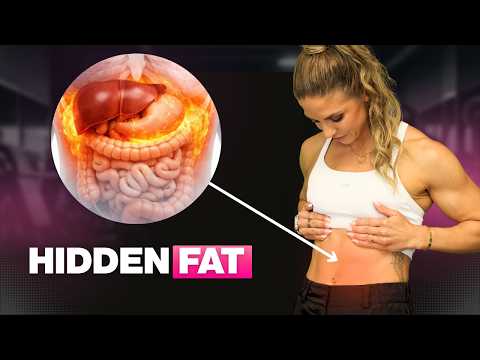
How do I lose belly fat after 40?
Build muscle and fix your nutrition instead of adding crunches, cardio or cutting food further. Nikkiey explains belly fat can't be spot-reduced; it comes off through a calorie deficit across your whole body. Her priorities: progressive strength training, enough protein, sleep, stress management and less alcohol, plus patience, because the midsection often leans out last.
Read the answer →
Fat Loss After 40
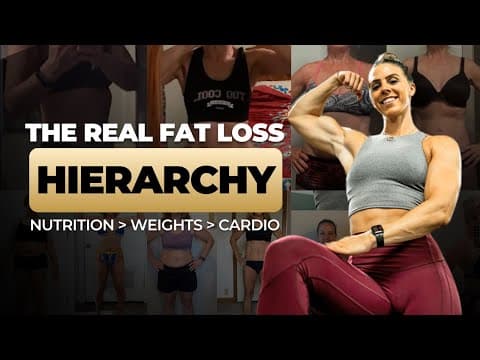
Is cardio or weight training better for fat loss?
Weight training wins. Nikkiey explains that cardio burns calories only while you're doing it and doesn't create long-term changes in your metabolism, while muscle keeps burning calories at rest. Her priority order for fat loss is nutrition first, then weights, then cardio, because you can't out-train a diet that isn't dialed in.
Read the answer →
Watch or listen in full
More on this topic → 11 min
What to Expect in a Cutting Phase: Hunger, Energy, Strength
Video · Jan 18, 2022