

From 1 video
Do vibration plates and waist trainers actually help you lose fat?
Answered by Maggie Topham · Updated
The short answer
No. Maggie explains that vibration plates jiggle your muscles without enough mechanical tension to build muscle or drive fat loss. Waist trainers only make you sweat water, which comes right back when you drink. Fat leaves the body through the liver and lungs, not sweat. Dumbbells, protein and proper nutrition do the real work.
Hear it answered
Tap play to start right where it's answered. It keeps playing while you browse.
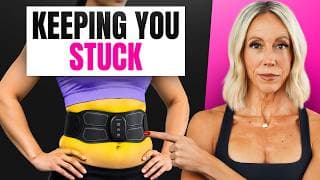
Maggie on why vibration plates jiggle muscles instead of building them
Plays from 1:36 · Video: Do Fat Loss Gadgets Work? 6 Tested for Women Over 40
Why a waist trainer only sheds water weight that returns when you drink
Plays from 3:50 · Video: Do Fat Loss Gadgets Work? 6 Tested for Women Over 40
How fat actually leaves the body, and the risks of exercising in a waist trainer
Plays from 4:15 · Video: Do Fat Loss Gadgets Work? 6 Tested for Women Over 40
Where vibration plates may help, and how Maggie suggests using one
Plays from 2:07 · Video: Do Fat Loss Gadgets Work? 6 Tested for Women Over 40
The full answer
Maggie tried these gadgets herself, and she explains why they feel like they're working when they aren't. A vibration plate creates involuntary micro-contractions, so your legs tingle and feel shaky when you step off. But as she puts it, your muscles aren't being challenged, they're being jiggled. The force is nowhere near enough mechanical tension to make muscle grow. She does say there is some evidence that vibration plates may help bone density in post-menopausal women, balance in older adults and lymphatic drainage. If you already own one, she suggests using it for two minutes as a warm-up, then picking up your dumbbells.
The waist trainer frustrates her most because it can work against you. It compresses your midsection so you sweat more there, and you'll weigh less afterward, until you drink a glass of water. Maggie explains that fat is not lost through sweat. It's metabolized through the liver and breathed out through the lungs, and a waist trainer has no part in that. Worn during exercise, she says it can restrict your breathing, lower your performance, weaken your core over time and raise blood pressure.
The same goes for ab stimulator belts. She wore one for two weeks and nothing changed, because the contractions are too shallow to trigger growth and you can't spot reduce fat anyway. In her view, a menopause belly isn't there because your abs are weak. She points to hormonal shifts, visceral fat storage and often under-eating, none of which a gadget can touch. If hormones are part of your picture, that's a conversation to have with your doctor.
So if these haven't worked for you, it's the tool, not you. What Maggie recommends instead:
- A pair of adjustable dumbbells, which she says cost about the same as the gadgets combined
- Four compound movements, three days a week, for 30 minutes
- Enough protein, and body fat reduction through proper nutrition
From WarriorBabe's coaches (how we write our answers). For education, not medical advice: talk to your doctor about your own health.
Women also ask
More on Fat Loss After 40 →
Fat Loss After 40
Is too much cardio bad for women over 40?
Cardio itself isn't bad after 40, Nikkiey says, but too much of it becomes a problem when it's your main fat loss tool, especially without enough food, recovery and strength training. Then it can stress your body, cost you muscle and slow your metabolism. Use it as a supplement, not the star of the show.
Read the answer →
Fat Loss After 40
Why does fat loss stall during a long calorie deficit?
Fat loss stalls in a long deficit because your body adapts to protect itself. Nikkiey explains that your metabolism slows, everyday movement drops, ghrelin rises, leptin falls and performance declines. The longer you stay in a cut, the stronger these adaptations get. A stall is your body adjusting, not proof the plan stopped working or that you failed.
Read the answer →
Fat Loss After 40
Can you out-train a bad diet?
No. Nikkiey explains that it doesn't matter how hard you train if your nutrition isn't aligned with your goals. Your body needs protein, healthy fats and carbs to build muscle, burn fat and recover. That includes eating healthy but too little, which she says you can't out-train any more than junk food.
Read the answer →

Fat Loss After 40
How do I lean out without losing muscle?
Lean out by chasing fat loss, not weight loss: eat enough, keep protein high and make strength training your foundation. One WarriorBabe coach suggests protein of roughly 0.8 to 1.2 times your body weight, and warns that a massive deficit plus tons of cardio strips muscle along with the fat.
Read the answer →
Fat Loss After 40
How do I cut back on cardio without panicking about gaining weight?
Ease out gradually instead of quitting. On Ep. 294, Nikkiey suggests replacing one cardio session a week with strength training, then swapping a run for a walk. Watch your recovery, sleep, hunger, energy and mood rather than calories burned. You don't have to give up cardio. It just shouldn't be your main fat loss tool.
Read the answer →

Fat Loss After 40
Why can't I lose weight after 40 even though I eat less and exercise more?
Nikkiey's answer: your body after 40 doesn't respond to restriction the way it did at 25. Eating less and doing more signals stress, so your body lowers your metabolic rate, raises cortisol, breaks down muscle and holds on to fat. The fix she teaches is more food, more protein, strength training and recovery, not further cuts.
Read the answer →
Watch or listen in full
More on this topic →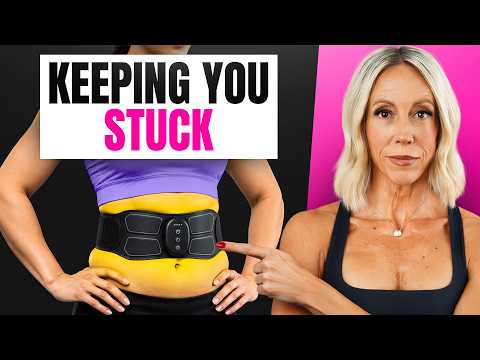 13 min
Do Fat Loss Gadgets Work? 6 Tested for Women Over 40
Video · Sep 24, 2026