

From 4 videos
What can I do if I can't do a full push-up?
Answered by Nikkiey Stott and her guests · Updated
The short answer
Start with a modified push-up. Do them against a wall, counter or sturdy table, or with your knees on the floor instead of a full plank. Nikkiey favors incline push-ups for women over 40 because they ease wrist and shoulder strain while working the same muscles. Lower the incline as you get stronger.
Hear Nikkiey answer it
Tap play to start right where it's answered. It keeps playing while you browse.
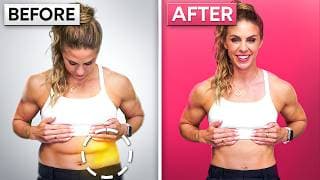
Nikkiey on why incline push-ups suit women over 40 and how to progress them
Plays from 2:51 · Video: 5-Move No-Equipment Home Workout for Women Over 40
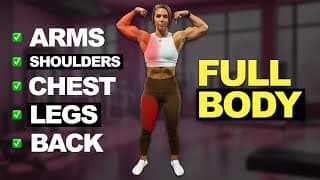
How to do knee push-ups with proper form: straight line, elbows tucked in
Plays from 4:11 · Video: Full-Body Dumbbell and Cable Workout for Women Over 40
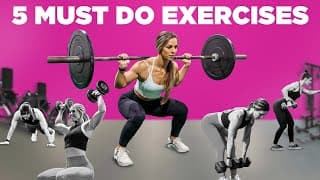
Wall and knee push-up options, plus why push-ups help core and bone health
Plays from 3:13 · Video: 5 Strength Exercises for Women Over 50 and a Weekly Plan
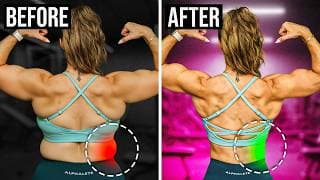
Nikkiey on the dumbbell bench press as a joint-friendly push-up alternative
Plays from 1:54 · Video: 6 Joint-Friendly Exercises to Build Muscle After 40
The full answer
Not being able to do a full push-up doesn't mean you can't train your chest. It means you need a starting point that fits where you are right now. Nikkiey explains that floor push-ups can be hard on women over 40 because of wrist strain, tight shoulders and core instability. Incline push-ups take pressure off all three and still target the same muscles. In her no-equipment home workout, she suggests 3 sets of 8 to 10 reps, with your core engaged and your neck neutral.
Form matters more than the version you choose. The full-body dumbbell and cable workout breaks it down:
- Hands about shoulder width apart, body in a straight line from head to heels (or knees)
- Elbows tight to your sides, not flaring out
- Lower until your chest is just above the floor, then push back up
- Don't let your hips sag
To build toward a full push-up, Nikkiey says to lower the incline over time. Wall, then counter, then table, then knees, then the floor. Her general rules for progressing at home also apply: add 2 to 3 reps a week, slow each rep down, or shorten your rest. The women-over-50 strength video adds why push-ups are worth working toward. They engage your core for balance, and their weight-bearing nature can help preserve bone density in your wrists and arms.
If push-ups bother your wrists or shoulders even when modified, you don't have to force them. Nikkiey recommends the dumbbell bench press as a way to train your chest and arms without push-ups. Do 3 sets of 6 to 8 reps. Start light and add five pounds over time. Even that small jump counts as real progress.
From Nikkiey Stott and WarriorBabe's coaching. For education, not medical advice: talk to your doctor about your own health.
Women also ask
More questions →
Strength Training for Women
Are full body workouts better than body part splits for women over 40?
For most women over 40, Nikkiey Stott recommends full body workouts over body part splits. One exercise per muscle group, four to five days a week, spreads the work out so you recover between sessions and stay consistent. She's clear that bro splits aren't bad, though. Progressive overload is what matters most.
Read the answer →
Strength Training for Women
How can I work up to doing a pull-up?
Work up to a pull-up in stages. Nikkiey recommends starting with inverted pull-ups until they feel comfortable, then jumping up to the bar and slowly lowering yourself (negatives), then banded or machine-assisted pull-ups, and finally full bodyweight pull-ups. Each stage builds the back, arm and core strength the next one needs.
Read the answer →
Strength Training for Women
What exercises should a full body workout for women over 40 include?
Nikkiey's full body workouts draw from joint-friendly staples: Smith machine or pendulum squats, hip thrusts, Romanian deadlifts, seated leg curls, rows, lat pulldowns or assisted pull-ups, incline presses, cable lateral raises, overhead tricep extensions and curls. Each session you pick one per muscle group, usually six or seven exercises, and push each one hard.
Read the answer →
Watch or listen in full
More on this topic → 7 min
5-Move No-Equipment Home Workout for Women Over 40
Video · Nov 1, 2025
 9 min
5 Strength Exercises for Women Over 50 and a Weekly Plan
Video · Nov 12, 2023
 7 min
6 Joint-Friendly Exercises to Build Muscle After 40
Video · Sep 4, 2025