Skip to content

Real answers from WarriorBabe's coaches

Ask WarriorBabe

Straight answers to what women over 40 ask about fat loss, menopause, protein and lifting, drawn from every video and episode. Tap play on any question to hear our coaches and guests answer it.

Page 6

  • Metabolism, Eating More & Reverse Dieting

    How do I know if I'm ready to start a cut?

    You're ready to start a cut when you have a solid foundation of muscle, you've spent real time eating at maintenance, and your metabolism is healthy. Nikkiey also looks for stable sleep, stress and recovery. If you're eating around 1,000 to 1,100 calories with no hunger cues, or you've dieted for years, a cut isn't the next step.

    Read the answer →
  • Building Muscle After 40

    Do women over 40 need carbs to build muscle?

    Yes. Nikkiey Stott says carbohydrates are a key macronutrient for building and repairing muscle and fueling hard workouts. Cutting them too low doesn't burn more fat. It drains your energy, hurts your recovery and makes your training suffer. She says keto and low-carb plans tend to bring short-lived results before the weight comes back.

    Read the answer →

  • Diets, Fasting & Diet Culture

    Do I need to eat every 2 to 3 hours to boost my metabolism?

    No. On The WarriorBabe Show, Nikkiey and her co-hosts say there's no research showing that eating every two to three hours boosts your metabolism, and it doesn't shut off between meals. Age, muscle mass and activity level matter more. What counts is total calories, macros and food quality, eaten on a schedule you can keep.

    Read the answer →
  • Protein for Women

    Can you get enough protein on a plant-based diet after 40?

    Yes, but it takes deliberate planning. On Ep. 34, Nikkiey says women build muscle on vegan and vegetarian diets as long as they hit their daily protein target. A WarriorBabe video adds that it's genuinely difficult. Plant protein is less bioavailable and often carb-heavy, so aim above 100 grams and build every meal around protein.

    Read the answer →

  • Fat Loss After 40

    Is incline walking better for burning fat?

    Not automatically. On The WarriorBabe Show, Maggie says it depends on your fitness. If you've been sedentary, a slightly brisker walk is enough. If you're very fit, you may need an incline. Use the talk test: if you can't hold a conversation, you're burning mostly glucose rather than fat.

    Read the answer →

  • The Scale & Tracking Progress

    What is the best time of day to weigh myself?

    Weigh yourself in the morning, after a full night's sleep, after you've used the bathroom and before you eat or drink anything. Nikkiey says to keep the conditions the same each time, including what you wear, and never to weigh in at night, when the day's food, water, sodium and training can push the number up several pounds.

    Read the answer →

  • Sleep, Recovery & Lifestyle

    What should I do on rest days from lifting?

    Walk. WarriorBabe's answer for rest days is to hit your step goals, not to sit on the couch and not to sneak in extra workouts. The walking isn't about burning calories, which she says is minimal. It's for your mood, sleep and insulin sensitivity. She calls walking the best recovery tool you have.

    Read the answer →

  • Menopause & Perimenopause Weight Loss

    Should I do intermittent fasting during menopause?

    Maybe, but it's individual. On Ep. 130, dietitian Esther Blum says menopausal women in her practice tolerate fasting best, though it may not suit women with hypothyroidism, cortisol or adrenal issues, chronic illness, or disordered eating history. On Ep. 117, Dr. Stephen Cabral warns fasting can become one more stressor on hormones. If you try it, start with 12 hours.

    Read the answer →

  • Hormones & Hormone Health

    Should I eat more the week before my period?

    Yes, according to Ep. 114 guest Jessica Suchan. She says progesterone is thermogenic and nudges metabolism up after ovulation, so she has many clients eat at maintenance at least the week before their period. Adding a protein-rich snack of around 200 calories works better than fighting the extra hunger and risking a binge later.

    Read the answer →

  • Food Noise, Cravings & Overeating

    Why do I crave sweets before my period or in perimenopause?

    Nikkiey explains that in the two weeks before your period, serotonin naturally drops, and your brain often tries to make up for it by driving carbohydrate cravings. In perimenopause and menopause, fluctuating and declining estrogen affects appetite regulation and dopamine sensitivity, so food noise often gets louder. It's hormonal chemistry, not a lack of willpower.

    Read the answer →

  • Consistency & Mindset

    Should I set a weight loss goal?

    Yes, set one, but don't make it the whole point. Nikkiey says goals are worth having as mile markers for direction, not the destination your happiness depends on. Put most of your focus on the daily systems that get you there, and anchor the goal to a deeper reason than just losing weight.

    Read the answer →

  • Strength Training for Women

    How should I warm up before lifting weights?

    Warm up for 5 to 10 minutes, not 30, Nikkiey says. Do a few minutes of light cardio to raise your heart rate, some gentle mobility like arm circles or glute bridges, then one or two lighter, high-rep sets of your first exercise so your joints, muscles and movement pattern are ready before your working sets.

    Read the answer →

  • Macros & Macro Tracking

    What are macros?

    Macros, short for macronutrients, are the three nutrients that make up everything you eat: protein, carbohydrates and fat. Calories are just the unit of energy they provide. Nikkiey explains that tracking macros shows what your calories are actually made of, so you get the balance your body needs instead of mostly carbs and fat.

    Read the answer →

  • Metabolism, Eating More & Reverse Dieting

    Is my metabolism broken from years of dieting?

    No. Nikkiey's view is that your metabolism isn't broken, it's down-regulated. After years of eating too little, your body adapts to survive on less: it burns fewer calories at rest, moves less, raises hunger and holds on to fat. What adapted can readapt once you change the environment it's responding to.

    Read the answer →

  • Building Muscle After 40

    How long should a muscle-building phase last?

    Nikkiey recommends three to six months for a muscle-building phase. Three months suits women who already carry a decent amount of muscle. If you need to build muscle, plan on six months or more, and she sometimes recommends a full year, because one solid build can change your body composition more than years of cycling between cutting and maintenance.

    Read the answer →

  • Diets, Fasting & Diet Culture

    Do I need to eat organic food to lose fat?

    No, you don't need to eat organic food to lose fat. On The WarriorBabe Show, a coach tells client Lisa she can eat organic if she wants, but doesn't have to. One WarriorBabe coach's rule is to buy organic only for the dirty dozen and conventional for everything else.

    Read the answer →

  • Protein for Women

    Is a high-protein diet bad for your kidneys?

    For healthy women with no existing kidney condition, Nikkiey says the research does not support high protein causing kidney damage. The worry came from studies of people whose kidneys were already compromised. If you have a known kidney condition, she says to work with your doctor or a nutritionist on your protein intake.

    Read the answer →

  • Fat Loss After 40

    Is it harder to lose weight when you have a lot of weight to lose?

    Not necessarily. Nikkiey says that from coaching thousands of women in WarriorBabe, women with more weight to lose often have an easier time once the strategy is dialed in, because their metabolism usually hasn't been suppressed by years of yo-yo dieting. The hard part is the plan and the habits, not your body.

    Read the answer →

  • The Scale & Tracking Progress

    Why do I feel stronger but don't look any different after a few weeks of lifting?

    In the first weeks of lifting, most of your progress is neurological. Nikkiey explains that your brain is learning movement patterns and recruiting muscle fibers more efficiently, so you get stronger using the muscle you already have. That strength is real, but it doesn't show up in the mirror or on the scale yet.

    Read the answer →

  • Sleep, Recovery & Lifestyle

    How much deep sleep and REM sleep should I get?

    On Ep. 196 of The WarriorBabe Show, Nikkiey passes along Dr. Cabral's recommendation: aim for 70 to 90 minutes of deep sleep and two hours or more of REM sleep each night. She treats sleep as a real pillar of fat loss after 40, not an afterthought, because so much recovery happens while you sleep.

    Read the answer →

  • Menopause & Perimenopause Weight Loss

    Can Pilates and yoga help with menopause symptoms?

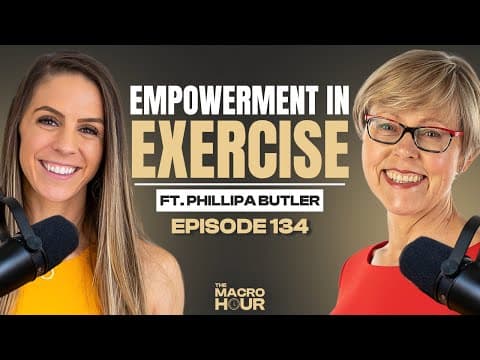
    Yes, according to physiotherapist Philippa Butler on Ep. 134 of The WarriorBabe Show. She says there isn't one menopause symptom that doesn't respond to movement. Pilates offers mindful, core-focused work that helps manage stress, and yoga adds breathing practices aimed at the nervous system. She sees both as partners to strength training, not replacements for it.

    Read the answer →
  • Hormones & Hormone Health

    Should I sync my workouts to my menstrual cycle?

    You don't have to, but it can help to know your cycle. On Ep. 204, Nikkiey says cycle syncing is about awareness, not overhauling your program: push for PRs around ovulation, when estrogen peaks and testosterone rises slightly, and ease off when the luteal phase and your period bring fatigue and slower recovery.

    Read the answer →
  • Consistency & Mindset

    What should I do on weeks when I can't follow my full fitness plan?

    Drop to a minimum standard instead of stopping. Nikkiey suggests deciding in advance what your hard-week version looks like, such as three strength sessions instead of four, 7,000 steps instead of 10,000, and protein three times a day. She says that still counts as consistency, and doing part of your plan beats doing none of it.

    Read the answer →
  • Strength Training for Women

    What exercises should a full body workout for women over 40 include?

    WarriorBabe's full body workouts draw from joint-friendly staples: Smith machine or pendulum squats, hip thrusts, Romanian deadlifts, seated leg curls, rows, lat pulldowns or assisted pull-ups, incline presses, cable lateral raises, overhead tricep extensions and curls. Each session you pick one per muscle group, usually six or seven exercises, and push each one hard.

    Read the answer →
  • Macros & Macro Tracking

    What is intuitive eating?

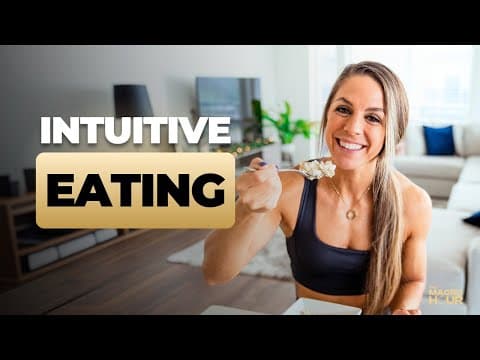
    Intuitive eating means eating by your body's hunger and fullness cues instead of strict rules or logging every meal. Nikkiey says it isn't eating whenever you feel like it. It's an informed, respectful relationship with food: you can roughly tally your day, prioritize protein, stop when satisfied, and trust your signals because you've done the work.

    Read the answer →
  • Metabolism, Eating More & Reverse Dieting

    What is a refeed day?

    A refeed day is a planned, temporary increase in calories, mostly from extra carbs and fats, that you still track before going right back into your deficit. Nikkiey uses refeeds to relieve the stress of dieting and support your metabolism. It's a strategy, not permission to eat whatever you want.

    Read the answer →
  • Building Muscle After 40

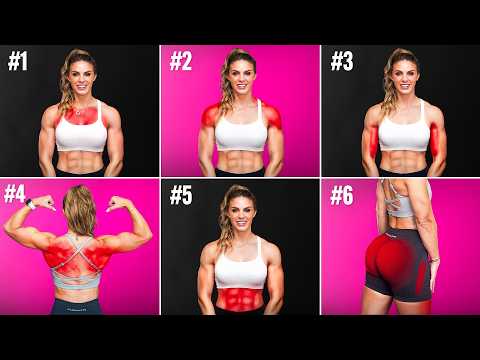
    How many sets per muscle group per week do I need to build muscle?

    Nikkiey cites research showing 10 to 20 sets per muscle group per week produces optimal muscle growth for most people. Training three to four times a week, that works out to roughly three to six working sets per muscle group per session, which fits in a focused 45- to 60-minute workout. You don't need two-hour sessions.

    Read the answer →
  • Diets, Fasting & Diet Culture

    Do summer shred challenges actually work?

    Not in the way they promise. Nikkiey explains that summer shred challenges usually rely on crash dieting, excessive cardio and severe calorie deficits. They can produce temporary results, but nobody can sustain them for months, so most women rebound to their old habits and regain the weight. Progress that lasts takes time and patience.

    Read the answer →

  • Protein for Women

    Is it bad to eat most of my protein at dinner?

    Nikkiey says yes, it works against you. Your body can only use roughly 30 to 40 grams of protein per meal to trigger muscle protein synthesis, so a big protein-heavy dinner triggers it once, while the excess is used for energy or excreted. Spreading the same total across four or more meals triggers it several times a day.

    Read the answer →
  • Fat Loss After 40

    Why is it so hard to lose the last 10 pounds?

    The last 10 pounds are hard because your body adapts as you get leaner. Nikkiey explains that a smaller body burns fewer calories for the same activities, your metabolism slows, and a balance-keeping mechanism treats those pounds as a reserve. Her fix is consistent, dialed-in nutrition for 60 to 90 days, not more cardio.

    Read the answer →
  • The Scale & Tracking Progress

    How should I measure my waist to track fat loss?

    Measure your waist once a week, on the same day at the same time, first thing in the morning after you've gone to the bathroom. Not midday, not at night. Nikkiey explains that if your waist is trending down, you're winning, even when the scale hasn't moved, because fat loss often shows up in measurements first.

    Read the answer →
  • Sleep, Recovery & Lifestyle

    Should I work out when I'm sick?

    No. On Ep. 129, Nikkiey explains that when you're sick, your body needs rest and recovery to heal. Pushing through a workout can worsen your condition, drag out your recovery, or even cause long-term damage. Treat symptoms like a cough, poor sleep, or congestion as your signal to stop, and focus on eating well and staying hydrated.

    Read the answer →
  • Menopause & Perimenopause Weight Loss

    Is menopause weight gain connected to mental health?

    Yes, according to the WarriorBabe video Losing 60 Pounds in Menopause. The speaker links her mood swings, anxiety, panic attacks and night-time rumination to declining hormones and years of restriction. She calls it a mental and biological toll, and says her mental health improved once she started caring for her body instead of punishing it.

    Read the answer →

  • Consistency & Mindset

    What should I do when I don't feel like working out?

    Expect it, and start anyway. Nikkiey says not feeling like it is resistance, not a reason to stop: your old self trying to keep you comfortable. Lean on discipline instead of motivation, which comes and goes, have a minimum version of your workout for hard days, and just get your gym clothes on. Showing up is the win.

    Read the answer →

  • Strength Training for Women

    Will working out more days a week get me results faster?

    No. Nikkiey explains that adding a sixth or seventh workout won't speed up your results, because muscle is built during recovery, not during the workout itself. Training hard every day, especially while under-eating, raises your risk of burnout and injury and actually slows progress. Consistent strength training, enough protein and real rest are what move the needle.

    Read the answer →

  • Macros & Macro Tracking

    What macro split is best for women over 40?

    WarriorBabe's starting point for women over 40 is roughly 35% protein, 27% carbs and 38% fat. Protein protects muscle and keeps you full, carbs fuel training and energy, and fat supports hormones and satisfaction. For a client facing menopause changes, one coach used 32% protein, 30% carbs and 38% fat. It's not keto, and your exact numbers depend on you.

    Read the answer →

  • Metabolism, Eating More & Reverse Dieting

    How do I know my metabolism has recovered from dieting?

    Your metabolism has recovered when you reach your true maintenance calories, the amount you can eat without gaining or losing weight, and your body is sending the right signals. Nikkiey points to better sleep, mood, energy and digestion, rising strength, fewer food thoughts and hunger cues returning. That number is usually much higher than where you started.

    Read the answer →

  • Building Muscle After 40

    What is sarcopenia?

    Sarcopenia is the age-related loss of muscle mass. On Ep. 337, Nikkiey explains it starts in your 30s, not your 60s, then accelerates in your 40s and again in your 50s and beyond. Left unchecked, she says women lose 3-8% of muscle per decade from age 30, and faster after 40.

    Read the answer →

  • Diets, Fasting & Diet Culture

    What is the difference between simple and complex carbs?

    Simple carbs break down fast and hit your bloodstream quickly, giving a short burst of energy and a blood sugar spike. Complex carbs are higher in fiber and starch, carry more nutrients and digest slowly, so they give you steadier energy over hours. Nikkiey says both have a place, especially around your workouts.

    Read the answer →

  • Protein for Women

    Is peanut butter a good source of protein?

    Not really. On The WarriorBabe Show, peanut butter is treated as a fat source with some protein, not a protein source. It's also an incomplete protein, so it won't build muscle the way eggs, chicken, fish or Greek yogurt do. Enjoy it, but don't count on it to hit your protein goals.

    Read the answer →

  • Fat Loss After 40

    Will I lose muscle when I lose weight?

    You can, if your plan only chases a lower number on the scale. Nikkiey explains that crash diets and weight-loss-only programs strip muscle along with fat. The goal is fat loss while keeping muscle: eat enough, including carbohydrates, so your body isn't forced to burn muscle for energy.

    Read the answer →

  • The Scale & Tracking Progress

    What are non-scale victories?

    Non-scale victories are signs of progress that have nothing to do with your weight. On The WarriorBabe Show, Nikkiey lists six: consistency in your routine, measurements and progress photos, better mood and well-being, more energy, a renewed zest for life, and growing endurance and strength. She treats the scale as the last thing to check.

    Read the answer →

  • Sleep, Recovery & Lifestyle

    What should I eat for dinner to sleep better?

    Maggie's dinner for better sleep is a satisfying, high-protein meal: about 30 to 40 grams of protein, some healthy carbohydrates, fiber and plenty of flavor. She says it keeps blood sugar steady overnight instead of spiking and crashing, and she eats it three to four hours before bed so digestion is done by lights-out.

    Read the answer →

  • Menopause & Perimenopause Weight Loss

    Is white rice or brown rice better for weight loss in menopause?

    Neither is better across the board. One WarriorBabe coach says both are valid for menopause fat loss: brown rice has more fiber and a slightly lower glycemic impact, but it digests slower and can cause bloating, while white rice is easier on digestion and works well after training. Pick the one your gut tolerates and you'll eat consistently.

    Read the answer →

  • Consistency & Mindset

    Do I need to feel confident before I start working out?

    No. Nikkiey Stott and guest Britley Williams both say confidence comes after you act, not before. You make the decision and take the courageous step first, and then each workout becomes evidence that you can handle it. Waiting until you feel ready only costs you time and results, because your body keeps changing either way.

    Read the answer →

  • Strength Training for Women

    Are weight machines as good as free weights for building muscle?

    For building muscle, yes. One WarriorBabe coach says machines are not cheating and are one of the best tools for feeling your muscles work. She built most of her muscle in her first two years barely touching barbells. She still recommends a blend, because free weights build coordination, balance and core control that machines don't.

    Read the answer →

  • Macros & Macro Tracking

    Are AI photo food tracking apps accurate?

    No, not in Nikkiey's testing. When she tried Cal AI, it logged about 12 grams of protein for a five-ounce chicken breast she knows has at least 30, and undercounted her usual breakfast and yogurt too. A photo can't see oil, portion size, or sauces, so she recommends weighing food and logging it in MyFitnessPal.

    Read the answer →

  • Metabolism, Eating More & Reverse Dieting

    How long should a fat loss phase last?

    Nikkiey's general guideline is three to five months for a moderate fat loss phase if you're consistent. It can stretch to six to eight months if you have a lot to lose or keep falling off on weekends. She's also clear that the timeline depends on your body and your journey, and that fat loss isn't meant to last forever.

    Read the answer →

  • Diets, Fasting & Diet Culture

    Can yo-yo dieting cause belly fat after 40?

    Nikkiey says it can. On Ep. 179 she explains that years of losing and regaining the same weight push cortisol up, and elevated cortisol leads to more fat storage, especially around the abdomen. Many women in their 40s and 50s blame menopause for that belly fat, when yo-yo dieting can be one factor.

    Read the answer →

  • Protein for Women

    What are good high-protein snacks to keep on hand?

    Nikkiey's go-to list is short and easy to find: hard-boiled eggs, protein bars, beef sticks and Greek yogurt, most of which you can grab at a gas station. On the WarriorBabe work-trip video, the team adds drinkable yogurts and yogurt topped with granola, honey and blueberries for something sweeter.

    Read the answer →

  • Fat Loss After 40

    Do I have to give up coffee to lose belly fat?

    No, you don't have to give up coffee to lose belly fat. One WarriorBabe coach says you deserve your morning coffee. The problem is what goes into it. Sugary lattes, frappuccinos and flavored creamers can pack 400-plus calories. Stick to black coffee or cold brew with a splash of unsweetened almond, oat or coconut milk.

    Read the answer →

  • The Scale & Tracking Progress

    What is biofeedback in fat loss?

    Biofeedback is your body's internal report card: the signals it sends about how well it's coping with your training, meals and sleep. Nikkiey tracks six markers, energy, sleep, hunger, digestion, mood, and performance and recovery, because they show whether your fat loss plan is actually working, often before the scale does.

    Read the answer →

  • Menopause & Perimenopause Weight Loss

    What are the best exercises for bone health during menopause?

    Compound strength exercises are best for bone health during menopause, Nikkiey Stott explains on Ep. 65. That means squats, lunges, deadlifts, chest presses and shoulder presses. Walking, jogging and stair climbing also stress the bones, but strength training should make up most of your exercise, ideally with free weights, barbells or resistance bands.

    Read the answer →

  • Consistency & Mindset

    Does taking rest days mean I'm not being consistent?

    No. Nikkiey explains that consistency doesn't mean working out every day. It means a sustainable routine you can follow for the long run, and that routine includes both training days and rest days. Taking rest days means you're being smart about your training, as long as the rest comes after your effort rather than instead of it.

    Read the answer →

  • Strength Training for Women

    Does being sore mean I had a good workout?

    No. Nikkiey says soreness is not an indicator of a good workout or of progress. It mostly means the stimulus was new to your muscles. A good workout is one where the last few reps of each set are challenging and where, over weeks, you add reps, sets or weight.

    Read the answer →

  • Macros & Macro Tracking

    Can I track macros if I have a history of disordered eating?

    Not as your first step, according to Nikkiey Stott. If you have a history of disordered eating, she says to nurture your past experiences and your relationship with food first, not macros. Once you've unpacked that and built more self-awareness, tracking can be introduced as a skill set rather than a rule.

    Read the answer →

  • Metabolism, Eating More & Reverse Dieting

    How long should I stay in a maintenance phase?

    There's no fixed number, but Nikkiey's rule of thumb is to stay in maintenance at least as long as your previous phase lasted, so about 12 weeks after a 12-week cut. If you want a hard estimate, she suggests roughly six to twelve months, and longer if you've under-eaten for years.

    Read the answer →

  • Diets, Fasting & Diet Culture

    Is diet soda better than regular soda for weight loss?

    Not necessarily. One WarriorBabe coach explains that diet soda isn't the clear win it looks like. Artificial sweeteners trick your taste buds into expecting sugar, and when it doesn't arrive you can end up craving more, snacking more, and finding belly fat harder to lose. She suggests sparkling water with fresh citrus or iced herbal teas instead.

    Read the answer →

  • Protein for Women

    Can eating more protein upset my stomach?

    Yes, it can. On Ep. 174, Nikkiey explains that raising protein can disrupt your digestive tract, including what people call protein farts, because your body isn't used to it. She says this is normal, and recommends holding at 100 grams a day for 7 to 14 days before going higher.

    Read the answer →

  • Fat Loss After 40

    Do little bites and tastes really affect fat loss?

    Yes. On Ep. 20, Nikkiey explains that little bites, licks and tastes add up over time. Finishing your kids' plates or licking the peanut butter spoon several times a week can put you over by 300 or 400 calories, which can throw you out of your deficit and stall results you've worked for.

    Read the answer →

Browse questions by topic