The short answer
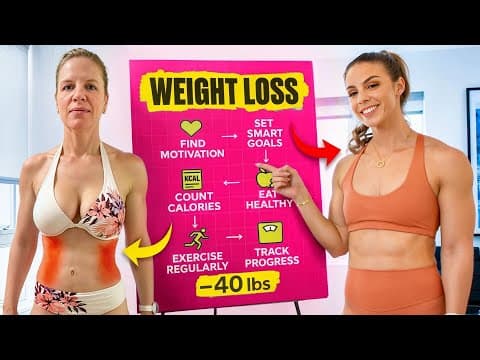
Women over 40 should strength train three to four days a week with compound lifts and progressive overload, according to WarriorBabe co-founder Nikkiey Stott. Pick a weight where the last few reps of each set are hard but your form holds, then add a little over time. Pair it with enough protein and food, real recovery and the patience to give one program a year.
What to know
- Nikkiey Stott treats strength training after 40 as not optional, because age-related muscle loss starts in your 30s and speeds up in your 40s and 50s.
- Her core recommendation is three to four days a week of strength training built on compound lifts and progressive overload, with walking on off days and seven to eight hours of sleep.
- Maggie Topham's rule is that the last two to three reps of every set should feel hard but not painful, and when 12 reps stop feeling hard, add two and a half to five pounds.
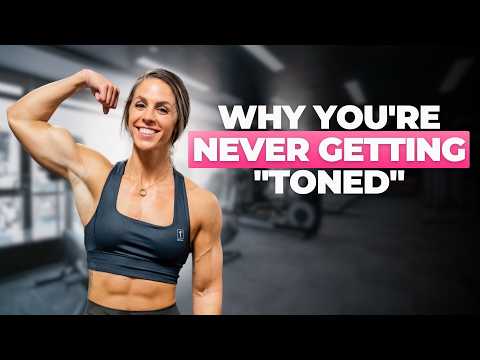
- Light two- to five-pound dumbbells have no special toning effect; toned is real muscle with less body fat on top, built with weight that goes up over time.
- Nikkiey calls 8,000 to 12,000 steps a day the sweet spot for health and fat loss, and walking helps you stay active without breaking down muscle.
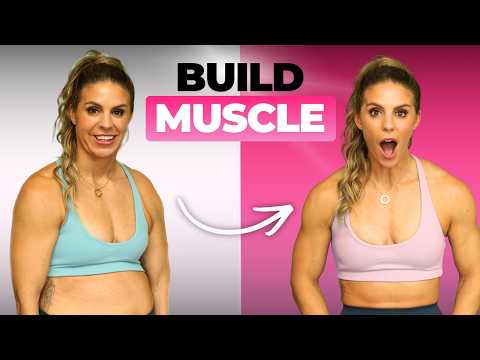
- Visible muscle can take six months to two years depending on where you start, which is why Nikkiey asks women to give one program a full year.
On this page
- Why strength training matters for women over 40
- Beginner strength training for women: how to start
- How heavy should you lift, and how often?
- Best strength training exercises for women over 40 and 50
- Strength training at home for women: dumbbell workouts
- Glute exercises and a glute workout that works
- Exercises for knee pain, back pain and sore joints
- Cardio, walking and how many steps a day
- How to build muscle and get toned: food, recovery and time
- More questions
Why strength training matters for women over 40
Strength training matters after 40 because muscle supports your metabolism, your bones and your everyday independence. Nikkiey Stott explains sarcopenia, the age-related loss of muscle, as starting in your 30s and speeding up in your 40s and again in your 50s. Left unchecked, she says women lose 3 to 8 percent of their muscle per decade from age 30.
Nikkiey calls muscle the engine of your metabolism and, borrowing Dr. Gabrielle Lyon's phrase, the organ of longevity. On The WarriorBabe Show, JJ Virgin adds that muscle improves insulin sensitivity and gives carbs somewhere to go besides your fat cells and liver. Nikkiey also links lifting to bone density, explaining that the weight-bearing bones of the legs and spine respond the most.
Her view comes partly from nine years in emergency rooms and long-term care. She saw falls, fractures and women losing everyday function like carrying groceries or climbing stairs. That is why she treats lifting after 40 as a foundation, not an extra.
It is not too late to start. Cheryl added muscle and lost fat between 57 and 60, Sandra hit 90-pound lunges at 61, and Peggy, at 70, carries her 11-foot paddleboard to the lake on her own.
Beginner strength training for women: how to start
Start small and start now. Nikkiey says you don't need to go full bore in week one: get to the gym twice a week or buy dumbbells for home, then build to about three sessions a week. Do 8 to 15 reps per set, with the last three challenging and your form solid.
Form comes first. The order WarriorBabe teaches is form, then connection to the muscle, then weight. If you can't feel the target muscle working, other muscles take over and your joints pay for it, so drop the weight until you can.
Warm up for 5 to 10 minutes, not 30. Nikkiey suggests a few minutes of light cardio, gentle mobility like arm circles or glute bridges, then one or two lighter, high-rep sets of your first exercise.
If the weight room feels intimidating, remember that almost nobody is watching you. Nikkiey suggests learning the exercises on YouTube before you go, wearing a hat as blinders and starting in a quiet corner. Alicia Erickson, who got lean and strong at 51, also suggests asking the front desk to show you around.
How heavy should you lift, and how often?
Lift heavy enough that the last three reps of every set are challenging while your form stays good, and do it three to four days a week. Nikkiey says that if you finish a set thinking it was easy, the weight is too light. You don't need huge numbers, just a weight that is hard for you.
Then keep making it harder. That is progressive overload: gradually adding weight, reps or sets, or changing tempo and rest, so your muscles keep having a reason to adapt. Maggie Topham's rule is to go up when you can do 12 reps with perfect form and feel you could do more, adding two and a half to five pounds.
How much work is enough? Nikkiey relies on 10 to 20 sets per muscle group per week, which fits into focused 45 to 60 minute sessions. On a short day, she says a 20 to 30 minute session with fewer sets and heavier weights still counts. Rest 60 to 90 seconds between compound sets and time it, because scrolling for five minutes breaks up the training effect.
For women 50 and older, Nikkiey recommends a four-day split rather than five to seven days, because she sees the body at this stage tolerating less stress. Dr. Stacy Sims and Esther Blum put the minimum at two full-body sessions, with three to build more muscle and bone. Everyone agrees on one thing: not every day.
Stick with your program. Nikkiey suggests running one for four to eight weeks, never less than four, and changing for a reason rather than boredom.
Best strength training exercises for women over 40 and 50
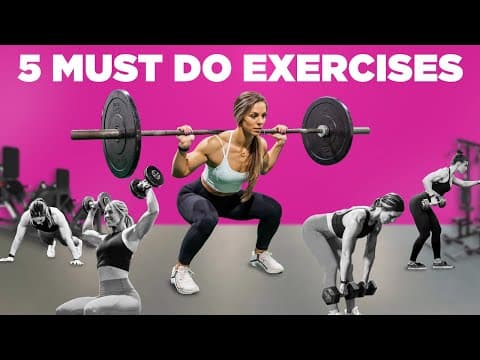
The best exercises are compound lifts that work several muscles at once, done progressively heavier over time. One WarriorBabe coach's top five for women over 50 are squats, push-ups, dumbbell deadlifts, standing shoulder presses, and lat pulldowns or dumbbell rows. The key, she says, is getting stronger at them, not just going through the motions.
Another WarriorBabe coach builds every full-body session around five categories:
- Lower body push: squats, lunges, leg press
- Lower body pull: deadlifts, RDLs, good mornings
- Upper body push: chest press, overhead press, push-ups
- Upper body pull: rows, pull-ups, lat pulldowns
- Accessory work: biceps, triceps, abs
Pick one strong exercise per muscle group, usually six or seven in a session, and push each one hard. Do the big compound lifts first, then isolation work, so smaller muscles aren't already tired when you reach the heavy movements.
Machines are not cheating. One coach built most of her muscle in her first two years barely touching barbells, though she still recommends a blend because free weights build balance and core control. Nikkiey recommends full-body workouts over body-part splits for most women over 40, but says progressive overload matters more than the split. Can't do a full push-up yet? WarriorBabe's coaches favor incline push-ups against a counter or bench.
Strength training at home for women: dumbbell workouts
Yes, you can build muscle at home with just dumbbells. The WarriorBabe message is that muscle grows from the force it produces against resistance and how close you take it to failure. Gym machines and dumbbells are two ways to deliver the same signal.
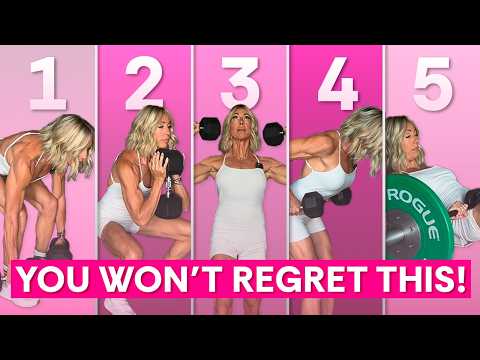
Maggie Topham rebuilt her training after menopause around four dumbbell moves: a press, a row, a goblet squat and a Romanian deadlift. She does them three days a week, three sets of 8 to 12 reps, with 60 to 90 seconds of rest and walking on off days. She warns against racing through them as a no-rest circuit for the burn, because tension and hard final reps are what build muscle.
In 6 Dumbbell Exercises to Build Muscle During Menopause, one coach splits six moves into two workouts you alternate three days a week:
- Workout A: goblet squat, bent-over row, overhead press
- Workout B: Romanian deadlift, chest press, hip thrust
No equipment yet? The 5-Move No-Equipment Home Workout for Women Over 40 uses a wall sit, glute bridge with a march, incline push-ups, dead bugs and wall angels, three to four times a week in under 25 minutes.
To keep progressing at home, add two to three reps or a few seconds each week, shorten your rest and slow every movement down. If your dumbbells feel light, try three seconds down, a one-second pause and three seconds up.
Glute exercises and a glute workout that works
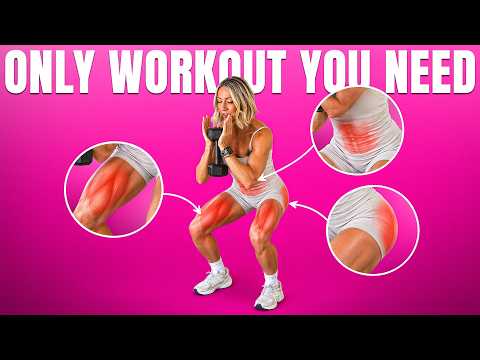
One WarriorBabe coach names the hip thrust as the best glute exercise after 40, because nothing else activates the glutes as much under the same load. She ranks Bulgarian split squats alongside it. Start with 3 sets of 10 to 12 reps and make sure you feel it in your glutes, not your lower back.
In Best and Worst Glute Exercises for Women Over 40, a coach ranks the popular moves. Cable kickbacks are a solid accessory, sumo deadlifts build overall lower body strength with less glute focus, bodyweight squats suit beginners and warm-ups, and jump squats are for cardio rather than building glutes.
Train glutes twice a week. One coach explains that two sessions are enough to stimulate growth and still recover, and two well-executed sessions beat three sloppy ones.
A simple dumbbell-only glute workout from one WarriorBabe coach:
- Glute bridges: 3 sets of 10
- Bulgarian split squats: 3 sets of 8 to 10 per leg
- Romanian deadlifts: 3 sets of 10
- Step-ups: 3 sets of 10 per leg
- Goblet squats: 3 sets of 10
Exercises for knee pain, back pain and sore joints
Maggie Topham's view is that squats are not bad for your knees after 40. She explains that knees usually hurt because the muscles around them are weak, and her own knee pain eased within weeks of goblet squatting. She suggests using a chair behind you as a depth marker rather than stopping at a quarter squat. If you have ongoing knee pain, check with your doctor first.
Learn the difference between soreness and joint pain. Maggie describes soreness as a dull ache in the middle of the muscle a day or two after training. Sharp pain in or around a joint during the movement means stop, modify or swap the exercise, and talk to your doctor if it keeps coming back.
Train around what hurts rather than quitting. Maggie suggests lower body work for a sore shoulder, upper body and core for a cranky knee, machines or bands for a sore wrist, and seated presses and rows for a bad back. One coach also uses dumbbell step-ups to train legs without the knee or hip strain some women feel in squats and lunges.
For your back, Maggie says deadlifts done with good form and the right weight build the chain that protects your spine; if you feel them in your lower back, lower the weight and keep your back flat. One coach swaps sit-ups for dead bugs. On Ep. 243, client Paige describes how her coach started her with light, back-safe exercises until she could deadlift without pain. If you live with back pain, check with your doctor first.
Cardio, walking and how many steps a day
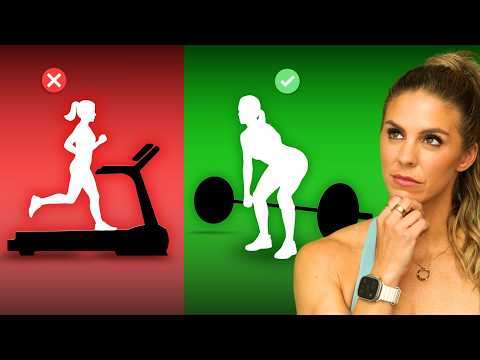
Keep some cardio, but let strength training lead. WarriorBabe's coaches say your heart is a muscle and needs cardio, but too much of it, especially while under-eating, works against muscle. Nikkiey puts fat loss priorities in this order: nutrition first, weights second, cardio third.
Walking is the tool she says most women overlook. In her view it burns calories without spiking cortisol the way high-intensity and long cardio sessions can, and it helps you hold on to muscle in a deficit. She calls 8,000 to 12,000 steps a day the sweet spot. If you average 3,000 now, add 1,000 to 2,000 steps a week rather than jumping to 10,000, and try a 10 to 15 minute walk after big meals.
For women 50 and older, Nikkiey recommends low-intensity steady-state cardio over HIIT for almost everyone, especially with a stressful life, and says walking outside counts. Dr. Stacy Sims takes a different angle on The WarriorBabe Show: replace moderate effort every day with a few hard sessions, including true sprint intervals, and keep easy activity as social time.
Lift first, then do cardio. One coach explains that cardio before weights burns through your pre-workout meal. On Ep. 291, Maggie Topham goes further: keep them separate, and if you only have time for one, choose strength training and walk later.
How to build muscle and get toned: food, recovery and time
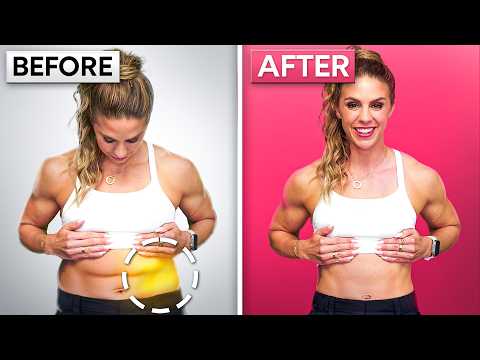
Visible muscle needs four things working together, Nikkiey explains: real tension on the muscle, enough calories and protein, recovery and progressive overload. Toned is simply developed muscle plus body fat low enough for it to show. She adds that lifting is the easy part for most women; nutrition is usually where definition stalls.
Eat enough to build. Nikkiey uses 0.7 to 1 gram of protein per pound of body weight, leaning higher as you age, and goal weight if you have a lot to lose. She aims for about 25 to 30 grams per meal. Maggie Topham puts most women over 40 who lift three to four days a week at 1,700 to 2,200 calories, not 1,200 or 1,400, and Nikkiey calls carbs key for fueling hard workouts.
Muscle grows during rest, not during the workout. Nikkiey explains that adding a sixth or seventh session won't speed things up and can raise your risk of burnout and injury. Sleep seven to eight hours and walk on your off days.
Then give it time. Nikkiey says energy, mood, sleep and strength improve first, with visible change often starting around weeks four to six and sometimes not until day 90. Bigger results may take six months to two years. The scale may stay flat or even rise, so track photos, measurements, strength and how your clothes fit.
Written from what WarriorBabe's coaches and guests say in the episodes, videos and answers linked above (how we write our guides). For education, not medical advice: talk to your doctor about your own health.
More questions
Will lifting weights make me bulky?
No. Nikkiey explains that building significant muscle as a woman takes years of intentional, progressive heavy training plus eating in a calorie surplus. Lifting three days a week gives you a leaner, more defined, stronger body instead.
Does Pilates build muscle?
Not in any meaningful way past beginner level, according to Nikkiey. She says Pilates is great for mobility, flexibility and balance and can help maintain muscle, but building new muscle takes progressive overload with dumbbells and barbells.
Are classes like F45 or Orangetheory enough to build muscle?
Not on their own. Nikkiey explains that everyone in the room does the same workout, so these classes don't prioritize muscle growth the way a progressive program does. Keep them if you love them, at about 20% of your training.
Does being sore mean I had a good workout?
No. Nikkiey says soreness mostly means the stimulus was new. A good workout is one where the last few reps of each set are challenging and, over weeks, you add reps, sets or weight.
How do I tone my arms after 40?
Nikkiey explains that bat wings combine upper-arm fat, lost triceps muscle and reduced skin elasticity, so nutrition comes first and challenging strength training shapes the arm. She recommends training arms two to three times a week within a full-body or upper-body plan, with no separate arm day needed.
Will I lose muscle if I take a week off?
No. Nikkiey explains that meaningful detraining doesn't begin until roughly two to four weeks of complete inactivity, and even then the loss is slow. You might feel a little sluggish for a few days, but strength returns quickly.
Is it too late to start lifting weights after menopause?
No. Nikkiey Stott and her guests say women in their 60s and 70s can still gain measurable muscle on a properly structured program. You phase it in from where you are, with more intention, protein and recovery.
Should I lift weights on an empty stomach?
Nikkiey advises against fasted lifting, though she considers fasted cardio okay. She explains that without fuel from carbs your body can tap into muscle for energy, and low blood sugar can leave you lightheaded mid-workout.