

From 2 episodes
How do I stop tracking macros without regaining weight?
Answered by Nikkiey Stott and her guests · Updated
The short answer
Ease off gradually rather than quitting all at once. Nikkiey suggests tracking your core meals while leaving one meal, usually dinner, flexible, then swapping one structured meal a week, staying structured about 80% of the time, keeping protein the priority, and returning to tracking for a week whenever you feel off.
Hear Nikkiey answer it
Tap play to start right where it's answered. It keeps playing while you browse.
Nikkiey on tracking core meals, leaving dinner flexible, and learning from overeating
Plays from 17:25 · Ep. 271: Can You Intuitively Eat Without Tracking Macros First?
Why your body can self-regulate after years of tracking, and keeping protein first
Plays from 29:19 · Ep. 194: How to Stop Tracking Macros and Eat Intuitively
Swapping one structured meal a week and staying structured 80% of the time
Plays from 26:00 · Ep. 271: Can You Intuitively Eat Without Tracking Macros First?
Coming back to tracking for a week as a refresher, and reading your plate by eye
Plays from 17:33 · Ep. 194: How to Stop Tracking Macros and Eat Intuitively
The full answer
On Ep. 271, Nikkiey explains that after a decade of planning and tracking, letting go meant testing herself. She tracked breakfast, lunch and maybe a snack, and left dinner flexible. She is honest that she overate at dinner, then had a big dessert, many times. Her point is that those moments are where you learn, not proof that you are a failure who needs to go back to full control. Each one teaches you what to do differently next time, and that is how she loosened structure without relying on guesswork.
She recommends a weekly review: what worked, what felt off, whether you ate to hunger or to emotion. Those honest reflections, she says, train your intuition. Once that foundation is in place (she describes it as roughly a year of this work), swap out one structured meal a week and let hunger cues guide it instead of macros. She still follows structure about 80% of the time and uses the other 20% to practice food freedom.
On Ep. 194, Nikkiey addresses the two big fears. On overeating: after years of tracking, your body is likely good at self-regulation, and the fear usually comes from not trusting its signals. When you tune in, you notice when you have had enough, and it balances out. On under-eating: she admits some days she ate only around 1,200 calories, which is why she keeps protein-rich meals at the center. Protein keeps her full, and if she is hungry 30 minutes after a meal, she adds more protein.
Tracking also stays in the toolkit. Nikkiey describes being intuitive 80 to 90% of the time and occasionally coming back to tracking for a week as a refresher on how much she actually needs. That is not failure. It is how you keep the skills you built.
From Nikkiey Stott and WarriorBabe's coaching. For education, not medical advice: talk to your doctor about your own health.
Women also ask
More questions →
Macros & Macro Tracking
How long should I track macros before switching to intuitive eating?
Nikkiey's answer is at least a year of consistent tracking, and often longer. Across episodes she gives ranges from one to three years, and her own journey took six to ten years. The finish line isn't a date. You keep tracking until you can eyeball a plate and estimate its protein, carbs and fat without weighing.
Read the answer →
Macros & Macro Tracking
What is intuitive eating?
Intuitive eating means eating by your body's hunger and fullness cues instead of strict rules or logging every meal. Nikkiey says it isn't eating whenever you feel like it. It's an informed, respectful relationship with food: you can roughly tally your day, prioritize protein, stop when satisfied, and trust your signals because you've done the work.
Read the answer →

Macros & Macro Tracking
Do I have to track macros forever?
No. Nikkiey is clear that you don't have to track macros for the rest of your life. Tracking and weighing your food is a temporary, educational phase that teaches you what real portions of protein, carbs and fat look like. Do it consistently for a couple of years and it becomes second nature.
Read the answer →
Watch or listen in full
More on this topic →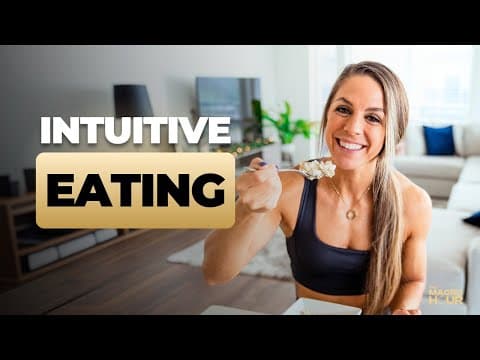 35 min
How to Stop Tracking Macros and Eat Intuitively
Episode 194 · Sep 30, 2024
 33 min
Can You Intuitively Eat Without Tracking Macros First?
Episode 271 · Jun 27, 2025