

From 3 videos
How do I fix a strength imbalance between my left and right side?
Answered by Nikkiey Stott and her guests · Updated
The short answer
Train each side on its own. Nikkiey's fix is unilateral work. Start with your weaker side, using a weight it can handle that still challenges it. Then do the same weight and reps on your stronger side. The strong side will find it easy, and that's the point. It gives the weaker side room to catch up.
Hear Nikkiey answer it
Tap play to start right where it's answered. It keeps playing while you browse.
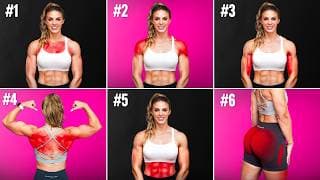
Nikkiey's weaker-side-first, same-weight structure for fixing imbalances
Plays from 11:44 · Video: How to Structure a Full Body Workout in Menopause
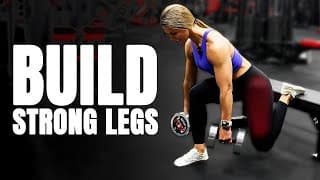
Why single-leg work and the right weight help a weaker hamstring catch up
Plays from 12:27 · Video: 30-Minute Gym Leg Workout for Women Over 40 and Menopause
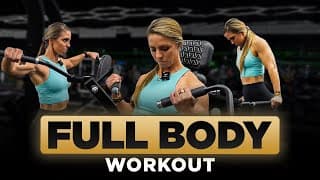
Keep the weight the same on both sides so the weaker leg can catch up
Plays from 15:12 · Video: Machine Leg Day Workout With Upper Body Supersets
Why your dominant side takes over in squats and leg presses
Plays from 9:42 · Video: How to Structure a Full Body Workout in Menopause
The full answer
Nikkiey explains that your dominant side does more work in everyday life and in the gym. In bilateral lifts like a barbell squat or a regular leg press, your stronger side naturally takes over, and over time the imbalance gets worse. She has lived this. After two ACL surgeries her left quad atrophied, and her right side started compensating until one quad looked shaped and defined and the other looked smaller and flatter. That's not a discipline problem. It's how the work gets split.
The structure she follows every time she trains:
- Start with the weaker side, when you have the most energy and focus.
- Pick a weight that side can complete that still challenges it.
- Match the same weight and reps on the stronger side. Don't load it heavier.
- Stay consistent so the weaker side can catch up.
In one leg workout Nikkiey also mentions switching which leg goes first, but her stated default is weaker side first. Either way, the weight stays the same on both sides.
Good unilateral options she lists are single-leg lunges, split squats, step-ups, single-arm rows, single-leg extensions and single-leg hamstring curls. Machines where you can work one leg at a time are useful because the other leg can't quietly overcompensate. Focus on the mind-muscle connection and clean form so the stronger side doesn't sneak back in. Nikkiey is honest that it took her a lot of time, patience and consistency to bring her legs back into balance. If your imbalance comes from an injury, she describes single-limb work as how she rebuilt hers, but check with your doctor before loading an injured area.
From Nikkiey Stott and WarriorBabe's coaching. For education, not medical advice: talk to your doctor about your own health.
Women also ask
More questions →
Strength Training for Women
Are weight machines as good as free weights for building muscle?
For building muscle, yes. Nikkiey says machines are not cheating and are one of the best tools for feeling your muscles work. She built most of her muscle in her first two years barely touching barbells. She still recommends a blend, because free weights build coordination, balance and core control that machines don't.
Read the answer →
Strength Training for Women
Are full body workouts better than body part splits for women over 40?
For most women over 40, Nikkiey Stott recommends full body workouts over body part splits. One exercise per muscle group, four to five days a week, spreads the work out so you recover between sessions and stay consistent. She's clear that bro splits aren't bad, though. Progressive overload is what matters most.
Read the answer →
Strength Training for Women
What exercises should a full body workout for women over 40 include?
Nikkiey's full body workouts draw from joint-friendly staples: Smith machine or pendulum squats, hip thrusts, Romanian deadlifts, seated leg curls, rows, lat pulldowns or assisted pull-ups, incline presses, cable lateral raises, overhead tricep extensions and curls. Each session you pick one per muscle group, usually six or seven exercises, and push each one hard.
Read the answer →
Watch or listen in full
More on this topic →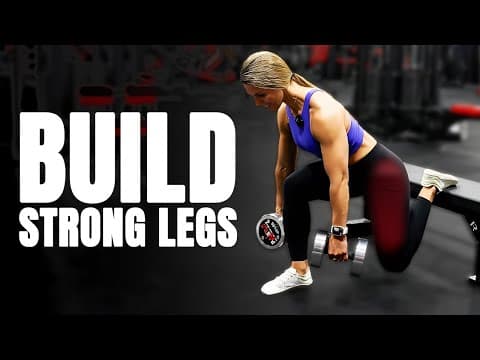 30 min
30-Minute Gym Leg Workout for Women Over 40 and Menopause
Video · Jun 3, 2024
 17 min
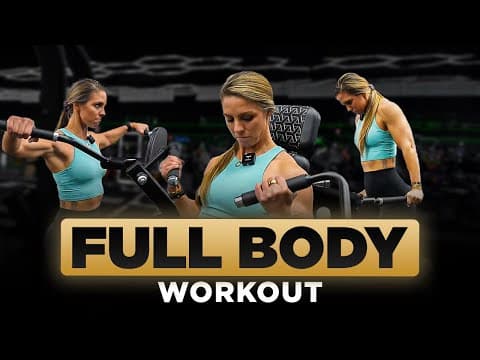
How to Structure a Full Body Workout in Menopause
Video · Apr 25, 2026
 34 min
Machine Leg Day Workout With Upper Body Supersets
Video · Feb 11, 2024