

From 1 video
How should I balance protein, carbs and fat at each meal?
Answered by Maggie Topham · Updated
The short answer
Maggie splits each meal into roughly 35 to 40 grams of protein, about the same amount of carbohydrates, and around 15 to 20 grams of fat. She says this balance keeps her satisfied, gives her the energy to push hard in her workouts and keeps her blood sugar regulated.
Hear it answered
Tap play to start right where it's answered. It keeps playing while you browse.
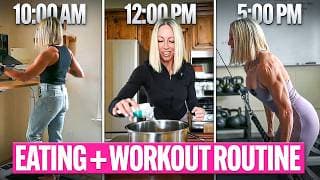
Maggie gives her per-meal split of protein, carbs and fat while making chicken wraps
Plays from 8:06 · Video: Full Day of Eating at 52 in Menopause: Meals and Workout
Why she says a balanced breakfast keeps her full, energized and her blood sugar steady
Plays from 2:56 · Video: Full Day of Eating at 52 in Menopause: Meals and Workout
Her egg white trick for more protein and food volume with fewer calories
Plays from 1:56 · Video: Full Day of Eating at 52 in Menopause: Meals and Workout
The full answer
In her full day of eating at 52, in menopause, Maggie treats that split as a template she builds every meal around, not a one-off. She starts with protein and looks for ways to get more of it without a lot of extra calories. Her trick is using mostly egg whites with one whole egg, which gives her a bigger volume of food for fewer calories.
Here is how her breakfast came together:
- One whole egg plus 100 grams of egg whites, seasoned with Italian seasoning, salt and pepper and cooked in a ramekin in the microwave
- About 40 grams of oatmeal for carbs
- Five or six grams of sugar-free syrup, because she likes a little sweet
- About 40 grams of blueberries
She calls the result a perfect balance of protein, fat and carbs, and says it's what lets her feel satisfied and train hard afterward.
Lunch follows the same pattern. She batch-cooks chicken in an Instant Pot with salsa and spices, then shreds it so she can weigh it for the next seven or eight meals. Her chicken wraps use about 100 grams of that chicken with Greek yogurt, peppers, lettuce and a little cheese for some good fats. Maggie's point is that prepping and measuring a lean protein ahead of time makes it easy to hit your numbers at every meal, and that you never have to sacrifice flavor to do it.
These are the numbers Maggie uses for her own meals. The episode doesn't walk through how to set targets for your body, so treat her split as a practical example of what a balanced plate looks like. If you've been eating in ways that leave you hungry or flat in your workouts, it may be the structure of your meals, not you.
From WarriorBabe's coaches (how we write our answers). For education, not medical advice: talk to your doctor about your own health.
Women also ask
More on Macros & Macro Tracking →
Macros & Macro Tracking
Is tracking macros restrictive?
No, according to Nikkiey Stott. With macros you can eat any food you want, including chocolate, bagels and dessert, in moderation and balance. What feels restrictive is usually old rules about 'bad' foods, or having to stop eating a whole bag of something. She sees tracking as a skill that leads to food freedom.
Read the answer →
Macros & Macro Tracking
Should I only track protein when I first start counting macros?
Mostly, yes. Nikkiey suggests focusing only on hitting your protein number for the first couple of weeks, then gradually adding carbs and fats to what you track. That doesn't mean eating only protein. Keep eating carbs and fats from good-quality food, you just aren't putting much emphasis on their numbers yet.
Read the answer →
Macros & Macro Tracking
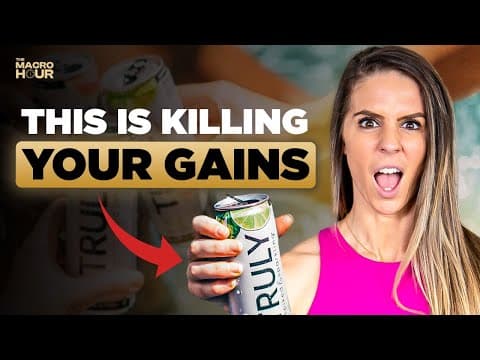
How do I track alcohol in my macros?
Track alcohol by assigning the drink's calories to carbs or fat. On The WarriorBabe Show, Nikkiey divides the total calories by 4 to log them as carbs, or by 9 to log them as fat. A 100-calorie can of Truly becomes about 25 grams of carbs or about 11 grams of fat, even though its label lists only 2 grams of carbs.
Read the answer →

Macros & Macro Tracking
How many meals a day should I eat when tracking macros?
Nikkiey Stott's guidance is to eat at least five meals a day while tracking macros, and that count includes your pre- and post-workout meals. Eating fewer meals is fine as long as you still hit your macros and spread your protein across every meal, so cravings don't take over the rest of your day.
Read the answer →

Macros & Macro Tracking
What is intuitive eating?
Intuitive eating means eating by your body's hunger and fullness cues instead of strict rules or logging every meal. Nikkiey says it isn't eating whenever you feel like it. It's an informed, respectful relationship with food: you can roughly tally your day, prioritize protein, stop when satisfied, and trust your signals because you've done the work.
Read the answer →

Macros & Macro Tracking
Do I have to track macros forever?
No. Nikkiey is clear that you don't have to track macros for the rest of your life. Tracking and weighing your food is a temporary, educational phase that teaches you what real portions of protein, carbs and fat look like. Do it consistently for a couple of years and it becomes second nature.
Read the answer →
Watch or listen in full
More on this topic →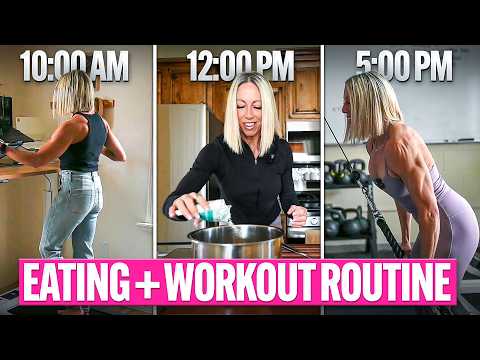 14 min
Full Day of Eating at 52 in Menopause: Meals and Workout
Video · Apr 4, 2026