

From 1 episode
How many sets per muscle group per week do I need to build muscle?
Answered by Nikkiey Stott · Updated
The short answer
Nikkiey cites research showing 10 to 20 sets per muscle group per week produces optimal muscle growth for most people. Training three to four times a week, that works out to roughly three to six working sets per muscle group per session, which fits in a focused 45- to 60-minute workout. You don't need two-hour sessions.
Hear it answered
Tap play to start right where it's answered. It keeps playing while you browse.
Nikkiey on the research behind 10 to 20 sets per muscle group per week
Plays from 3:45 · Ep. 397: How Long Should Workouts Be for Women Over 40?
How weekly sets break down into three to four sessions a week
Plays from 4:00 · Ep. 397: How Long Should Workouts Be for Women Over 40?
Why four to seven key movements beat a 12-exercise session
Plays from 12:29 · Ep. 397: How Long Should Workouts Be for Women Over 40?
What the working sets look like inside a focused 45-minute workout
Plays from 14:02 · Ep. 397: How Long Should Workouts Be for Women Over 40?
The full answer
On Ep. 397 of The WarriorBabe Show, Nikkiey explains that this is one of the areas where the data is clear, even though the fitness industry keeps pushing the idea that women need to live in the gym. The research she points to shows that most of the stimulus for meaningful muscle growth can come from a well-structured 45 to 60 minutes of focused, intentional, progressive work. Not 90 minutes, and not two or three hours.
The math behind that is simple. If you train three to four times a week, which Nikkiey says is all most women need, hitting 10 to 20 weekly sets means three to six working sets per muscle group each session. She estimates three to five minutes per set including rest, so a full body, upper, or lower session covers that volume comfortably in under an hour.
Volume only works when it goes to the right movements. Nikkiey says growth comes from adequate volume on exercises that matter: compound lifts for the larger muscle groups, with isolation work for the smaller ones. If your session has 12 or 15 exercises, she says half are probably redundant. Four to a maximum of seven key movements, done with full intention and progressive overload, will outperform a wandering session every time.
Here is what she describes a focused 45-minute session looking like:
- The first five to eight minutes: cardio to raise your heart rate, then lighter sets of your first exercise to prime the joints and movement pattern
- Roughly minutes eight to 40: your working sets, five to seven exercises at three to four working sets each
If you have been grinding through long workouts without the results to show for it, the problem was likely the structure, not your effort. Cut the junk, add intention, and your sessions get shorter while your results get better.
From WarriorBabe's coaches (how we write our answers). For education, not medical advice: talk to your doctor about your own health.
Women also ask
More on Building Muscle After 40 →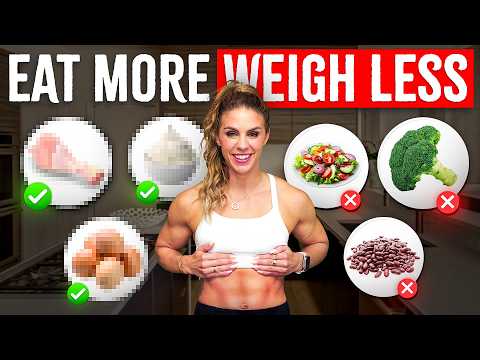
Building Muscle After 40
Do women over 40 need carbs to build muscle?
Yes. Nikkiey Stott says carbohydrates are a key macronutrient for building and repairing muscle and fueling hard workouts. Cutting them too low doesn't burn more fat. It drains your energy, hurts your recovery and makes your training suffer. She says keto and low-carb plans tend to bring short-lived results before the weight comes back.
Read the answer →
Building Muscle After 40
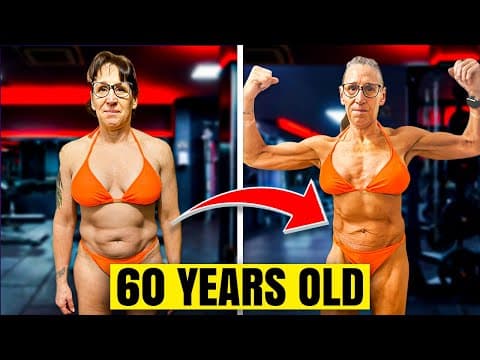
Can you build muscle in your 60s?
Yes, you can build muscle in your 60s. On The WarriorBabe Show, Nikkiey shares clients who did it. Cheryl added muscle and lost fat between 57 and 60, Sandra hit 90-pound lunges at 61, and Michelle got stronger at 67. Nikkiey says it took hard work, consistency and patience, with no special circumstances.
Read the answer →
Building Muscle After 40
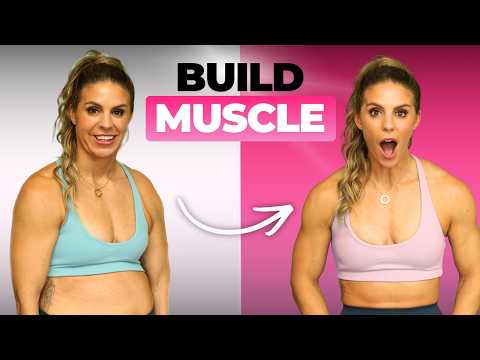
What is sarcopenia?
Sarcopenia is the age-related loss of muscle mass. On Ep. 337, Nikkiey explains it starts in your 30s, not your 60s, then accelerates in your 40s and again in your 50s and beyond. Left unchecked, she says women lose 3-8% of muscle per decade from age 30, and faster after 40.
Read the answer →
Building Muscle After 40
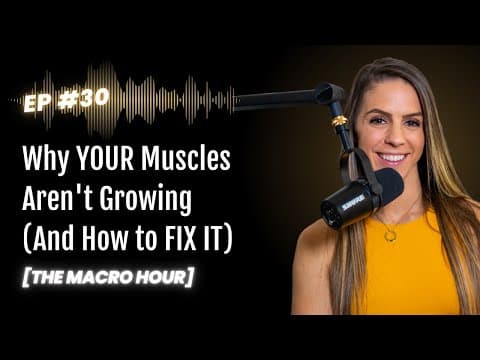
Why am I not building muscle even though I work out?
Most often, your training isn't challenging your muscles enough or your eating isn't fueling them. Nikkiey points to switching workouts constantly, going through the motions without adding weight or intensity, and under-eating, plus poor sleep, stress and recovery. Her fix: run one program for six to eight weeks and make the last three reps of every set hard.
Read the answer →
Building Muscle After 40
How long should a muscle-building phase last?
Nikkiey recommends three to six months for a muscle-building phase. Three months suits women who already carry a decent amount of muscle. If you need to build muscle, plan on six months or more, and she sometimes recommends a full year, because one solid build can change your body composition more than years of cycling between cutting and maintenance.
Read the answer →
Building Muscle After 40
Why does the scale go up during a muscle-building phase?
The scale goes up during a muscle-building phase because you're eating more food, and food has weight. The extra carbs are stored as glycogen, which holds about three to four grams of water per gram. You're also adding muscle, and Nikkiey says a small amount of fat comes with it. That is normal and expected.
Read the answer →
Watch or listen in full
More on this topic → 20 min
How Long Should Workouts Be for Women Over 40?
Episode 397 · Sep 18, 2026