

From 2 videos
What should I do on rest days from lifting?
Answered by Nikkiey Stott and her guests · Updated
The short answer
Walk. Nikkiey's answer for rest days is to hit your step goals, not to sit on the couch and not to sneak in extra workouts. The walking isn't about burning calories, which she says is minimal. It's for your mood, sleep and insulin sensitivity. She calls walking the best recovery tool you have.
Hear Nikkiey answer it
Tap play to start right where it's answered. It keeps playing while you browse.
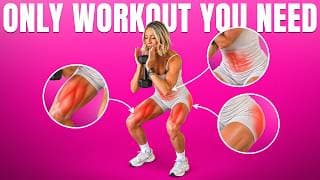
Nikkiey on why walking is the best recovery tool on days you don't lift
Plays from 11:16 · Video: At-Home Dumbbell Workout After Menopause: 4 Key Moves

Why recovery equals movement, not a day of Netflix and chilling
Plays from 6:59 · Video: Full Body Workout Routine for Women Over 40: 4-5 Days
Why muscles grow during recovery and skipping rest days slows progress
Plays from 10:51 · Video: At-Home Dumbbell Workout After Menopause: 4 Key Moves
Why recovery is slower after 40 and your training has to adapt
Plays from 2:37 · Video: Full Body Workout Routine for Women Over 40: 4-5 Days
The full answer
Nikkiey explains that rest days are part of the plan, not a break from it. In her at-home dumbbell routine, she says to rest at least a day between lifting sessions because your muscles don't grow during the workout. They grow during recovery. Skipping rest days doesn't speed results up. She says it actually slows them down.
Rest doesn't mean doing nothing, though. On her full-body routine video, she puts it simply: focus on step goals on rest days, because recovery equals movement, not just Netflix and chilling. She's clear that the walking isn't about adding a calorie burn. What it does help, she says, is:
- your mood
- your sleep
- your insulin sensitivity
This matters more after 40. Nikkiey points out that with hormones fluctuating, stress stacking up and recovery slower than it used to be, training like you're 25 leads to burnout, soreness, injury and inconsistency. Being so wrecked that you skip workouts isn't a discipline problem. It's a program that wasn't built for you. She also says soreness doesn't equal success. If you're crawling up the stairs, that's a sign your recovery is shot.
So the rest day is where the lifting pays off. Lift with intention on training days, then walk on the days in between and let your body do its rebuilding.
From Nikkiey Stott and WarriorBabe's coaching. For education, not medical advice: talk to your doctor about your own health.
Women also ask
More questions →
Sleep, Recovery & Lifestyle
How can I improve my sleep?
Start with the basics Nikkiey returns to again and again: cut screens and bright light before bed, keep your room cool and pitch black with the phone out, and go to bed and wake at the same times. Then try Dr. Stephen Cabral's 3-2-1 rule: no food three hours before bed, no liquids two hours, no screens one hour.
Read the answer →

Sleep, Recovery & Lifestyle
Does alcohol stop you from building muscle?
According to Nikkiey, alcohol works directly against building muscle. It slows muscle protein synthesis, the repair process after strength training, and increases muscle breakdown, so tissue can be broken down faster than it's rebuilt. The result is slower recovery, harder muscle gain and a less toned look, even when you're doing everything else right.
Read the answer →

Sleep, Recovery & Lifestyle
How do I recover from muscle soreness faster?
Recover faster by fixing your recovery inputs, not by pushing harder. Nikkiey points to sleep, eating enough (especially protein), and hydration, plus not hammering the same muscles over and over. She recommends spreading leg work across full-body sessions instead of one brutal leg day, and treating soreness past 72 hours as a sign to reassess.
Read the answer →
Watch or listen in full
More on this topic →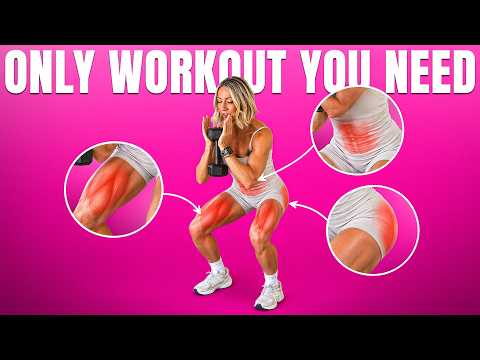 14 min
At-Home Dumbbell Workout After Menopause: 4 Key Moves
Video · Sep 16, 2026
 8 min
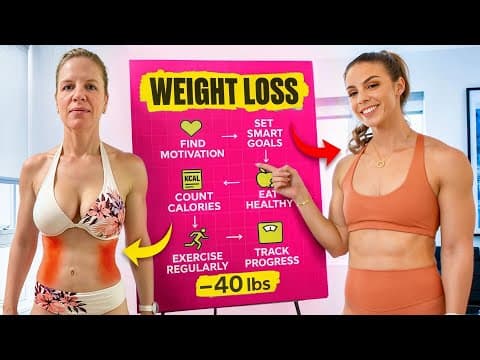
Full Body Workout Routine for Women Over 40: 4-5 Days
Video · Jul 3, 2025