

From 1 video
How long should a muscle-building phase last?
Answered by Nikkiey Stott and her guests · Updated
The short answer
Nikkiey recommends three to six months for a muscle-building phase. Three months suits women who already carry a decent amount of muscle. If you need to build muscle, plan on six months or more, and she sometimes recommends a full year, because one solid build can change your body composition more than years of cycling between cutting and maintenance.
Hear Nikkiey answer it
Tap play to start right where it's answered. It keeps playing while you browse.
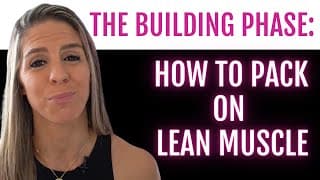
Nikkiey gives her three-to-six-month range and who can keep it shorter
Plays from 3:20 · Video: Muscle Building Phase for Women: Who It's For and How Long
Why she sometimes recommends a full year and how it beats endless cut cycles
Plays from 3:50 · Video: Muscle Building Phase for Women: Who It's For and How Long
A 58-year-old client's nine-month build at 3,000 calories, then her cut
Plays from 2:13 · Video: Muscle Building Phase for Women: Who It's For and How Long
Who shouldn't start a build yet and what it takes mentally
Plays from 1:02 · Video: Muscle Building Phase for Women: Who It's For and How Long
The full answer
Nikkiey ties the length of a build to where you're starting. If you already have a good base of muscle and want to add a little more, you can stay at the shorter end. If building muscle is what will actually change your body composition, you need more time. She also says the result depends heavily on your consistency, so the calendar matters less than how well you stick to the plan.
Her case for a longer build is practical. She explains that a year in a build can save you years of going from maintenance to a cut and back again, only to see your body composition finally change after three to five years. One of her WarriorBabe VIP clients, a 58-year-old woman, stayed in a build for over nine months. She gained upwards of 30 pounds, built muscle, and taught her metabolism to handle eating 3,000 calories. When she moved into a cut, she was still losing weight at around 2,000 calories. She dropped upwards of 20 pounds while keeping the muscle she had built.
Nikkiey is honest that a build is uncomfortable. You'll gain weight, look a little softer and eat a lot of food. She went through multiple builds herself, was about 25 pounds over her usual weight and had clothes that stopped fitting, and she calls it one of the hardest parts of her journey. It's temporary, and it serves the long-term body you want.
She also says a build isn't for everyone. If you need to lose 30 pounds or more, she advises getting through that weight loss first and then thinking about building and recomping.
From Nikkiey Stott and WarriorBabe's coaching. For education, not medical advice: talk to your doctor about your own health.
Women also ask
More questions →
Building Muscle After 40
Why does the scale go up during a muscle-building phase?
The scale goes up during a muscle-building phase because you're eating more food, and food has weight. The extra carbs are stored as glycogen, which holds about three to four grams of water per gram. You're also adding muscle, and Nikkiey says a small amount of fat comes with it. That is normal and expected.
Read the answer →

Building Muscle After 40
How do I go from a building phase into a fat loss phase?
Nikkiey says to lower calories slowly rather than all at once, and to keep protein the same or nudge it up so you protect the muscle you just built. Track progress with photos instead of the scale. Expect your strength to dip a little, and expect some hunger. A small protein increase often helps.
Read the answer →
Building Muscle After 40
Do women need to bulk to build muscle?
No. Nikkiey says women do not have to bulk to build muscle. You can build muscle while losing body fat at maintenance, as long as you eat enough. A building phase, her preferred term for bulking, just gets you there faster, and it is not for women who still have significant weight to lose.
Read the answer →
Watch or listen in full
More on this topic →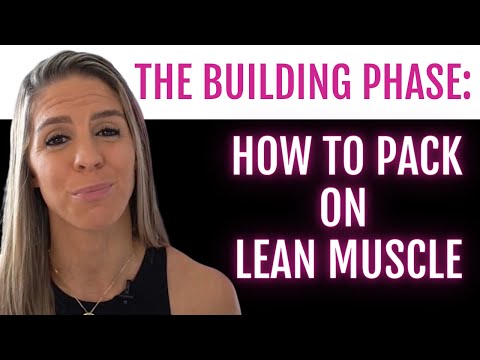 5 min
Muscle Building Phase for Women: Who It's For and How Long
Video · Feb 1, 2022