

From 2 videos
Do women over 40 need carbs to build muscle?
Answered by Nikkiey Stott and her guests · Updated
The short answer
Yes. Nikkiey Stott says carbohydrates are a key macronutrient for building and repairing muscle and fueling hard workouts. Cutting them too low doesn't burn more fat. It drains your energy, hurts your recovery and makes your training suffer. She says keto and low-carb plans tend to bring short-lived results before the weight comes back.
Hear Nikkiey answer it
Tap play to start right where it's answered. It keeps playing while you browse.
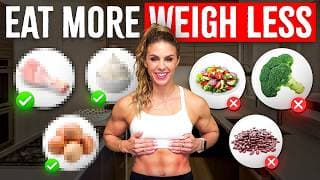
Nikkiey on why your body needs carbs to build and repair muscle after 40
Plays from 6:59 · Video: 8 Foods to Build Lean Muscle After 40: A Grocery List

Why keto and low-carb plans give short-lived results and stall muscle building
Plays from 16:03 · Video: How to Lose Fat Without Losing Muscle: 3 Key Rules
The carbs Nikkiey recommends, from cream of rice to sweet potatoes
Plays from 7:08 · Video: 8 Foods to Build Lean Muscle After 40: A Grocery List
Nikkiey's summary: protein, no deep deficit, and make carbs your friend
Plays from 18:29 · Video: How to Lose Fat Without Losing Muscle: 3 Key Rules
The full answer
Nikkiey has coached thousands of women, and she says many arrive having tried keto or low-carb plans. The pattern she sees is the same: short-lived success, then the weight comes back and you're starting over. Her point is that restricting carbs means restricting the fuel your body uses to build and recover muscle, and building muscle is what gets you toned. If those plans didn't stick, it's the plan, not you. She asks you to see carbs as fuel for changing your body composition, not as the enemy.
Age isn't the barrier either. Nikkiey shares the example of Cheryl, a 57-year-old VIP client who came in eating 270 grams of carbs and lost weight. To maintain, Nikkiey raised her to 300 grams, and when she kept maintaining well, raised her again to 330. Her takeaway: your metabolism responds when you give your body the food it needs, especially when the goal is building muscle.
On which carbs to choose, Nikkiey's grocery list episode offers a practical approach:
She notes that whole grains can feel heavy and cause bloating for many women over 40, but that's a reason to swap the source, not to cut carbs entirely.
- White rice or cream of rice: gentle, easy to digest, fast fuel. She suggests pairing it with egg whites or another protein.
- Jasmine rice, sushi rice and rice cakes digest quickly and help replenish energy so muscles can recover and grow.
- Sweet potatoes for slower-digesting carbs outside your workout window.
Carbs are one of three rules Nikkiey gives for losing fat without losing muscle. The other two are hitting your protein numbers and not diving into a deep calorie deficit. As she puts it, less food will not get you toned.
From Nikkiey Stott and WarriorBabe's coaching. For education, not medical advice: talk to your doctor about your own health.
Women also ask
More questions →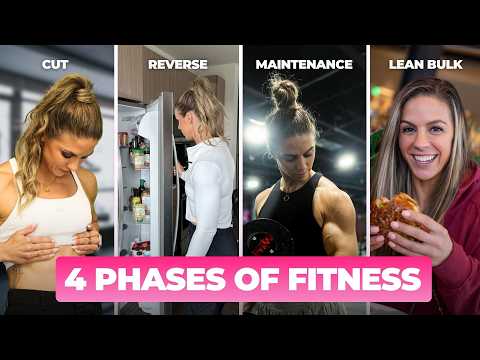
Building Muscle After 40
Why does the scale go up during a muscle-building phase?
The scale goes up during a muscle-building phase because you're eating more food, and food has weight. The extra carbs are stored as glycogen, which holds about three to four grams of water per gram. You're also adding muscle, and Nikkiey says a small amount of fat comes with it. That is normal and expected.
Read the answer →
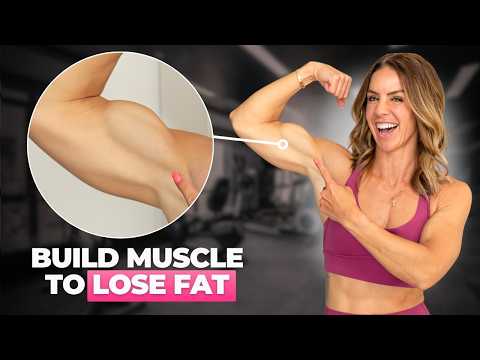
Building Muscle After 40
Why is muscle so important for women over 40?
Muscle matters after 40 because it drives your metabolism and protects your long-term health. Nikkiey explains that women lose about 3 to 8 percent of muscle per decade after 30, and less muscle means a slower metabolism. She calls muscle the engine of your metabolism and, borrowing Dr. Gabrielle Lyon's phrase, the organ of longevity.
Read the answer →

Building Muscle After 40
Can I build muscle in a calorie deficit?
Yes, you can build some muscle in a calorie deficit, especially if you're newer to strength training or have more fat to lose, but not as much as at maintenance or in a surplus. Nikkiey explains that a modest deficit, enough protein and a real lifting program work. Crash-level calories like 1,200 don't.
Read the answer →
Watch or listen in full
More on this topic → 12 min
8 Foods to Build Lean Muscle After 40: A Grocery List
Video · Oct 25, 2025
 20 min
How to Lose Fat Without Losing Muscle: 3 Key Rules
Video · Jul 19, 2020