

The short answer
Nikkiey says it can. On Ep. 179 she explains that years of losing and regaining the same weight push cortisol up, and elevated cortisol leads to more fat storage, especially around the abdomen. Many women in their 40s and 50s blame menopause for that belly fat, when yo-yo dieting can be one factor.
Hear it answered
Tap play to start right where it's answered. It keeps playing while you browse.
Nikkiey on how years of yo-yo dieting drive up cortisol and fat storage
Plays from 10:36 · Ep. 179: Why Yo-Yo Dieting Keeps You Stuck After 40
Why belly fat blamed on menopause may be elevated cortisol
Plays from 11:12 · Ep. 179: Why Yo-Yo Dieting Keeps You Stuck After 40
How repeated loss and regain affects thyroid, insulin and cortisol
Plays from 8:59 · Ep. 179: Why Yo-Yo Dieting Keeps You Stuck After 40
Why cortisol is the marker most often elevated in her clients' tests
Plays from 10:24 · Ep. 179: Why Yo-Yo Dieting Keeps You Stuck After 40
The full answer
On Ep. 179, Nikkiey explains that the problem isn't one diet. It's the repeated cycle of losing weight and gaining it back, which she says disrupts your hormonal balance in several ways:
On top of that, she points out that when you cut calories hard, your body adapts by slowing your metabolism to conserve energy.
- Your thyroid, which regulates metabolism, can become less efficient, leading to a slower metabolic rate.
- Insulin sensitivity decreases, which she links to weight gain and a higher risk of type 2 diabetes.
- Stress hormones like cortisol rise.
Cortisol is the piece she keeps coming back to. Through WarriorBabe's partnership with Equal Life, every woman gets stress, mood and metabolism testing on the way in, covering thyroid, A1C, sex hormones and cortisol. Nikkiey says that of all those markers, cortisol is the one that most often comes back elevated. Everyday life stress plays a part, but she says years on the dieting roller coaster do too. When cortisol is elevated, she explains, fat storage increases and tends to settle around the abdomen, where it becomes really hard to lose.
She adds some nuance. Elevated cortisol "could be one of a couple of different things," and yo-yo dieting is one factor, not the only explanation. Her point is that many women label sudden belly fat as menopause without considering what decades of restrict-and-regain may have done. If you want to know where your own cortisol, thyroid or blood sugar actually stand, that's a conversation to have with your doctor. Either way, if you've lost and regained the same weight many times, the belly fat isn't a sign you failed. The cycle itself is what keeps you stuck, not a lack of effort.
From WarriorBabe's coaches (how we write our answers). For education, not medical advice: talk to your doctor about your own health.
Women also ask
More on Diets, Fasting & Diet Culture →
Diets, Fasting & Diet Culture
Why does the weight come back after keto?
Most of the fast weight you lose on keto is water, not fat. Nikkiey explains that carbs hold on to water in your body, so cutting them drops the scale quickly. The moment you eat carbs again, that water returns. Because you can't avoid carbs forever, the weight comes back.
Read the answer →
Diets, Fasting & Diet Culture
Should I follow a bodybuilding prep diet to get lean?
Probably not, unless you actually want to compete. On Ep. 35, Paula Ciarniello explains that a contest prep diet is not a lifestyle. It takes everyday habits to an extreme most women don't want to live with. Tracking food, hitting calories and hitting protein can get you lean in a way you can enjoy, without the prep extremes.
Read the answer →

Diets, Fasting & Diet Culture
Do cheat meals help your metabolism?
Nikkiey says they can, when you've been in a calorie deficit for a while. She explains that long stretches of restriction lower leptin, which she describes as regulating hunger and metabolism, and a planned cheat meal can temporarily boost it. The extra carbs also refill glycogen, giving you more energy for strength training.
Read the answer →
Diets, Fasting & Diet Culture
Can you build muscle while intermittent fasting?
Yes, but it's harder, and Nikkiey doesn't think it's the best route. She explains that intermittent fasting can work for muscle if you hit your calories, prioritize protein, keep your fast to roughly the overnight hours, and train inside your eating window. Long fasts without enough protein work against muscle growth.
Read the answer →
Diets, Fasting & Diet Culture
Is OMAD a good way for women over 40 to lose weight?
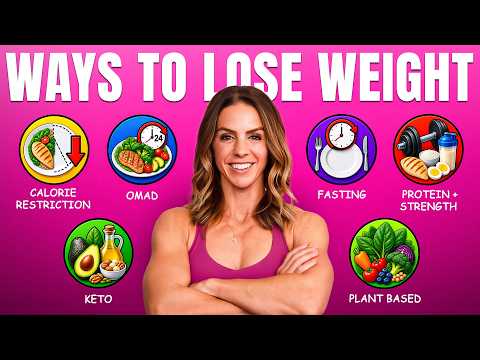
One WarriorBabe coach says no. In her ranking of six popular weight loss methods for women over 40, OMAD came last, scoring 7 out of 30. One meal gives you one shot at muscle protein synthesis instead of three or four, 20-plus hours without food is a big cortisol trigger, and almost no one can sustain it.
Read the answer →

Diets, Fasting & Diet Culture
Why am I not losing weight on 1,200 calories?
Eating 1,200 calories is often too little, not too much. Dr. Stacy Sims explains it sits around an average resting metabolic rate, so your body treats it as a threat, conserves energy and breaks down lean mass. Long-term dieting also adapts your metabolism down. Before cutting further, check your tracking is accurate.
Read the answer →
Watch or listen in full
More on this topic → 33 min
Why Yo-Yo Dieting Keeps You Stuck After 40
Episode 179 · Aug 9, 2024