

From 1 episode
What are the best exercises for bone health during menopause?
Answered by Nikkiey Stott and her guests · Updated
The short answer
Compound strength exercises are best for bone health during menopause, Nikkiey Stott explains on Ep. 65. That means squats, lunges, deadlifts, chest presses and shoulder presses. Walking, jogging and stair climbing also stress the bones, but strength training should make up most of your exercise, ideally with free weights, barbells or resistance bands.
Hear Nikkiey answer it
Tap play to start right where it's answered. It keeps playing while you browse.
Nikkiey lists the compound lifts she wants in every menopause bone-health plan
Plays from 23:59 · Ep. 65: Strength Training for Strong Bones During Menopause
Why strength training should outrank walking and jogging for building bone
Plays from 21:45 · Ep. 65: Strength Training for Strong Bones During Menopause
Nikkiey on why free weights beat weight machines for women in menopause
Plays from 22:21 · Ep. 65: Strength Training for Strong Bones During Menopause
The full answer
On Ep. 65, Nikkiey explains that walking, jogging and stair climbing still put stress on the bones and stimulate bone remodeling. You just don't need a lot of them. Strength training is the most important part of an exercise routine built for strong bones, so it should be the majority of what you do. Compound movements earn their place because they pull in many muscle groups at once. In her words, that creates an environment that stimulates new bone tissue and muscle growth together.
She also has a clear view on equipment. Many women in their 50s and 60s go straight to the weight machines because they feel safer. Machines are fine for part of your routine, but Nikkiey says you don't get the same resistance you can get from free weights, resistance bands or, over time, a barbell. Free weights also build coordination, ab control and balance. If a barbell feels like a big step, she suggests the Smith machine. She relied on it for her first couple of years of serious strength training, and says it's a solid way to work on form, balance and core engagement while you build the confidence to move to the barbell.
A simple way to put her advice into practice:
- Build sessions around squats, lunges, deadlifts, chest presses and shoulder presses
- Use mostly free weights, bands or barbells, with machines as a smaller share
- Add walking or stair climbing as a supplement, not the main event
- Keep frequency and duration in check; she stresses that less is more
If you've been diagnosed with low bone density or have a medical condition, talk with your doctor about which movements and loads suit you before you start.
From Nikkiey Stott and WarriorBabe's coaching. For education, not medical advice: talk to your doctor about your own health.
Women also ask
More questions →
Menopause & Perimenopause Weight Loss
Do I need to do cardio to lose weight in menopause?
No. Nikkiey says cardio isn't what drives fat loss in menopause, and leaning on it can backfire. She explains that too much cardio spikes cortisol and burns muscle, especially in a calorie deficit. What she recommends instead is strength training as the foundation, plus enough protein, daily walking and proper recovery.
Read the answer →

Menopause & Perimenopause Weight Loss
What are the first signs of perimenopause?
According to guests on The WarriorBabe Show, the first signs usually aren't hot flashes or missed periods. Dr. Jolene Brighten says falling progesterone shows up first as worsening PMS, irritability, breast tenderness and waking at night before your period, sometimes from 35. Hatty McCafferty adds sleep disruption, skin changes, digestive shifts and fatigue.
Read the answer →
Menopause & Perimenopause Weight Loss
Can eating too little make belly fat worse?
Yes, according to Nikkiey. She says chronic under-eating, often 1,100 to 1,300 calories a day, signals famine to your body. That raises cortisol, slows metabolism and makes your body hold on to belly fat. Her fix is eating enough, with protein at every meal, plus strength training and real recovery.
Read the answer →
Watch or listen in full
More on this topic →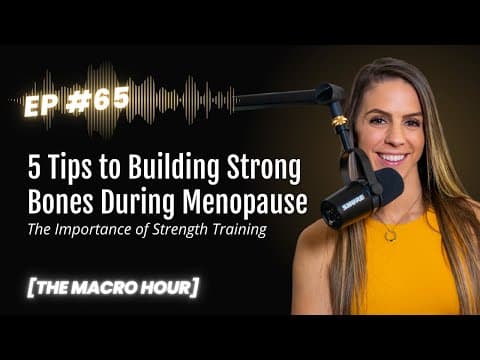 29 min
Strength Training for Strong Bones During Menopause
Episode 65 · Jun 7, 2023