

From 1 episode
How much deep sleep and REM sleep should I get?
Answered by Nikkiey Stott and her guests · Updated
The short answer
On Ep. 196 of The WarriorBabe Show, Nikkiey passes along Dr. Cabral's recommendation: aim for 70 to 90 minutes of deep sleep and two hours or more of REM sleep each night. She treats sleep as a real pillar of fat loss after 40, not an afterthought, because so much recovery happens while you sleep.
Hear Nikkiey answer it
Tap play to start right where it's answered. It keeps playing while you browse.
Nikkiey shares Dr. Cabral's deep sleep and REM targets, and why deep sleep matters
Plays from 20:59 · Ep. 196: How Does Sleep Affect Fat Loss and Muscle After 40?
Nikkiey's own Oura ring deep sleep and REM numbers from one night
Plays from 21:17 · Ep. 196: How Does Sleep Affect Fat Loss and Muscle After 40?
The three, two, one method for better sleep from Dr. Cabral
Plays from 23:43 · Ep. 196: How Does Sleep Affect Fat Loss and Muscle After 40?
The full answer
Nikkiey explains that deep sleep matters because growth hormone is released primarily during sleep, and primarily during deep sleep. She also says sleep has a direct effect on your metabolism, and that being sleep deprived can contribute to weight gain over time, even when your workouts, macros and hydration are on point. If you are doing everything right and still stuck, sleep may be the pillar that is missing. That is a gap in the plan, not a failing on your part.
She tracks her own sleep with an Oura ring and shared one night where she got an hour and 55 minutes of deep sleep and two hours and 45 minutes of REM, comfortably past the targets. She calls herself a sleep champion and says she feels the positive effects afterward. A tracker can show you where you sit against the 70 to 90 minutes of deep sleep and two-plus hours of REM.
To get there, Nikkiey shares the three, two, one method Dr. Cabral described on a WarriorBabe community call:
She is especially firm on the phone. No doom scrolling in bed, and she keeps hers out of her bedroom entirely.
- Three hours before bed, stop eating.
- Two hours before bed, no liquids.
- One hour before bed, no blue light: no TV, computer or phone, and wear blue light blockers if you have them.
Dr. Cabral framed this method in particular for people who feel tired and wired, with cortisol low in the morning and high at night. If you suspect something hormonal is affecting your sleep, that is a conversation to have with your doctor.
From Nikkiey Stott and WarriorBabe's coaching. For education, not medical advice: talk to your doctor about your own health.
Women also ask
More questions →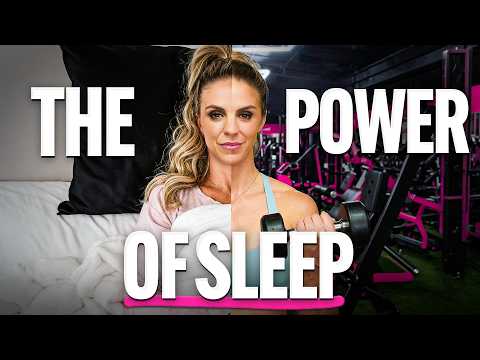
Sleep, Recovery & Lifestyle
How can I improve my sleep?
Start with the basics Nikkiey returns to again and again: cut screens and bright light before bed, keep your room cool and pitch black with the phone out, and go to bed and wake at the same times. Then try Dr. Stephen Cabral's 3-2-1 rule: no food three hours before bed, no liquids two hours, no screens one hour.
Read the answer →
Sleep, Recovery & Lifestyle
How does poor sleep affect weight loss?
Poor sleep works against fat loss on several fronts. Nikkiey explains that it raises your hunger hormone ghrelin, lowers your fullness hormone leptin, and raises cortisol, which she says signals your body to hold fat, break down muscle and become more insulin resistant. That means you can be in a calorie deficit and still stall.
Read the answer →
Sleep, Recovery & Lifestyle
Does sleep affect building muscle?
Yes. Nikkiey explains that you break muscle down in the gym and rebuild it during recovery, and most of that repair happens in deep sleep, when your body releases growth hormone. If you train hard but sleep poorly, she says, you're only doing half the work. She recommends at least seven hours, ideally seven to eight.
Read the answer →
Watch or listen in full
More on this topic → 36 min
How Does Sleep Affect Fat Loss and Muscle After 40?
Episode 196 · Oct 7, 2024