

The short answer
Sarcopenia is the age-related loss of muscle mass. On Ep. 337, Nikkiey explains it starts in your 30s, not your 60s, then accelerates in your 40s and again in your 50s and beyond. Left unchecked, she says women lose 3-8% of muscle per decade from age 30, and faster after 40.
Hear it answered
Tap play to start right where it's answered. It keeps playing while you browse.
Nikkiey defines sarcopenia as the age-related loss of muscle mass
Plays from 4:55 · Ep. 337: Why Women Over 40 Are Losing Muscle and How to Stop It
Why muscle loss starts in your 30s and speeds up after 40
Plays from 5:03 · Ep. 337: Why Women Over 40 Are Losing Muscle and How to Stop It
Why Pilates, walking and yoga aren't enough to stop muscle loss
Plays from 15:10 · Ep. 337: Why Women Over 40 Are Losing Muscle and How to Stop It
How strength training protects muscle and why eating less isn't the fix
Plays from 15:24 · Ep. 337: Why Women Over 40 Are Losing Muscle and How to Stop It
The full answer
Nikkiey calls sarcopenia a health science term for something most women feel long before they have a name for it. The surprise is the timing. It doesn't wait for your 60s or 70s. She describes it beginning in your 30s and picking up speed with each decade after that if nothing is done to stop it. That's why she wants you to think of muscle as an organ, just like your heart and lungs. In her words, muscle is the organ of longevity.
She also explains what happens when muscle slowly slips away. Without the right stimulus, the body adapts downward. It loses muscle, your metabolism drops, and your body stores more fat. So if your body feels like it changed overnight at 45, that's real, and it isn't a willpower problem. It's what happens when muscle isn't being actively built or protected.
This is where many women go wrong. The instinct is to eat less and less, living off small yogurts, fruit and salads with chicken. Nikkiey's view is that you don't need to eat less. You need to build more muscle. She likes Pilates, walking and yoga and does them herself, but says they aren't enough to prevent muscle loss on their own. Strength training with dumbbells and barbells is what she calls the ultimate stimulus to build, maintain and protect muscle, and why she believes it's no longer optional after a certain age.
The reframe she offers: stop asking how to weigh less and start asking how to become stronger. As she puts it, the women who age the best are the women who lift weights.
From WarriorBabe's coaches (how we write our answers). For education, not medical advice: talk to your doctor about your own health.
Women also ask
More on Building Muscle After 40 →
Building Muscle After 40
Why is muscle so important for women over 40?
Muscle matters after 40 because it drives your metabolism and protects your long-term health. Nikkiey explains that women lose about 3 to 8 percent of muscle per decade after 30, and less muscle means a slower metabolism. She calls muscle the engine of your metabolism and, borrowing Dr. Gabrielle Lyon's phrase, the organ of longevity.
Read the answer →

Building Muscle After 40
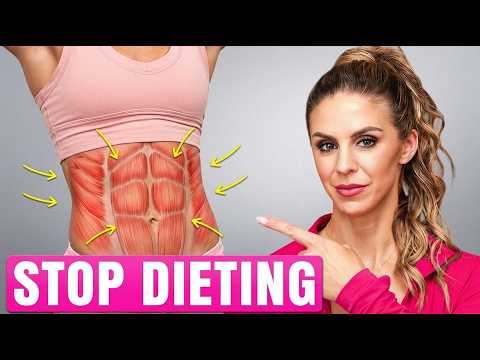
How many sets per muscle group per week do I need to build muscle?
Nikkiey cites research showing 10 to 20 sets per muscle group per week produces optimal muscle growth for most people. Training three to four times a week, that works out to roughly three to six working sets per muscle group per session, which fits in a focused 45- to 60-minute workout. You don't need two-hour sessions.
Read the answer →
Building Muscle After 40
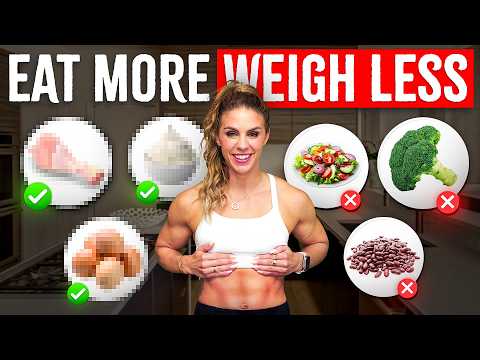
How long does body recomposition take after 40?
One WarriorBabe coach frames body recomposition after 40 as a rebuild of six to 12 to 18 months, not a 30-day challenge. You usually feel changes in weeks one to four, see them in months two to three, and by month six the change is undeniable. Client stories on the show took one and a half to two and a half years.
Read the answer →
Building Muscle After 40
Do women over 40 need carbs to build muscle?
Yes. Nikkiey Stott says carbohydrates are a key macronutrient for building and repairing muscle and fueling hard workouts. Cutting them too low doesn't burn more fat. It drains your energy, hurts your recovery and makes your training suffer. She says keto and low-carb plans tend to bring short-lived results before the weight comes back.
Read the answer →
Building Muscle After 40
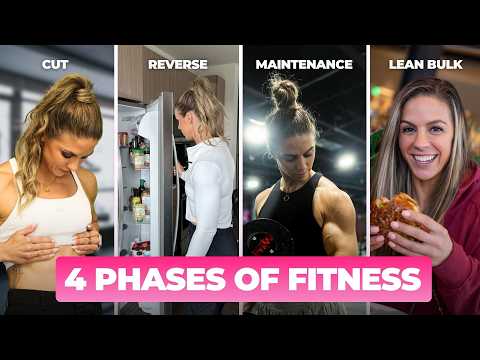
Will I lose muscle if I take a week off from working out?
No. Nikkiey explains that a week off won't cost you your muscle. Meaningful detraining, a measurable loss of strength and muscle, doesn't begin until roughly two to four weeks of complete inactivity, and even then the loss is slow. You might feel a little weak or sluggish for a few days back, but strength returns quickly.
Read the answer →
Building Muscle After 40
Why does the scale go up during a muscle-building phase?
The scale goes up during a muscle-building phase because you're eating more food, and food has weight. The extra carbs are stored as glycogen, which holds about three to four grams of water per gram. You're also adding muscle, and Nikkiey says a small amount of fat comes with it. That is normal and expected.
Read the answer →
Watch or listen in full
More on this topic → 20 min
Why Women Over 40 Are Losing Muscle and How to Stop It
Episode 337 · Feb 16, 2026