

From 2 episodes
Can I track macros if I have a history of disordered eating?
Answered by Nikkiey Stott and her guests · Updated
The short answer
Not as your first step, according to Nikkiey Stott. If you have a history of disordered eating, she says to nurture your past experiences and your relationship with food first, not macros. Once you've unpacked that and built more self-awareness, tracking can be introduced as a skill set rather than a rule.
Hear Nikkiey answer it
Tap play to start right where it's answered. It keeps playing while you browse.
Nikkiey on nurturing an eating disorder history before you track macros
Plays from 12:44 · Ep. 80: Is Tracking Macros Too Restrictive for Women Over 40?
Mike Millner on why macros are an awareness tool, not something disordered
Plays from 34:36 · Ep. 102: How to Stop Self-Sabotaging Your Weight Loss Journey
Nikkiey on finding the root cause behind feeling restricted by macros
Plays from 22:05 · Ep. 80: Is Tracking Macros Too Restrictive for Women Over 40?
The full answer
On Ep. 80, Nikkiey pumps the brakes on her usual push to commit to tracking. If you've had an eating disorder or disordered patterns in the past, she says those are what need nurturing, not your macro numbers. That means getting curious about how you view food and why. In her words, there's usually something deeper, an experience in your life that led to this relationship with food. Macros may be a triggering word, but she argues the approach itself isn't the root problem. The work is unpacking that history first. Then you can introduce tracking as a skill set. If that history is still active for you, bring your doctor or another qualified professional into the conversation before you start.
On Ep. 102, guest Mike Millner, a nutrition coach and host of the Mind Over Macros podcast, speaks more broadly about macros' reputation for being disordered or stressful. He calls macros a tool with no feelings attached, a way to build awareness, because awareness precedes change. He compares it to reviewing your budget when you want to save money. Nobody calls that disordered. Note the nuance: Mike is talking about tracking in general. Nikkiey is the one who draws the line for women with an eating disorder history.
Nikkiey also frames tracking as temporary. She tracked for a couple of years and now eats intuitively while keeping her results, using the skills tracking taught her. Once you're ready, she says, it takes real commitment, not tracking two days out of seven. The payoff she describes is a more realistic, sustainable relationship with food. If tracking felt wrong before, it may not have been you. It may have been the order things were done in.
From Nikkiey Stott and WarriorBabe's coaching. For education, not medical advice: talk to your doctor about your own health.
Women also ask
More questions →
Macros & Macro Tracking
Do I have to track macros forever?
No. Nikkiey is clear that you don't have to track macros for the rest of your life. Tracking and weighing your food is a temporary, educational phase that teaches you what real portions of protein, carbs and fat look like. Do it consistently for a couple of years and it becomes second nature.
Read the answer →
Macros & Macro Tracking
How do I track macros when eating out?
Order simple dishes you can estimate, like salmon with rice and vegetables, ask for sauce on the side, ballpark the portion, find something similar in your app, log it and move on. Weighing food at home trains your eye, and asking for extra protein keeps you on track. The goal is consistency and awareness, not perfection.
Read the answer →
Macros & Macro Tracking
How long does it take to get good at tracking macros?
Expect a learning curve of about three to four months, with tracking feeling noticeably easier somewhere between six months and a year. Nikkiey's first planning sessions took up to an hour and a half; years later she logs a full day in about two minutes. Some women, like guest Valerie, hit their numbers within two weeks.
Read the answer →
Watch or listen in full
More on this topic →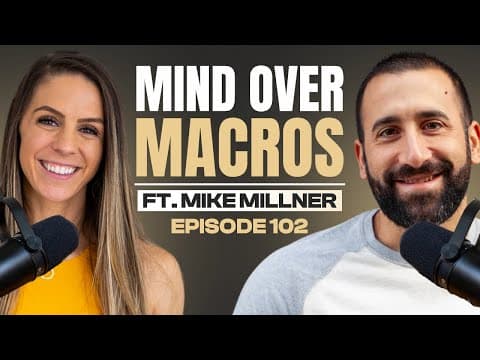 57 min
How to Stop Self-Sabotaging Your Weight Loss Journey
With Mike Millner
 26 min
Is Tracking Macros Too Restrictive for Women Over 40?
Episode 80 · Jul 21, 2023