Skip to content

Real answers from WarriorBabe's coaches

Ask WarriorBabe

Straight answers to what women over 40 ask about fat loss, menopause, protein and lifting, drawn from every video and episode. Tap play on any question to hear our coaches and guests answer it.

Page 4

  • Meal Prep & Workout Nutrition

    What is the fastest way to batch cook protein for the week?

    The fastest way is to put a large bag of frozen meat in a slow cooker or Instant Pot with a little salsa on top. Four to eight pounds cooks in under an hour and covers four to five days of salads, wraps and protein bowls. Keep the flavor neutral so it works with anything.

    Read the answer →
  • Menopause & Perimenopause Weight Loss

    Is HIIT bad for women in menopause?

    Not necessarily. One WarriorBabe coach explains that what backfires in menopause is long, frequent, exhausting cardio, which keeps cortisol elevated and encourages belly fat storage. Short sprint interval training, with 20 to 30 second all-out efforts and full rest, is one of her core exercises. For everything else, she favors low-impact incline walking.

    Read the answer →
  • How to Get Toned

    How often should women over 40 train arms?

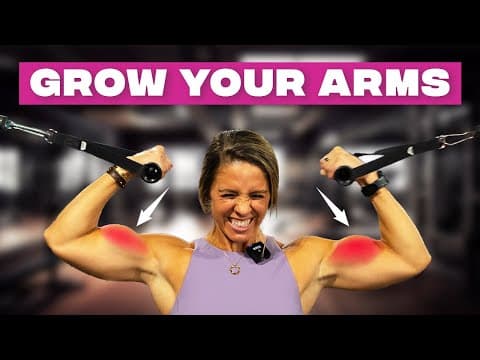
    Nikkiey recommends training arms two to three times a week as part of a full body or upper body split, with no separate arm day needed. Elsewhere, one WarriorBabe coach frames it as one to two focused arm sessions with real intensity. Either way, daily light arm work is out. Muscles grow when they recover.

    Read the answer →

  • Hormones & Hormone Health

    Does alcohol lower testosterone in women?

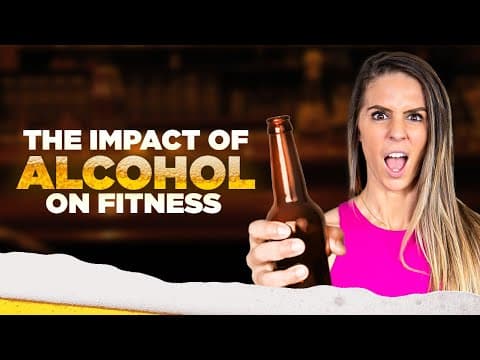
    Yes, according to one WarriorBabe coach. She explains that alcohol can decrease testosterone levels, which makes it harder to build muscle and recover from strength training. She adds that low testosterone can also lower sex drive and leave you more tired, and that alcohol disrupts other hormones that matter for fat loss, including growth hormone and cortisol.

    Read the answer →

  • Food Noise, Cravings & Overeating

    How do I stop impulse eating?

    Stop impulse eating by building one habit at a time, not by trying harder. Nikkiey Stott works from five buckets: mindful eating, structured meal and snack times, environment control, emotional awareness and self-compassion. Start with a pattern interrupt: before you grab food, ask why you want it, and whether you're hungry, stressed or bored.

    Read the answer →

  • Holidays, Travel & Social Life

    How do I get back into my workout routine after a vacation?

    Ease back in rather than jumping straight to full intensity. Nikkiey suggests spending the first day or two home hydrating, eating well and catching up on sleep, then returning with a lighter workout of fewer sets and lighter weights. Write out a structured schedule for the week, and get back on track the day the trip ends.

    Read the answer →

  • Supplements & Creatine

    How much creatine should a woman over 40 take?

    Nikkiey recommends 3 to 5 grams of creatine monohydrate a day, roughly half a teaspoon, taken every day rather than only on training days. No loading phase and no cycling. She takes 5 grams each morning stirred into her coffee, and it mixes easily into water or a smoothie.

    Read the answer →

  • Consistency & Mindset

    Is it selfish for moms to prioritize working out?

    No. On The WarriorBabe Show, Nikkiey Stott says taking care of your body is not selfish; it's what makes everything else possible. When you're healthy, strong and energized, you show up better for your kids, family, work and community. You can't pour from an empty cup, and your kids learn from watching you.

    Read the answer →

  • Strength Training for Women

    How long until I see results from lifting weights after 40?

    Most women feel changes from lifting within the first weeks and see them later. Nikkiey says energy, mood, sleep and gym strength improve first, while visible change usually starts around weeks four to six of consistent training and nutrition, sometimes not until day 90. After years of dieting, it can take six months to a year.

    Read the answer →

  • Macros & Macro Tracking

    Is tracking macros restrictive?

    No, according to Nikkiey Stott. With macros you can eat any food you want, including chocolate, bagels and dessert, in moderation and balance. What feels restrictive is usually old rules about 'bad' foods, or having to stop eating a whole bag of something. She sees tracking as a skill that leads to food freedom.

    Read the answer →

  • Metabolism, Eating More & Reverse Dieting

    When should I stop dieting and eat at maintenance?

    Nikkiey says it's time to move to maintenance when you've reached your goal, hit a plateau that won't budge for weeks, or your body starts pushing back. That means energy and gym performance drop, hunger is constant, mood or sleep suffer, or you're mentally burned out from dieting, often after months in a deficit.

    Read the answer →

  • Building Muscle After 40

    Why am I not building muscle even though I work out?

    Most often, your training isn't challenging your muscles enough or your eating isn't fueling them. Nikkiey points to switching workouts constantly, going through the motions without adding weight or intensity, and under-eating, plus poor sleep, stress and recovery. Her fix: run one program for six to eight weeks and make the last three reps of every set hard.

    Read the answer →

  • Diets, Fasting & Diet Culture

    Why does the weight come back after keto?

    Most of the fast weight you lose on keto is water, not fat. Nikkiey explains that carbs hold on to water in your body, so cutting them drops the scale quickly. The moment you eat carbs again, that water returns. Because you can't avoid carbs forever, the weight comes back.

    Read the answer →

  • Protein for Women

    What is the easiest way to hit my protein goal every day?

    The easiest way is to plan tomorrow's meals the night before, then split your protein across every meal so each one carries a manageable number. Nikkiey's 150-gram day breaks into five meals of roughly 24 to 38 grams each. Build those meals around lean sources like chicken, egg whites, lean ground beef, fish, tofu or protein powder.

    Read the answer →

  • Fat Loss After 40

    How many calories should a woman over 40 eat to lose fat?

    One WarriorBabe coach's starting point is to find maintenance, your body weight in pounds times 13 to 15, then eat just 200 to 300 calories below it. For a 160-pound woman that maintenance is roughly 2,100 to 2,400 calories. If you've under-eaten for months or years, she says to reverse diet up first.

    Read the answer →

  • The Scale & Tracking Progress

    Why does the scale go up after a vacation or cheat meal?

    After a vacation or cheat meal, the jump on the scale is mostly water and inflammation, not fat. Nikkiey explains that extra carbs make your body hold water, and sugar and alcohol add puffiness. Gaining a pound of fat takes roughly 3,500 extra calories, so get back to your routine and it typically drops within days.

    Read the answer →

  • Sleep, Recovery & Lifestyle

    Does sleep affect building muscle?

    Yes. Nikkiey explains that you break muscle down in the gym and rebuild it during recovery, and most of that repair happens in deep sleep, when your body releases growth hormone. If you train hard but sleep poorly, she says, you're only doing half the work. She recommends at least seven hours, ideally seven to eight.

    Read the answer →

  • Meal Prep & Workout Nutrition

    What should I eat after a workout?

    After a workout, eat a protein source plus carbohydrates. Nikkiey explains that protein supplies the amino acids that repair and rebuild the muscle you broke down, while carbs refill depleted glycogen. Broadly, she suggests 20 to 40 grams of quality protein, ideally within about 30 minutes, with fast-digesting carbs like rice, sweet potatoes or fruit.

    Read the answer →

  • Menopause & Perimenopause Weight Loss

    Is perimenopause the reason I can't lose weight?

    Partly, but probably not entirely. On Ep. 406, Nikkiey says perimenopause is real and makes fat loss genuinely harder. But a significant portion of what women over 40 blame on it comes from a plan that was never going to work: too little protein, no progressive lifting, inconsistency, or hormones never actually tested.

    Read the answer →

  • How to Get Toned

    Why am I lifting weights but not seeing muscle definition?

    Usually one piece of the plan is out of alignment, not your effort. Nikkiey explains that visible muscle needs four things working together: enough tension on the muscle, enough calories and protein, real recovery, and progressive overload. She adds that lifting is the easy part for most women. Keeping nutrition and macros consistent is where definition usually stalls.

    Read the answer →

  • Hormones & Hormone Health

    How do I know if I have insulin resistance?

    The clearest check is a fasting insulin test. On Ep. 159, Dr. Morgan Nolte says the research gold standard is a HOMA-IR score, calculated from fasting glucose and fasting insulin, and that fasting insulin alone should ideally be under six. On Ep. 211, Lara Briden adds that normal blood sugar or HbA1c can't rule it out.

    Read the answer →

  • Food Noise, Cravings & Overeating

    Why do I think about food all the time?

    Most often, it's because you're not eating enough. Nikkiey Stott explains that when your body senses too few calories or too little protein, hunger signals like ghrelin get louder and more intrusive. She calls this food noise and stresses it's a signal from your body, not a character flaw. Years of diet rules can also blur your hunger cues.

    Read the answer →

  • Holidays, Travel & Social Life

    Should I skip meals to save calories for a holiday dinner?

    No. Nikkiey calls saving calories for later rookie energy that sets you up to lose control at the table. Eat your normal breakfast, get protein in throughout the day, drink your water, and walk into the holiday meal feeling fed rather than frantic and ready to eat until you feel full.

    Read the answer →

  • Supplements & Creatine

    Is collagen worth taking after 40?

    Collagen can be worth taking after 40 for joint support, connective tissue and recovery, but it is not a magic fix for your skin. One WarriorBabe coach says it is not where she would start. If your budget is limited, choose creatine over collagen every time. Collagen also doesn't count toward your daily protein.

    Read the answer →

  • Consistency & Mindset

    Should I wait until January to start getting in shape?

    No. Nikkiey's answer is to start now. She calls January 1st a date with cultural permission attached, not a reset button. Women who start in the fall or keep moving through the holidays walk into January with months of habits and momentum, while those who wait often start from a deficit and quit by mid-January.

    Read the answer →

  • Strength Training for Women

    How often should I change my workout program?

    Most of the time, run a program for four to eight weeks before changing it, and never less than four. Nikkiey's rule is to change for a reason, not because you're bored. Keep any lift that's still progressing, and don't run the same program unchanged for six months.

    Read the answer →

  • Macros & Macro Tracking

    Are online TDEE and macro calculators accurate?

    Not very, according to Nikkiey. Online TDEE and macro calculators only use your height, age, weight and activity level, so they miss menopause, muscle mass, dieting history and lifestyle. She says they often disagree with each other. Treat any number as a rough starting point and adjust it based on how your body actually responds.

    Read the answer →

  • Metabolism, Eating More & Reverse Dieting

    Can a woman over 50 lose weight eating 2,000 calories a day?

    Yes. The WarriorBabe Show says many women over 50 can see results eating close to 2,000 calories. On Ep. 312, Melissa, 58, eats about 1,900 calories a day, and her clothes are looser while she sets gym personal bests. Maggie herself went from aiming for 800 calories a day to eating almost triple that.

    Read the answer →

  • Building Muscle After 40

    Will I lose muscle if I take a week off from working out?

    No. Nikkiey explains that a week off won't cost you your muscle. Meaningful detraining, a measurable loss of strength and muscle, doesn't begin until roughly two to four weeks of complete inactivity, and even then the loss is slow. You might feel a little weak or sluggish for a few days back, but strength returns quickly.

    Read the answer →

  • Diets, Fasting & Diet Culture

    Does eating fat make you fat?

    No. Nikkiey explains that eating fat doesn't make you fat; eating too many calories, or so few that your body holds on to fat, does. Dietary fat supports hormone production, brain function and nutrient absorption, and healthy fats like avocados, nuts, seeds and olive oil fit into a fat-loss plan. Trans fats are the ones to avoid.

    Read the answer →

  • Protein for Women

    Can your body only absorb 30 grams of protein at once?

    No. Nikkiey explains that your body can absorb more than 30 grams of protein in one meal. What tops out is muscle protein synthesis, the muscle-building response, at around 30 to 50 grams per meal for most women. Protein beyond that is still absorbed and used for other functions. It is not stored as fat.

    Read the answer →

  • Fat Loss After 40

    Where should I start if I want to lose fat after 40?

    Start with nutrition, not cardio. Nikkiey's advice is to track what you actually eat for a week, find where you fall short (usually protein), and build meals around a daily protein target. Once protein is consistent every day, look at calories, carbs and fats. Then add strength training, with cardio last.

    Read the answer →

  • The Scale & Tracking Progress

    Why does the scale go up when I eat more carbs?

    The scale goes up after more carbs because your body stores carbs as glycogen in your muscles and liver, and glycogen holds water. Nikkiey explains that stored glycogen holds about three times its amount in water, so the jump is water retention, not fat. It's temporary, and it fuels your strength training.

    Read the answer →
  • Sleep, Recovery & Lifestyle

    How much water should I drink if I lift weights?

    If you're strength training and sweating, Nikkiey recommends about 100 to 128 ounces of water a day. On Ep. 140, Dr. Carolyn Dean gives a baseline of half your body weight in pounds as ounces, with more if you sweat. Nutritional therapist Louise Digby adds a simple check: aim for light yellow urine.

    Read the answer →
  • Meal Prep & Workout Nutrition

    Is granola a healthy breakfast for weight loss?

    Usually not. One WarriorBabe coach says granola is marketed as health food but often works like a sugar bomb in wellness packaging, with 12 to 16 grams of sugar per serving, and most people eat more than one. Paired with fruit and almond milk, it may give you only about 10 grams of protein.

    Read the answer →
  • Menopause & Perimenopause Weight Loss

    Should I change my workouts as I go through menopause?

    Yes. Nikkiey says that during menopause, less is more. One WarriorBabe coach recommends three to four strength sessions a week, intentional walking, and one or two short conditioning sessions if recovery supports it. Nikkiey also recommends fewer supersets and more straight sets with rest. What worked at 20 or 30 isn't the plan for your body now.

    Read the answer →
  • How to Get Toned

    Do I need HIIT classes to get toned?

    No. On The WarriorBabe Show, the message is that you can get toned without living in HIIT classes. Nikkiey says most of your training, about 80%, should be progressive overload strength work. Community member Emily got toned lifting weights and says one HIIT session a week is plenty, if you want it at all.

    Read the answer →
  • Hormones & Hormone Health

    What is metabolic flexibility?

    Metabolic flexibility is your body's ability to run on fat for energy and then easily switch to burning carbs after a carb-containing meal or during hard effort. On The WarriorBabe Show, Lumen co-founders Michal and Merav link it to healthy mitochondria and to lower risk of obesity, insulin resistance and other chronic disease.

    Read the answer →
  • Food Noise, Cravings & Overeating

    Does eating more protein reduce cravings?

    Yes. On The WarriorBabe Show, Nikkiey explains that protein is the most satiating macronutrient and suppresses the hunger hormone ghrelin better than carbs or fat, so hunger signals come less often and with less intensity. Dietitian Abbey Sharp adds that pairing protein with fiber and healthy fats curbs both emotional and physical cravings.

    Read the answer →
  • Holidays, Travel & Social Life

    Should I track my macros on Thanksgiving?

    No. Nikkiey says she doesn't expect you to track, weigh your food or worry about your nutrition choices on Thanksgiving, Christmas or Hanukkah. Her rule is memories over macros: be present with the people you love. If you want some structure, she suggests eating protein throughout the day, without tracking it.

    Read the answer →
  • Supplements & Creatine

    Should I take a break from caffeine?

    You don't have to. Nikkiey says a caffeine break is worth testing if you're drinking caffeine but still exhausted by the end of the day, foggy, or no longer getting the lift you used to. She tapered over two weeks, stayed off about five, saw her sleep and focus improve, then brought coffee back slowly.

    Read the answer →
  • Consistency & Mindset

    Why do I always quit a few weeks into a new program?

    Usually because motivation runs out before visible results arrive. Nikkiey explains that the excitement of a new program fades around weeks three to four, while your body is still changing internally. If you also tried to change too many things at once, quitting feels logical right when the plan is starting to work.

    Read the answer →
  • Strength Training for Women

    Is good form more important than lifting heavier?

    Yes. The order is form first, then connection to the muscle, then weight. If you can't feel the target muscle working, adding weight doesn't make it stronger; other muscles take over and your joints pay for it. Drop the weight until you feel the right muscle, then build from there.

    Read the answer →
  • Macros & Macro Tracking

    How close do I need to get to my macro targets?

    Nikkiey's target is within plus or minus five grams of each macro: protein, fat and carbs. Land there and you've nailed your macros for the day. You don't have to hit it every day, especially in your first few weeks; hitting your targets most of the time is what counts.

    Read the answer →
  • Metabolism, Eating More & Reverse Dieting

    Can I lose weight by eating more after 60?

    Yes, it can happen when you have been under-eating. On The WarriorBabe Show, four women in their 60s raised their calories with a coach and still lost weight. Michelle went from about 800-900 to 1,800 calories, Ya'el from 1,100 to 1,950, and Linda and Beth also gained food and lost fat.

    Read the answer →
  • Building Muscle After 40

    Do women need to bulk to build muscle?

    No. Nikkiey says women do not have to bulk to build muscle. You can build muscle while losing body fat at maintenance, as long as you eat enough. A building phase, her preferred term for bulking, just gets you there faster, and it is not for women who still have significant weight to lose.

    Read the answer →
  • Diets, Fasting & Diet Culture

    Is it bad to eat carbs at night?

    No. On The WarriorBabe Show, Nikkiey Stott tells women over 40 to please have carbs at dinner, because that fuel helps your body repair and recover while you sleep. Guest Esther Blum adds that whole-food carbs paired with protein and fiber can calm nighttime cortisol and support sleep. Eating very close to bedtime is the one caveat.

    Read the answer →
  • Protein for Women

    Does extra protein get stored as fat?

    Not in any way that should worry you. Nikkiey explains that any macronutrient eaten in a big calorie surplus can contribute to fat storage, but protein is the hardest one for your body to convert to fat. Eaten within a reasonable calorie range and paired with strength training, high protein supports fat loss instead.

    Read the answer →

  • Fat Loss After 40

    Why am I eating healthy but not losing weight?

    Because your body responds to calories, macros, portions and consistency, not to labels like clean or healthy. Nikkiey explains that healthy foods can be calorie dense, so small meals add up fast, while many women actually under-eat overall, landing near 1,000 to 1,200 calories with too little protein. It's the plan, not you.

    Read the answer →
  • The Scale & Tracking Progress

    Can I hit a weight loss plateau after only one or two weeks?

    Not really, according to Nikkiey. One or two weeks without a drop on the scale doesn't mean you've stalled or that your plan is failing. On Ep. 87 she defines a plateau as consistent effort with no visible change in your progress photos for four to six weeks, and says nothing needs adjusting at two weeks.

    Read the answer →
  • Sleep, Recovery & Lifestyle

    Why do I wake up at 3 a.m. and can't fall back asleep?

    According to one WarriorBabe coach, falling asleep fine but waking at 2 or 3 a.m. with a racing mind is a cortisol and magnesium issue almost every time. Once magnesium and the stress response are supported, she sees that wake-up start to resolve. Calming your evenings and eating enough during the day both help bring nighttime cortisol down.

    Read the answer →
  • Menopause & Perimenopause Weight Loss

    Why am I gaining belly fat in menopause when I eat clean and work out?

    One WarriorBabe coach explains that falling estrogen in menopause shifts fat storage toward your midsection, and a slower metabolism, muscle loss and elevated cortisol add to it. Clean eating often hides too little protein and too few calories, and training six days a week on that can push your body into survival mode, holding on to belly fat.

    Read the answer →
  • How to Get Toned

    How do I get rid of cellulite after 40?

    You probably won't erase cellulite completely, but you can reduce it. Nikkiey says the lasting approach is building muscle. Strength train with challenging weight at least four times a week, eat enough food with about your body weight in grams of protein, cut processed foods, and treat it as a lifestyle rather than a quick fix.

    Read the answer →

  • Hormones & Hormone Health

    Why am I always bloated?

    Most of the time, Nikkiey says, constant bloating comes down to two things: you ate too much in one sitting, or you ate something your body can't break down well. Excess gas, swallowed air, stress and hormonal changes around your cycle can add to it, and often it's several of these at once.

    Read the answer →

  • Food Noise, Cravings & Overeating

    What causes emotional eating?

    Emotional eating starts with an emotion that creates a feeling, and that feeling drives the action of eating, Nikkiey explains. Triggers can be negative, like stress, sadness or pressure, or positive, like birthdays and holidays. It's a learned coping strategy your brain built because food really does bring short-term comfort, and most of it happens unconsciously.

    Read the answer →

  • Holidays, Travel & Social Life

    What are the lowest calorie alcoholic drinks?

    The lowest calorie alcoholic drinks are clear spirits like vodka, tequila, gin or rum mixed with a zero-calorie mixer such as soda water, club soda or sparkling water plus fresh lime, at roughly 100 calories. Nikkiey ranks light beer (about 100) and a five-ounce glass of wine (120 to 130) next, with IPAs and mixed cocktails highest.

    Read the answer →

  • Supplements & Creatine

    Which supplements are a waste of money?

    One WarriorBabe coach names four supplements most women over 40 can skip: green powders, which are usually underdosed and don't replace real food; biotin, unless you actually have a deficiency; apple cider vinegar gummies, which she calls basically candy; and fat burners, which she says are mostly caffeine packaged differently. You don't need more supplements, just the right ones.

    Read the answer →

  • Consistency & Mindset

    How do I stop comparing myself to other women?

    Notice the comparison thought, own it, and redirect it to your own journey. Nikkiey reminds you that you're comparing your chapter three to someone else's chapter 20, and that social media is a highlight reel. The only comparison that serves you is who you are today versus who you were when you started.

    Read the answer →

  • Strength Training for Women

    What is progressive overload?

    Progressive overload is gradually increasing the stress you place on your muscles over time so they keep having a reason to adapt and grow. Nikkiey explains you do it by adding small amounts of weight, reps, sets, or changing tempo and rest, while sticking with the same exercises long enough to measure progress.

    Read the answer →

  • Macros & Macro Tracking

    How long does tracking macros take each day?

    Expect up to an hour, sometimes an hour and a half, a day at first. On The WarriorBabe Show, Nikkiey Stott says that drops with a couple of weeks of consistent practice, to 30 minutes, then about 10. Years in, she logs her day in two to three minutes, and client Debra does hers in about two.

    Read the answer →

Browse questions by topic