

The short answer
Progressive overload is gradually increasing the stress you place on your muscles over time so they keep having a reason to adapt and grow. Nikkiey explains you do it by adding small amounts of weight, reps, sets, or changing tempo and rest, while sticking with the same exercises long enough to measure progress.
Hear it answered
Tap play to start right where it's answered. It keeps playing while you browse.
Nikkiey defines progressive overload and why it matters for body composition
Plays from 16:08 · Ep. 16: How to Choose a Workout Plan and Use Progressive Overload
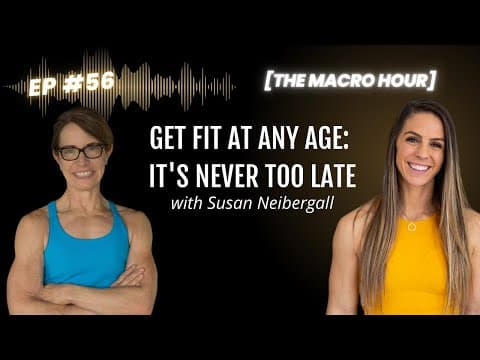
Susan Niebergall on getting better over time and why you must track workouts
Plays from 36:28 · Ep. 56: Is It Too Late to Build Muscle After 50?
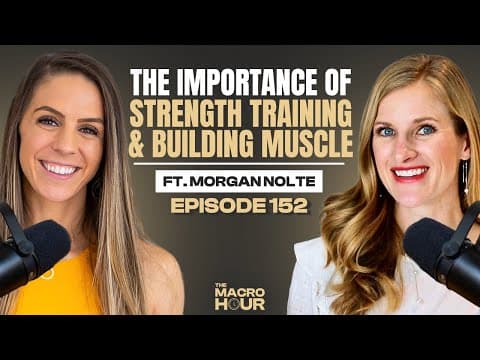
The many ways to progress: weight, sets, reps, tempo and rest periods
Plays from 16:19 · Ep. 152: How Do Women Build Muscle? Protein, Macros and Lifting
Nikkiey on why reformer spring resistance isn't true progressive overload
Plays from 10:58 · Ep. 382: Does Reformer Pilates Build Muscle After 40?
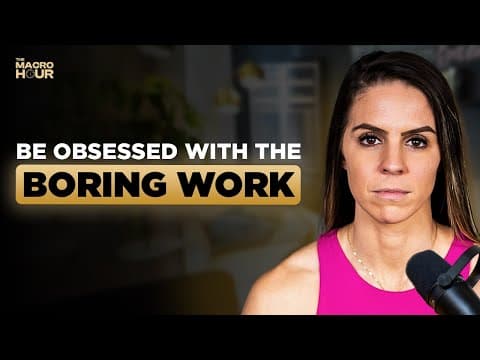
Nikkiey on doing the boring work while keeping the same exercises
Plays from 7:13 · Ep. 97: Progressive Overload for Women: What It Is and How to Do It
The full answer
Nikkiey explains on Ep. 16 and Ep. 97 that when muscles are pushed past what they're used to, they undergo microscopic damage. The body then repairs and strengthens those fibers. Keep raising the demand and the body keeps adapting, which is how you build strength and muscle, break through plateaus, and get the toned look most women are after. Go through the same motions at the same weights and that adaptation stalls. On Ep. 152, Dr. Morgan Nolte recalls her jazzercise days, when people used the same five- and eight-pound dumbbells for years. That is not progressive overload.
Ways the show describes to progress:
- Add a little weight. Nikkiey's example is 40 pounds on an incline chest press one week and 45 the next, not a jump to 60.
- Add reps at the same weight, or add a set.
- Adjust tempo, slow the lowering (eccentric) phase for more time under tension, or change rest periods.
- Use techniques like drop sets, which Nikkiey covers on Ep. 53.
The catch is consistency. Nikkiey calls it doing the boring work: the same exercises week after week, so there is something to beat. You can vary which method you use from week to week to keep it interesting, as long as the exercises stay the same. On Ep. 56, strength coach Susan Niebergall says to track your lifts as carefully as your food, or you won't remember whether you used 15 or 20 pounds. She is also clear that progress isn't linear. Her deadlift stayed the same for almost eight months, and she kept going.
One distinction from Ep. 382: Nikkiey says moving through spring settings in a reformer class is not progressive overload in any meaningful sense. True overload needs enough mechanical tension to exceed what your muscles can currently handle, and springs don't deliver that for most regularly active women. Her version looks like adding 10 pounds to your squat over a month.
From WarriorBabe's coaches (how we write our answers). For education, not medical advice: talk to your doctor about your own health.
Women also ask
More on Strength Training for Women →
Strength Training for Women
What are the different ways to do progressive overload?
Nikkiey's progressive overload methods are adding weight, adding reps or sets, shortening rest between sets, changing tempo, switching equipment, varying exercises with techniques like drop sets, and eccentric training with more time under tension. Her advice is to add them one at a time, starting with weight, rather than changing everything at once.
Read the answer →
Strength Training for Women
Are classes like F45 or Orangetheory enough to build muscle?
Not on their own. Nikkiey explains that F45, Orangetheory and CrossFit include strength work but don't prioritize muscle growth the way a progressive overload program does, because everyone in the room does the same workout. Keep the classes if you love them, but make them about 20% of your training and progressive lifting the other 80%.
Read the answer →

Strength Training for Women
Does Pilates build muscle?
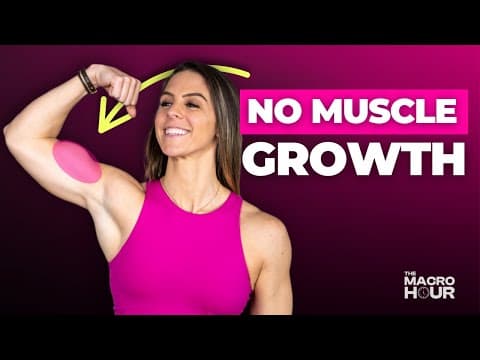
Not in any meaningful way once you're past beginner level. Nikkiey explains that Pilates can help you maintain muscle and is great for mobility, flexibility and balance, but it can't grow new muscle the way strength training can. Building muscle takes progressive overload with dumbbells and barbells, and Pilates classes don't provide that kind of load.
Read the answer →
Strength Training for Women
What is time under tension in weight training?
Time under tension is how long your muscle is working during a set. You increase it by slowing each rep down, especially the lowering portion. Nikkiey explains that taking 45 seconds instead of 30 to finish 12 reps maximizes muscle breakdown, which builds muscle when you follow it with good eating and recovery.
Read the answer →

Strength Training for Women
When should I increase the weight I lift?
Go up when you can do 12 reps with perfect form and feel like you could do more. Maggie's rule: the last two to three reps of every set should feel hard, not painful. When they stop feeling hard, add a small amount, two and a half to five pounds, and build from there.
Read the answer →

Strength Training for Women
How many days a week should I lift weights?
Three to four days a week is Nikkiey's core recommendation for women over 40: 30 to 45 minutes per session, built on compound lifts and progressive overload, with walking on off days and seven to eight hours of sleep. Lifting six or seven days a week, she says, breaks down muscle faster than you can rebuild it.
Read the answer →
Watch or listen in full
More on this topic → 32 min
Progressive Overload for Women: What It Is and How to Do It
Episode 97 · Oct 2, 2023
 57 min
Is It Too Late to Build Muscle After 50?
With Susan Niebergall
 57 min
How Do Women Build Muscle? Protein, Macros and Lifting
With Dr. Morgan Nolte