

The short answer
No. On The WarriorBabe Show, Nikkiey Stott tells women over 40 to please have carbs at dinner, because that fuel helps your body repair and recover while you sleep. Guest Esther Blum adds that whole-food carbs paired with protein and fiber can calm nighttime cortisol and support sleep. Eating very close to bedtime is the one caveat.
Hear it answered
Tap play to start right where it's answered. It keeps playing while you browse.
Nikkiey on why carbs at dinner help your body repair and recover overnight
Plays from 19:44 · Ep. 308: Signs You're Not Eating Enough as a Woman Over 40
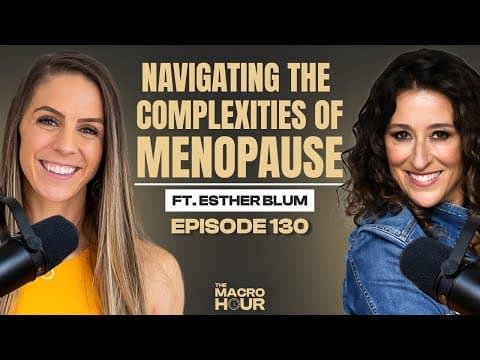
Esther Blum on whole-food carbs at night to calm cortisol in menopause
Plays from 12:19 · Ep. 130: How to Navigate Menopause: Protein, Carbs, HRT and Lifting
Nikkiey on 2-4 a.m. wake-ups as a fuel problem, not just insomnia
Plays from 17:35 · Ep. 308: Signs You're Not Eating Enough as a Woman Over 40
Jodi on moving starches earlier and keeping veggies as her nighttime carbs
Plays from 22:47 · Ep. 256: Eating More and Getting Leaner at 54: Jodi's Story
The full answer
If you were told to cut carbs after 6 p.m., you are not alone, and it is not your fault that it has not worked. On Ep. 308, Nikkiey explains that the most important recovery happens while you sleep: repairing muscle, regulating hormones and more. All of that takes energy. She points out that waking between 2 and 4 a.m. can be your body releasing cortisol because your blood sugar dropped overnight. What feels like insomnia may really be a fuel problem. Her advice is direct: have carbs at dinner so you recover faster and your stress response calms down.
On Ep. 130, integrative dietitian Esther Blum makes the case specifically for menopause. She says that as hormones decline, many women see a bump in cortisol, often at night. She recommends whole-food carbs like sweet potatoes, rice, lentils or beans if you tolerate them, or white potatoes, paired with protein and fiber. In her view, a small insulin bump works against cortisol, raises serotonin and dopamine, and helps you feel calm and sleep, and her clients still lose weight eating this way. If you suspect hormones are part of your sleep story, that is worth raising with your doctor.
There is nuance:
- Timing matters. Nikkiey notes that eating very close to bedtime can keep your heart rate elevated while you digest, which can affect sleep stages. Carbs at dinner is not the same as a big meal right before lights out.
- Your body gets a vote. On Ep. 256, client Jodi shares that starches at night were not sitting well for her, so she moved potatoes and rice earlier, around her workouts, and kept vegetables or salad as her nighttime carbs.
The takeaway: carbs at night are not the problem. Under-fueling and a plan that ignores how you sleep and feel usually are.
From WarriorBabe's coaches (how we write our answers). For education, not medical advice: talk to your doctor about your own health.
Women also ask
More on Diets, Fasting & Diet Culture →
Diets, Fasting & Diet Culture
Why am I not losing weight on 1,200 calories?
Eating 1,200 calories is often too little, not too much. Dr. Stacy Sims explains it sits around an average resting metabolic rate, so your body treats it as a threat, conserves energy and breaks down lean mass. Long-term dieting also adapts your metabolism down. Before cutting further, check your tracking is accurate.
Read the answer →

Diets, Fasting & Diet Culture
How do I stop losing and regaining the same 10 pounds?
Stop treating it as a 30-day diet and start building habits, beliefs and skills that outlast the plan. Nikkiey explains that the same 10 pounds keep coming back when old habits return after a diet ends, when you quit before your body responds, and when nobody teaches you how to move from fat loss into maintenance.
Read the answer →
Diets, Fasting & Diet Culture
Why does the weight come back after keto?
Most of the fast weight you lose on keto is water, not fat. Nikkiey explains that carbs hold on to water in your body, so cutting them drops the scale quickly. The moment you eat carbs again, that water returns. Because you can't avoid carbs forever, the weight comes back.
Read the answer →
Diets, Fasting & Diet Culture
Can yo-yo dieting cause belly fat after 40?
Nikkiey says it can. On Ep. 179 she explains that years of losing and regaining the same weight push cortisol up, and elevated cortisol leads to more fat storage, especially around the abdomen. Many women in their 40s and 50s blame menopause for that belly fat, when yo-yo dieting can be one factor.
Read the answer →

Diets, Fasting & Diet Culture
Do carbs make you gain weight?
No. Nikkiey explains that carbs on their own don't make you gain fat. Eating more calories than your body burns does, whether those calories come from carbs, fat or protein. Carbs are stored as glycogen, which holds about three grams of water per gram, so the scale can rise temporarily without any fat gain.
Read the answer →

Diets, Fasting & Diet Culture
Do I have to cut carbs to lose weight?
No. On The WarriorBabe Show, Nikkiey's position is that you don't need to cut carbs to lose fat. She calls carbs fuel, not the enemy, and says very low carb mostly drops water weight at first. Over time, under-eating carbs can drain your energy, hurt your workouts and make building muscle nearly impossible.
Read the answer →
Watch or listen in full
More on this topic →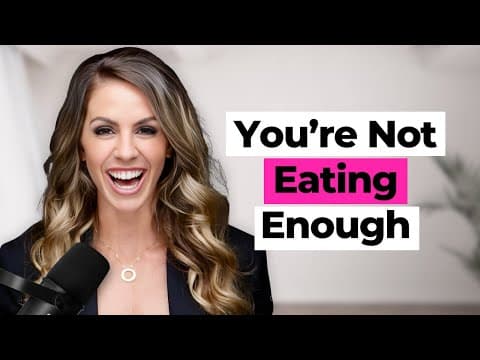 28 min
Signs You're Not Eating Enough as a Woman Over 40
Episode 308 · Nov 3, 2025
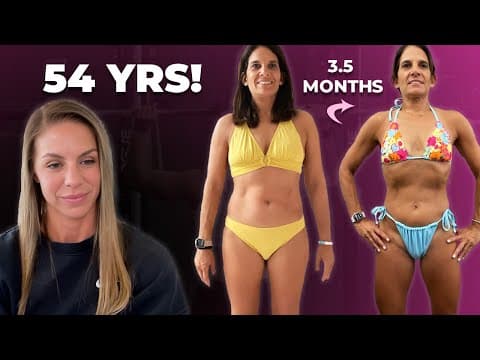 43 min
Eating More and Getting Leaner at 54: Jodi's Story
Episode 256 · May 5, 2025
 1 hr 6 min
How to Navigate Menopause: Protein, Carbs, HRT and Lifting
With Esther Blum