

From 4 episodes
Why does the scale go up after a vacation or cheat meal?
Answered by Nikkiey Stott and her guests · Updated
The short answer
After a vacation or cheat meal, the jump on the scale is mostly water and inflammation, not fat. Nikkiey explains that extra carbs make your body hold water, and sugar and alcohol add puffiness. Gaining a pound of fat takes roughly 3,500 extra calories, so get back to your routine and it typically drops within days.
Hear Nikkiey answer it
Tap play to start right where it's answered. It keeps playing while you browse.
Nikkiey on carbs, water weight and why the post-Thanksgiving scale isn't fat
Plays from 16:34 · Ep. 105: How to Eat on Thanksgiving Without Derailing Fat Loss
Why you feel ten pounds heavier after vacation, and how fast it goes away
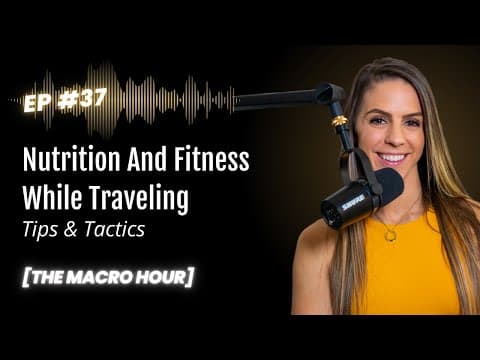
Plays from 9:34 · Ep. 37: How to Stay on Track With Nutrition While Traveling
How long-time clients know post-weekend weight is bloat that's gone by Friday
Plays from 14:43 · Ep. 76: How to Stay on Track on Vacation Without Losing Progress
Nikkiey on next-day bloat after a cheat meal and why it's not fat
Plays from 34:00 · Ep. 162: Cheat Meals vs Refeed Days: When and How to Use Them
The full answer
On Ep. 105, Nikkiey puts it plainly: when you eat a lot of carbohydrates, your body holds on to water, so you feel puffier and the scale reads heavier. That is water weight and inflammation, not fat. She points out that it takes roughly 3,500 extra calories to gain a pound of fat, and nobody she knows does that without trying. On Ep. 37 she adds that the sugary foods and alcohol are a big part of why you can feel like you gained five or ten pounds. She has felt it herself after a birthday trip: inflamed, foggy, off. That feeling is real, but it isn't fat.
The good news is how quickly it passes. Nikkiey says that if you get back to your routine, you should feel much better within about four to five days. On Ep. 76 she describes clients she has coached for years who know a weekend away means bloat, and by Friday the water is gone and their photos look like the trip never happened. Some come home and see no change at all, because they stayed somewhat aware while away. On Ep. 162 she notes that after a cheat day her own scale sometimes went up, sometimes stayed the same, and sometimes even dropped.
There is a nuance worth hearing. On Ep. 76, Nikkiey warns that a full week of no movement and all-out eating is a different story. She says that pattern can mean seven pounds in a week, a week to get back into the groove and a few weeks to work it off. And on Ep. 162 she says one meal won't derail you; what does is a cheat meal that becomes a cheat day, then a cheat week, then a cheat month.
So the number after a trip or a big meal isn't a verdict on you. It's water. What matters, as Nikkiey says again and again, is getting right back to your routine when you get home.
From Nikkiey Stott and WarriorBabe's coaching. For education, not medical advice: talk to your doctor about your own health.
Women also ask
More questions →
The Scale & Tracking Progress
How can I track progress without the scale?
Track the changes the scale can't show: waist and body measurements, side-by-side progress photos, how your clothes fit, and whether you're lifting more than two weeks ago. Nikkiey also watches energy, sleep, cravings, recovery and habits like hitting protein and showing up to train. The scale becomes supporting data, not the decision maker.
Read the answer →

The Scale & Tracking Progress
Why isn't the scale moving when I'm strength training?
The scale often stalls with strength training because you can build muscle while losing fat at the same time, so your weight barely changes while your body composition does. Nikkiey explains that muscle is denser and takes up less space than fat. Water retention, glycogen, your cycle and hormonal shifts can also stall or spike the number.
Read the answer →

The Scale & Tracking Progress
How often should I weigh myself?
Daily, if you can stay neutral about the number. Nikkiey suggests weighing every morning and comparing weekly averages, or weighing two to three times a week if daily weigh-ins trigger you. Guests Susan Niebergall and Paula Ciarniello also favor daily weighing, because a single weekly weigh-in can land on a water-retention day and mislead you.
Read the answer →
Watch or listen in full
More on this topic → 40 min
Cheat Meals vs Refeed Days: When and How to Use Them
Episode 162 · Jun 7, 2024
 27 min
How to Stay on Track With Nutrition While Traveling
Episode 37 · Apr 3, 2023
 22 min
How to Eat on Thanksgiving Without Derailing Fat Loss
Episode 105 · Nov 20, 2023