

From 1 episode and 2 videos
Should I change my workouts as I go through menopause?
Answered by Nikkiey Stott and her guests · Updated
The short answer
Yes. Nikkiey says that during menopause, less is more: three to four strength sessions a week, intentional walking, and one or two short conditioning sessions if recovery supports it. She also recommends fewer supersets and more straight sets with rest. What worked at 20 or 30 isn't the plan for your body now.
Hear Nikkiey answer it
Tap play to start right where it's answered. It keeps playing while you browse.

Nikkiey's weekly workout framework for women in menopause
Plays from 6:57 · Video: Is Overtraining Causing Your Menopause Weight Gain?
Why less is more in menopause and cutting six training days to four
Plays from 3:00 · Video: Menopause Workouts: Why Fewer Days and Straight Sets Help
Acute vs. chronic cortisol and why overtraining can hold on to belly fat
Plays from 3:36 · Video: Is Overtraining Causing Your Menopause Weight Gain?
Why Nikkiey favors straight sets with rest over supersets in menopause
Plays from 3:38 · Video: Menopause Workouts: Why Fewer Days and Straight Sets Help
Doing less, not more, after 45 and why overtraining slows results
Plays from 6:54 · Ep. 219: How to Stick to Your New Year's Fitness Goals After 40
The full answer
Nikkiey's reasoning comes down to stress and recovery. Exercise is a good physical stress, but it's still a stressor. On the overtraining episode she adds a nuance: a hard lifting session spikes cortisol briefly and then it drops back down, which is a healthy response. In her view the problem is chronic cortisol. When you're already stressed from hormonal changes, under-eating and poor sleep, and you stack five or six cardio and strength sessions on top with no real recovery, cortisol never settles. She says that in a menopausal body this signals it to store fat in the midsection and hold on to it.
So the shift she recommends looks like this:
- Scale back from six training days to four. She says she can almost 80% guarantee you'll start seeing the results you want.
- Swap many supersets for straight sets, with more rest built into the workout.
- Prioritize strength training over piling on cardio. She explains that lifting signals your body to preserve muscle, which burns calories at rest, while cardio only burns calories in the moment.
- Keep intentional walking, and add short conditioning only if your recovery can handle it.
She's clear that the answer isn't no exercise. It's the right type of exercise with enough recovery and enough food for your body to respond. On Ep. 219 she adds that overtraining while eating very little doesn't speed things up; it slows progress down, sometimes doubling how long results take.
If you've been training harder and harder and the scale won't move, that isn't a willpower problem. Nikkiey's point is that your body has been doing exactly what it's designed to do under those conditions. Change the plan, give it time, and if you have specific hormonal or health concerns, work with your doctor alongside your training.
From Nikkiey Stott and WarriorBabe's coaching. For education, not medical advice: talk to your doctor about your own health.
Women also ask
More questions →
Menopause & Perimenopause Weight Loss
Why am I gaining belly fat in menopause when I eat clean and work out?
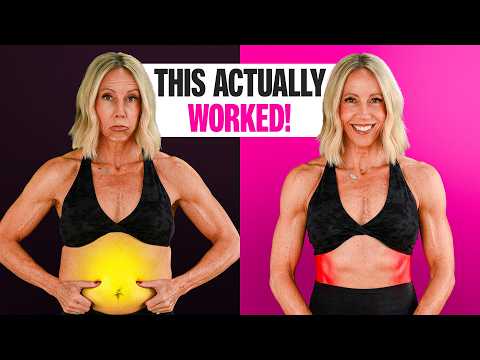
Nikkiey explains that falling estrogen in menopause shifts fat storage toward your midsection, and a slower metabolism, muscle loss and elevated cortisol add to it. Clean eating often hides too little protein and too few calories, and training six days a week on that can push your body into survival mode, holding on to belly fat.
Read the answer →
Menopause & Perimenopause Weight Loss
Do I need to do cardio to lose weight in menopause?
No. Nikkiey says cardio isn't what drives fat loss in menopause, and leaning on it can backfire. She explains that too much cardio spikes cortisol and burns muscle, especially in a calorie deficit. What she recommends instead is strength training as the foundation, plus enough protein, daily walking and proper recovery.
Read the answer →

Menopause & Perimenopause Weight Loss
What are the first signs of perimenopause?
According to guests on The WarriorBabe Show, the first signs usually aren't hot flashes or missed periods. Dr. Jolene Brighten says falling progesterone shows up first as worsening PMS, irritability, breast tenderness and waking at night before your period, sometimes from 35. Hatty McCafferty adds sleep disruption, skin changes, digestive shifts and fatigue.
Read the answer →
Watch or listen in full
More on this topic → 7 min
Menopause Workouts: Why Fewer Days and Straight Sets Help
Video · Feb 4, 2022
 12 min
Is Overtraining Causing Your Menopause Weight Gain?
Video · Jul 1, 2026
 22 min
How to Stick to Your New Year's Fitness Goals After 40
Episode 219 · Dec 27, 2024