

From 1 episode and 5 videos
Is good form more important than lifting heavier?
Answered by Nikkiey Stott and her guests · Updated
The short answer
Yes. Nikkiey's order is form first, then connection to the muscle, then weight. If you can't feel the target muscle working, adding weight doesn't make it stronger; other muscles take over and your joints pay for it. Drop the weight until you feel the right muscle, then build from there.
Hear Nikkiey answer it
Tap play to start right where it's answered. It keeps playing while you browse.
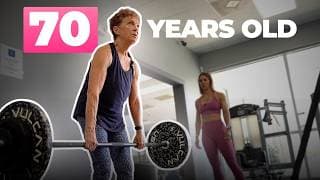
Nikkiey's order for lifting: form, then muscle connection, then weight
Plays from 11:55 · Video: Strength Training at 70 With Knee Replacements and Scoliosis
Why feeling the muscle beats chasing heavier weights and helps protect your joints
Plays from 2:45 · Ep. 267: Why Can't I Feel My Muscles Working When I Lift?
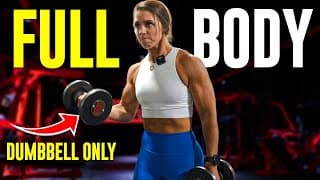
Nikkiey lowers her weight mid-workout when her form gets sloppy
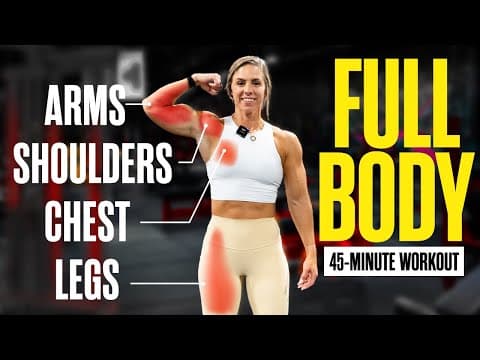
Plays from 3:37 · Video: 45-Minute Full Body Dumbbell Workout for Women Over 40
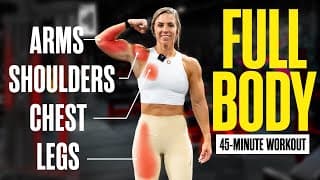
Swinging the weight? Put your ego aside and go lighter
Plays from 6:54 · Video: Full Body Gym Workout With Squats, Dumbbells and Cables
The other side: when a weight is too light, it's time to increase it
Plays from 4:16 · Video: Full Body Gym Workout With Squats, Dumbbells and Cables
The full answer
On the WarriorBabe Show, Nikkiey explains that heavier only helps if the right muscle is doing the work. Coaching Julie, a 70-year-old client with two partial knee replacements and scoliosis, she noticed Julie's form looked fine but her hamstring wasn't the main muscle working because the weight was a little too heavy. Once the weight came down, the hamstring took the load. If you can't engage the muscle, she says, it isn't getting stronger. On Ep. 267 she adds that feeling the muscle contract is more transformative than adding 5 or 10 pounds, and it helps protect your joints.
She calls skipping connection to hit bigger numbers ego lifting. Her fix is simple: drop the weight until you feel the target muscle, trust the feel and forget the number. She says she sometimes uses 10-pound dumbbells because her muscles feel them better than they would ever feel a 25.
She follows this in her own workouts:
- When her form got sloppy on seal rows, she lowered the weight for the last set: form over everything.
- When she was fatiguing quickly after training without food, she dropped the weight because losing form is counterproductive.
- Without straps, she used lighter dumbbells and slowed the tempo, and said the session was still effective.
- When she caught herself swinging, her advice was to put your ego aside and pick up a lighter weight.
Form first does not mean staying light forever. Nikkiey also says that if a weight feels too light and you're just going through the motions, increase it, because nothing happens with weight that's too easy. Julie was adding 2.5 to 5 pounds when she could, and Nikkiey pushed her to try a little heavier. Weight comes once the form and the connection are there.
From Nikkiey Stott and WarriorBabe's coaching. For education, not medical advice: talk to your doctor about your own health.
Women also ask
More questions →
Strength Training for Women
What is the mind-muscle connection?
The mind-muscle connection is your ability to tune into the specific muscle you're training, feel it working, and consciously engage it through the whole movement. Nikkiey compares it to focusing on one voice in a noisy room. She says feeling the muscle contract can be more transformative than chasing heavier weights.
Read the answer →
Strength Training for Women
Can I build muscle at home with just dumbbells?
Yes. On The WarriorBabe Show, the message is that muscle grows from the force it produces against resistance and how close you take it to failure. Gym machines and dumbbells are two delivery systems for that same signal. What matters is lifting heavy enough, resting enough, and gradually making it harder over time.
Read the answer →
Strength Training for Women
How can I work up to doing a pull-up?
Work up to a pull-up in stages. Nikkiey recommends starting with inverted pull-ups until they feel comfortable, then jumping up to the bar and slowly lowering yourself (negatives), then banded or machine-assisted pull-ups, and finally full bodyweight pull-ups. Each stage builds the back, arm and core strength the next one needs.
Read the answer →
Watch or listen in full
More on this topic → 7 min
45-Minute Full Body Dumbbell Workout for Women Over 40
Video · May 28, 2023
 30 min
Why Can't I Feel My Muscles Working When I Lift?
Episode 267 · Jun 13, 2025
 11 min
Full Body Gym Workout With Squats, Dumbbells and Cables
Video · Sep 17, 2023