

The short answer
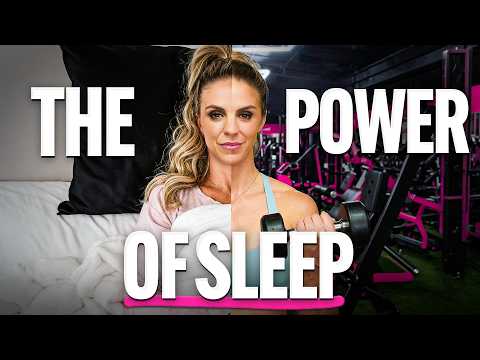
Yes. Nikkiey explains that you break muscle down in the gym and rebuild it during recovery, and most of that repair happens in deep sleep, when your body releases growth hormone. If you train hard but sleep poorly, she says, you're only doing half the work. She recommends at least seven hours, ideally seven to eight.
Hear Nikkiey answer it
Tap play to start right where it's answered. It keeps playing while you browse.
Nikkiey on why you break muscle down in the gym and rebuild it in deep sleep
Plays from 8:42 · Ep. 346: Can Poor Sleep Stop Fat Loss After 40?
How poor sleep cuts growth hormone, slowing muscle growth and prolonging soreness
Plays from 6:49 · Ep. 196: How Does Sleep Affect Fat Loss and Muscle After 40?
Why under seven hours of sleep can stall muscle building, and the hormones involved
Plays from 8:57 · Ep. 30: Why Aren't My Muscles Growing? 5 Fixes for Women
How sleep-driven cortisol can break down the muscle you've worked to build
Plays from 7:32 · Ep. 346: Can Poor Sleep Stop Fat Loss After 40?
The full answer
On Ep. 346, Nikkiey puts it simply: you don't build muscle inside the gym, you break it down. Training creates tiny tears in your muscle fibers, and your body repairs them afterward so they come back stronger. She says that repair happens mostly during deep sleep, when your body releases human growth hormone. That, she explains, is why two women can follow the exact same program and get very different results. If your training is solid and your results aren't, the missing piece may be your nights, not your effort.
Across episodes, she describes what short or broken sleep does:
- Less time to produce the hormones that repair muscle. On Ep. 30 she names growth hormone and testosterone, and on Ep. 196 she notes growth hormone production already declines as you age, which makes deep sleep matter more.
- Slower muscle growth, prolonged soreness, poorer recovery and feeling inflamed the next day (Ep. 196).
- Higher cortisol. On Ep. 30 and Ep. 346 she explains that sleep deprivation pushes cortisol up, which can break down muscle tissue for energy while signaling your body to hold onto fat, especially around the midsection.
- Worse workouts. Tired and sluggish, you won't perform at your best, which slows progress (Ep. 30).
Her target is at least seven hours, ideally seven to eight, and uninterrupted. On Ep. 30 she says the part you control is your nightly routine before your head hits the pillow, and she points to Ep. 25 for specific strategies. She also acknowledges a routine won't fix everything; if you're doing the basics and still sleeping badly, it may be worth digging deeper, and working with your doctor is a sensible place to start.
From Nikkiey Stott and WarriorBabe's coaching. For education, not medical advice: talk to your doctor about your own health.
Women also ask
More questions →
Sleep, Recovery & Lifestyle
How can I improve my sleep?
Start with the basics Nikkiey returns to again and again: cut screens and bright light before bed, keep your room cool and pitch black with the phone out, and go to bed and wake at the same times. Then try Dr. Stephen Cabral's 3-2-1 rule: no food three hours before bed, no liquids two hours, no screens one hour.
Read the answer →
Sleep, Recovery & Lifestyle
How does poor sleep affect weight loss?
Poor sleep works against fat loss on several fronts. Nikkiey explains that it raises your hunger hormone ghrelin, lowers your fullness hormone leptin, and raises cortisol, which she says signals your body to hold fat, break down muscle and become more insulin resistant. That means you can be in a calorie deficit and still stall.
Read the answer →
Sleep, Recovery & Lifestyle
How many hours of sleep do I need to lose fat?
Aim for seven to nine hours a night. Nikkiey explains that most adults need that range to support the hormones that drive hunger, cravings, recovery and fat storage. If you're getting five or six hours now, don't overhaul everything overnight. Add 15 to 30 minutes at a time until you get there.
Read the answer →
Watch or listen in full
More on this topic → 22 min
Why Aren't My Muscles Growing? 5 Fixes for Women
Episode 30 · Mar 17, 2023
 36 min
How Does Sleep Affect Fat Loss and Muscle After 40?
Episode 196 · Oct 7, 2024
 20 min
Can Poor Sleep Stop Fat Loss After 40?
Episode 346 · Mar 23, 2026