

From 3 episodes
How much water should I drink if I lift weights?
Answered by Nikkiey Stott and her guests · Updated
The short answer
If you're strength training and sweating, Nikkiey recommends about 100 to 128 ounces of water a day. On Ep. 140, Dr. Carolyn Dean gives a baseline of half your body weight in pounds as ounces, with more if you sweat. Nutritional therapist Louise Digby adds a simple check: aim for light yellow urine.
Hear Nikkiey answer it
Tap play to start right where it's answered. It keeps playing while you browse.
Nikkiey on why lifters need 100 to 128 ounces and why she skips the body-weight rule
Plays from 26:15 · Ep. 139: Why Isn't the Scale Moving When I Eat Well and Lift?
Dr. Carolyn Dean's half-your-body-weight baseline with colored sea salt per liter
Plays from 53:18 · Ep. 140: Does Magnesium Help Muscle Cramps and Workout Recovery?
Louise Digby on why there's no set amount and what urine color tells you
Plays from 38:03 · Ep. 138: Why Can't I Lose Weight in Perimenopause or Menopause?
Nikkiey's timing fix: water before coffee, reminders, and stopping at 6 p.m.
Plays from 27:04 · Ep. 139: Why Isn't the Scale Moving When I Eat Well and Lift?
The full answer
Nikkiey explains on Ep. 139 that when you train consistently, three to five times a week, your body pulls in more water. You need to replace what you sweat out and give your cells the hydration they need for repair and recovery. You break muscle down in the gym and rebuild it through what you eat, how much water you drink and how well you sleep. For women who are lifting hard, she says she doesn't care about the half-your-body-weight formula. Her target is 100 to 128 ounces. On Ep. 140 she puts it at around 100 to 120 ounces, depending on the person.
On that same episode, Dr. Carolyn Dean uses half your body weight in pounds, in ounces, as a baseline minimum, and says you need more if you're sweating. Her approach adds at least a quarter teaspoon of colored sea salt per liter. She says white sea salt has been refined and its minerals removed, and that people who sweat heavily without replacing minerals can end up feeling worse. That's her protocol, not a universal rule. If you have a medical condition, run added salt by your doctor.
On Ep. 138, Louise Digby offers a different view. She says there's no research-backed set amount, though people carrying more body fat need more. Her rule of thumb is light yellow urine: not dark, and not completely clear all the time. If you eat a fairly clean diet, she says your thirst will guide you. Many people mistake thirst for hunger, so try a glass of water before a between-meal snack.
If hitting your number feels impossible, Nikkiey's fix is timing:
- Drink first thing in the morning, before coffee: hydrate, then caffeinate.
- Set phone reminders through the day.
- Stop around 6 p.m. so you aren't up at night.
From Nikkiey Stott and WarriorBabe's coaching. For education, not medical advice: talk to your doctor about your own health.
Women also ask
More questions →
Sleep, Recovery & Lifestyle
How can I improve my sleep?
Start with the basics Nikkiey returns to again and again: cut screens and bright light before bed, keep your room cool and pitch black with the phone out, and go to bed and wake at the same times. Then try Dr. Stephen Cabral's 3-2-1 rule: no food three hours before bed, no liquids two hours, no screens one hour.
Read the answer →
Sleep, Recovery & Lifestyle
Does alcohol stop you from building muscle?
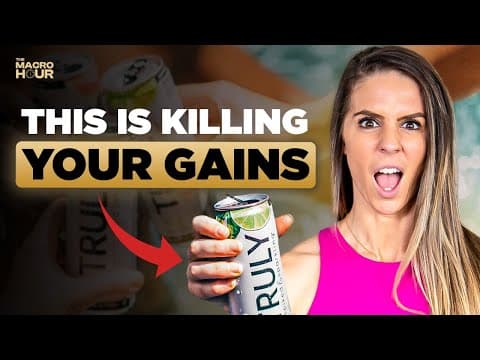
According to Nikkiey, alcohol works directly against building muscle. It slows muscle protein synthesis, the repair process after strength training, and increases muscle breakdown, so tissue can be broken down faster than it's rebuilt. The result is slower recovery, harder muscle gain and a less toned look, even when you're doing everything else right.
Read the answer →

Sleep, Recovery & Lifestyle
How do I recover from muscle soreness faster?
Recover faster by fixing your recovery inputs, not by pushing harder. Nikkiey points to sleep, eating enough (especially protein), and hydration, plus not hammering the same muscles over and over. She recommends spreading leg work across full-body sessions instead of one brutal leg day, and treating soreness past 72 hours as a sign to reassess.
Read the answer →
Watch or listen in full
More on this topic → 47 min
Why Can't I Lose Weight in Perimenopause or Menopause?
With Louise Digby
 30 min
Why Isn't the Scale Moving When I Eat Well and Lift?
Episode 139 · Mar 18, 2024
 59 min
Does Magnesium Help Muscle Cramps and Workout Recovery?
With Dr. Carolyn Dean