Skip to content

Real answers from WarriorBabe's coaches

Ask WarriorBabe

Straight answers to what women over 40 ask about fat loss, menopause, protein and lifting, drawn from every video and episode. Tap play on any question to hear our coaches and guests answer it.

Page 9

  • Macros & Macro Tracking

    How many meals a day should I eat when tracking macros?

    Nikkiey Stott's guidance is to eat at least five meals a day while tracking macros, and that count includes your pre- and post-workout meals. Eating fewer meals is fine as long as you still hit your macros and spread your protein across every meal, so cravings don't take over the rest of your day.

    Read the answer →

  • Metabolism, Eating More & Reverse Dieting

    Why didn't my reverse diet work?

    Nikkiey says it most likely did work. You just didn't stay in it long enough for your body to heal. Many women try a reverse diet for two to six weeks, panic when the scale goes up, and jump back into a deficit. If you've dieted for years, she says repair can take 6 to 12 months.

    Read the answer →

  • Strength Training for Women

    Are squats bad for your knees after 40?

    No. Maggie explains that knees usually hurt because the muscles around them are weak, and the squat is the single best exercise for strengthening the quads, glutes and the whole chain that supports the knee. Avoiding squats doesn't protect your knees; it lets them get worse. Her own knee pain eased within weeks of goblet squatting.

    Read the answer →

  • Macros & Macro Tracking

    Should I count net carbs or total carbs when tracking macros?

    Track total carbs. On The WarriorBabe Show, Nikkiey Stott says net carbs are a keto approach, and one WarriorBabe coach explains that every carb is a carb, fiber and sugar included. Counting all of them keeps your daily carb intake consistent, while subtracting fiber makes it swing from day to day.

    Read the answer →

  • Metabolism, Eating More & Reverse Dieting

    Why is maintenance so hard after losing weight?

    Maintenance is hard because it stops rewarding you the way fat loss did. Nikkiey explains that the scale holds steady, photos barely change, workouts feel repetitive and compliments slow down, so the regular dopamine hit disappears. Eating more can also feel scary. The fix is to give yourself new goals, not to keep dieting.

    Read the answer →

  • Strength Training for Women

    Can I strength train with chronic back pain?

    Yes, according to The WarriorBabe Show, many women can, if they start in the right place. On Ep. 243, client Paige describes how her coach began with light, back-safe exercises and built her core first, until she could deadlift without pain. Nikkiey adds stretching rather than cutting back. Check with your doctor first.

    Read the answer →

  • Macros & Macro Tracking

    Should I put my goal weight or my current weight into a macro calculator?

    Use your current weight. Nikkiey Stott explains that your macros need to feed the body you have right now, and that is what puts you in the appropriate deficit. If you enter your goal weight, you will be eating too little food. Once the numbers are working, she says not to recalculate until you hit a plateau.

    Read the answer →

  • Metabolism, Eating More & Reverse Dieting

    Do my maintenance calories change over time?

    Yes. Nikkiey explains that your maintenance calories are not a fixed number. After a fat loss phase you start at the low end of your maintenance threshold, then slowly raise your macros weekly or biweekly while your weight and leanness hold. Over time, and as you build muscle, your body can handle much more food.

    Read the answer →

  • Strength Training for Women

    Do I have to sweat for a workout to be effective?

    No. Nikkiey explains that sweat is your body regulating its temperature, not a measure of how effective your workout was. She barely sweats herself and still trains effectively. A good session is one where you executed with intention, challenged your muscles, and walked away feeling it was sustainable, not drenched or wrecked.

    Read the answer →

  • Macros & Macro Tracking

    Should I weigh meat raw or cooked when tracking macros?

    On The WarriorBabe Show, one WarriorBabe coach weighs her meat after it's cooked. She cooks the chicken, puts it on a food scale in ounces, then logs that exact weight in MyFitnessPal. The point is to log exactly what you're eating instead of guessing. The episodes don't compare raw and cooked weights directly.

    Read the answer →

  • Metabolism, Eating More & Reverse Dieting

    Does doing a lot of cardio slow down your metabolism?

    In Nikkiey Stott's view, yes. Lots of cardio teaches your body to become an efficient endurance machine, and it conserves calories by turning down muscle, which slows your metabolism over time. She recommends about 30 minutes of slow, steady-state cardio a few times a week, paired with strength training.

    Read the answer →

  • Strength Training for Women

    Does barre build muscle?

    Not on its own, according to the women on The WarriorBabe Show. On Ep. 242, Linda explains that barre breaks muscle down and you need enough protein to build it back. On Ep. 312, Melissa did Pure Barre for three years without her body changing; weight training and eating more with a coach did it.

    Read the answer →

  • Macros & Macro Tracking

    Should I weigh my food or use measuring cups when tracking macros?

    Weigh it. Nikkiey recommends a food scale in grams and ounces because cups aren't fully accurate. Food can be packed into a cup, so you may be eating more than you think. She uses ounces for meats like chicken, turkey and ground beef, and grams for rice, oatmeal, peanut butter, jelly and yogurt.

    Read the answer →

  • Metabolism, Eating More & Reverse Dieting

    Should I eat the BMR number a calculator gives me to lose weight?

    No. Nikkiey Stott explains that your BMR is only what your body burns at rest: sitting, talking and breathing. Walking, workouts and daily movement add to that and can push your real needs well above it. Instead of eating your BMR, she says to follow the WarriorBabe calculator, which accounts for your activity and your goal.

    Read the answer →

  • Strength Training for Women

    How do I break through a strength plateau in the gym?

    Usually the fix is to train harder on the plan you already have, not to switch programs. Nikkiey explains that a few weeks in, you've likely just learned the exercises. Track your lifts, push the last three reps of each set, go heavier when you can, and look honestly at your recovery and how much you're eating.

    Read the answer →

  • Macros & Macro Tracking

    Why do I always go over my macros at the end of the day?

    You usually go over because you're tracking as you go. Nikkiey explains that logging meals as you eat them leaves you at night with leftover protein, carbs and fats and no meal that fits. Planning and logging your food the night before, or the morning of, lets you nail your numbers before the day starts.

    Read the answer →

  • Metabolism, Eating More & Reverse Dieting

    What is survival mode and how do I get my body out of it?

    Survival mode is what Nikkiey calls your body adapting when it senses an unsafe environment. Chronic under-eating, overtraining and stress signal it to slow your metabolism and hold on to fat. To get out, she says to feed it protein, carbs and healthy fats, sleep around eight hours, strength train instead of overtraining, and manage stress.

    Read the answer →

  • Strength Training for Women

    Should I do compound or isolation exercises first in my workout?

    Do your compound exercises first. One WarriorBabe coach explains that tiring out smaller muscles with isolation work before the big lifts means you lift lighter and do fewer reps on the movements that build the most strength and muscle. Save isolation exercises for afterward, when they can target specific muscles and finish them off.

    Read the answer →

  • Macros & Macro Tracking

    Do I need to count the cooking oil I use in my macros?

    Not necessarily. Nikkiey Stott says she wouldn't count all of the olive oil you cook with, because in her view the heat breaks down much of what's in it. If you want to account for it, she suggests logging about half of what you measured out, such as half a tablespoon instead of a full one.

    Read the answer →

  • Metabolism, Eating More & Reverse Dieting

    Why am I so sore after workouts when I'm eating very little?

    Nikkiey explains that when you eat very little and still push hard in your workouts, your body doesn't have what it needs to heal and recover, so you end up insanely sore. Too few calories means too few vitamins and nutrients for your muscles, and cutting carbs removes a key fuel for muscle recovery.

    Read the answer →

  • Strength Training for Women

    What are the best strength exercises for women over 50?

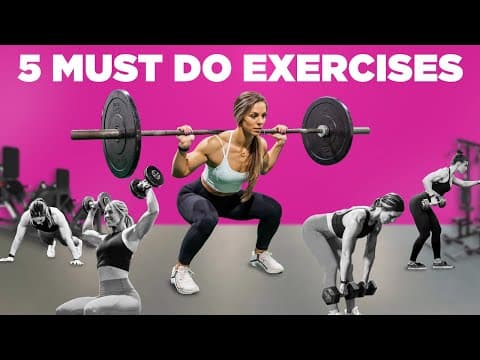
    One WarriorBabe coach's top five for women over 50 are squats, push-ups, dumbbell deadlifts, standing shoulder presses, and lat pulldowns or dumbbell rows. These compound moves work multiple muscles at once to support muscle, bone density, balance and everyday strength. The key is getting progressively stronger at them, not just going through the motions.

    Read the answer →

  • Macros & Macro Tracking

    Does 'if it fits your macros' mean I can eat anything?

    No. On The WarriorBabe Show, Nikkiey explains that 'if it fits your macros' still means 80 to 85 percent of your food should be wholesome whole foods. Only about 10 to 15 percent should come from treats like chocolate, cookies or pizza. That small share for treats keeps you sane without making them the whole plan.

    Read the answer →

  • Strength Training for Women

    What is a back-friendly alternative to sit-ups?

    The dead bug is a back-friendly alternative to sit-ups. One WarriorBabe coach explains that sit-ups aren't the most back-friendly move as we get older. Dead bugs train your core to resist movement, which supports spinal health, posture and strength. She says they help if you've dealt with lower back pain, and you only need a mat.

    Read the answer →

  • Macros & Macro Tracking

    Does tracking macros work if I overeat instead of undereat?

    Yes. Nikkiey says macros work for overeaters just as powerfully as for under-eaters. The fix usually isn't eating less, it's eating differently: raise protein dramatically and bring carbs and fats into a structured range. When your body finally gets real fullness signals, total calories often come down on their own.

    Read the answer →

  • Strength Training for Women

    What should I do during a deload week?

    During a deload week, keep training but do noticeably less. Cut your volume by roughly 40 to 60 percent with similar weights, or lower the weight and keep reps higher. Keep protein and calories steady, prioritize sleep, and stick to light movement like walking or yoga. Then rest without guilt.

    Read the answer →

  • Macros & Macro Tracking

    How should I balance protein, carbs and fat at each meal?

    Maggie splits each meal into roughly 35 to 40 grams of protein, about the same amount of carbohydrates, and around 15 to 20 grams of fat. She says this balance keeps her satisfied, gives her the energy to push hard in her workouts and keeps her blood sugar regulated.

    Read the answer →

  • Strength Training for Women

    Why am I sore after some workouts and not others?

    Soreness varies because of what you did and how ready you were. Nikkiey explains that new exercises, a new training block, and more intensity (heavier weights, more reps, shorter rest) make soreness more likely, while sleep, hydration, yesterday's macros and your period affect recovery. Not being sore doesn't mean the workout didn't work.

    Read the answer →

  • Macros & Macro Tracking

    How strict should I be with my macros during maintenance?

    Nikkiey suggests aiming to hit your macros about 80% of the time during maintenance. After the precision of fat loss, this is the phase to pull back and allow more flexibility while keeping the habits that got you there. The goal is a stable weight and a calm relationship with food, not perfect tracking.

    Read the answer →

  • Strength Training for Women

    Are jump squats good for growing my glutes?

    Not really. One WarriorBabe coach ranks jump squats in D tier for glute growth. They're explosive and great for cardio, but the emphasis is on power and endurance, not building glute strength or size. If bigger, stronger glutes are your goal, put your effort into loaded moves like hip thrusts and Bulgarian split squats.

    Read the answer →

  • Macros & Macro Tracking

    Should I track macros in grams or percentages?

    Track in grams. Nikkiey explains that percentage goals shift whenever your total calories shift. A 40% protein goal is a different amount on a 1,600-calorie day than on a 2,100-calorie day. Fixed gram targets, like 150 grams of protein, give you a stable number to build meals around, measure progress against and troubleshoot.

    Read the answer →

  • Strength Training for Women

    How can I fix rounded shoulders and bad posture after 40?

    Train your back directly. Maggie recommends the bent-over row because the back muscles control your posture, pull your shoulders open and lift your chest. Most women over 40 skip them because they can't see them in the mirror. When she started rowing with real weight, her shoulders stopped rounding forward within weeks.

    Read the answer →

  • Strength Training for Women

    How can I tell muscle soreness from joint pain?

    Muscle soreness is a dull ache in the middle of the muscle that shows up a day or two after training and fades within a couple of days. Joint pain is sharp, sits in or around the joint and usually hits during the movement. Maggie's rule: soreness means you're fine; joint pain means stop, modify or swap the exercise.

    Read the answer →

  • Strength Training for Women

    How do I know if my strength training program is working?

    Your program is working if you're getting stronger, progressing your weights, improving your form, recovering well, consistently hitting your protein and noticing your clothes fit differently. Nikkiey Stott also asks how long you've truly been consistent, and whether the plan is failing or your body is simply changing more slowly than you expected.

    Read the answer →

  • Strength Training for Women

    How do I make a home workout harder without a gym?

    Make it harder by adding two to three reps or a few extra seconds each week, shortening your rest between sets, and slowing every movement down. When that starts to feel too easy, one WarriorBabe coach suggests adding light dumbbells or resistance bands. You don't need a gym or heavy weights to keep progressing.

    Read the answer →

  • Strength Training for Women

    How often should I train glutes after 40?

    Train glutes twice a week. One WarriorBabe coach explains that two sessions are enough to stimulate growth and still allow recovery, and that's where most women start. As you advance you can move to three, but two well-executed sessions will always beat three sloppy ones. Progressive load, sleep and protein matter as much as frequency.

    Read the answer →

  • Strength Training for Women

    What is the difference between exercising and training?

    Exercise is any movement: walking, running, a class at your gym, or a fun workout you found on Instagram. Training has intention behind it. On The WarriorBabe Show, Nikkiey explains that training means working toward a specific adaptation, like building muscle, and measuring whether that adaptation is actually happening over time.

    Read the answer →

  • Strength Training for Women

    Will squats give me bulky legs?

    In one WarriorBabe coach's experience, no. She once feared bulky legs too, until she noticed the women with the bodies she admired were squatting heavy. Squats changed her body more than any other exercise, and building that muscle is what reshapes body composition after 40, especially as estrogen drops and muscle gets harder to keep.

    Read the answer →

Browse questions by topic