

From 2 videos
Should I do compound or isolation exercises first in my workout?
Answered by Nikkiey Stott and her guests · Updated
The short answer
Do your compound exercises first. Nikkiey explains that tiring out smaller muscles with isolation work before the big lifts means you lift lighter and do fewer reps on the movements that build the most strength and muscle. Save isolation exercises for afterward, when they can target specific muscles and finish them off.
Hear Nikkiey answer it
Tap play to start right where it's answered. It keeps playing while you browse.
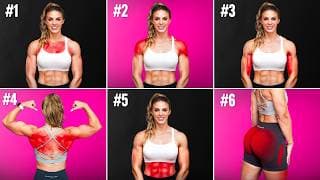
Nikkiey on why isolation work first drags down your big compound lifts
Plays from 12:55 · Video: How to Structure a Full Body Workout in Menopause
The exact exercise order Nikkiey follows in her full body workout
Plays from 14:49 · Video: How to Structure a Full Body Workout in Menopause
Why compound lifts first gives Nikkiey more strength, focus and quality reps
Plays from 14:01 · Video: How to Structure a Full Body Workout in Menopause
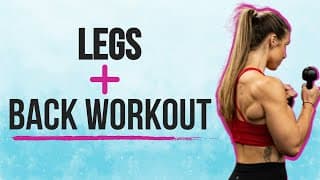
Nikkiey explains what a compound exercise is and which muscles it works
Plays from 0:12 · Video: Deadlift-Focused Leg and Back Gym Workout for Women
The full answer
A compound exercise works several muscle groups at once. Nikkiey points to squats and deadlifts, which hit the quads, hamstrings, glutes, lower back, upper back and traps. Isolation work focuses on one smaller muscle. Her example of getting the order wrong: exhaust your triceps on a machine, then try pushups or a chest press. Your chest and shoulders can't be trained well because one tired small muscle is holding everything back. She says she notices a big difference when she puts compound lifts first, because that's when she has the most energy, strength and focus, so she can push more weight and get more quality reps.
On the full body workout video, Nikkiey walks through the order she uses:
The whole session takes about 45 to 60 minutes. Her leg and back video follows the same idea: a barbell warmup, deadlifts as the main lift, then smaller isolation-style moves later.
- A lighter, controlled warmup movement, such as reverse lunges
- Heavy lower body compounds like squats, deadlifts, good mornings or RDLs
- Lower body isolation, such as leg extensions, hamstring curls or glute kickbacks
- Upper body compounds like rows and pushups
- Accessory and burnout work for biceps, triceps and shoulder press
The mistake Nikkiey says she sees all the time is women moving from machine to machine at random, doing a little legs, a little arms, whatever is open. You're technically working out, but with no structure it's hard to progress, and you leave feeling like you did something without making progress. If your workouts haven't been changing your body, it may not be effort you're missing. It may simply be the order. A planned structure, repeated until it becomes second nature, is what lets you keep progressing.
From Nikkiey Stott and WarriorBabe's coaching. For education, not medical advice: talk to your doctor about your own health.
Women also ask
More questions →
Strength Training for Women
Are full body workouts better than body part splits for women over 40?
For most women over 40, Nikkiey Stott recommends full body workouts over body part splits. One exercise per muscle group, four to five days a week, spreads the work out so you recover between sessions and stay consistent. She's clear that bro splits aren't bad, though. Progressive overload is what matters most.
Read the answer →
Strength Training for Women
What exercises should a full body workout for women over 40 include?
Nikkiey's full body workouts draw from joint-friendly staples: Smith machine or pendulum squats, hip thrusts, Romanian deadlifts, seated leg curls, rows, lat pulldowns or assisted pull-ups, incline presses, cable lateral raises, overhead tricep extensions and curls. Each session you pick one per muscle group, usually six or seven exercises, and push each one hard.
Read the answer →
Strength Training for Women
Are weight machines as good as free weights for building muscle?
For building muscle, yes. Nikkiey says machines are not cheating and are one of the best tools for feeling your muscles work. She built most of her muscle in her first two years barely touching barbells. She still recommends a blend, because free weights build coordination, balance and core control that machines don't.
Read the answer →
Watch or listen in full
More on this topic →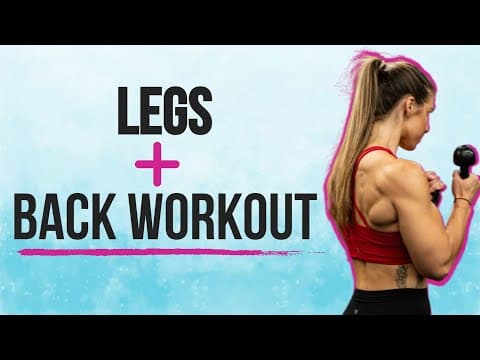 8 min
Deadlift-Focused Leg and Back Gym Workout for Women
Video · Feb 3, 2021
 17 min
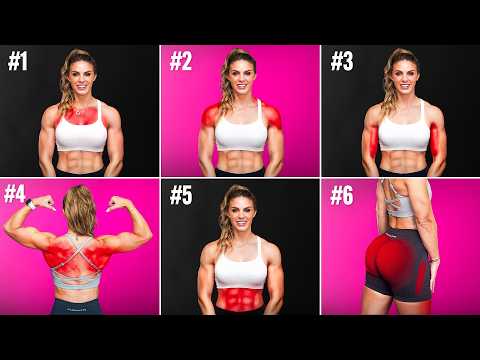
How to Structure a Full Body Workout in Menopause
Video · Apr 25, 2026