

From 2 videos
What is a back-friendly alternative to sit-ups?
Answered by Maggie Topham and WarriorBabe's coaches · Updated
The short answer
The dead bug is a back-friendly alternative to sit-ups. One WarriorBabe coach explains that sit-ups aren't the most back-friendly move as we get older. Dead bugs train your core to resist movement, which supports spinal health, posture and strength. She says they help if you've dealt with lower back pain, and you only need a mat.
Hear it answered
Tap play to start right where it's answered. It keeps playing while you browse.

One WarriorBabe coach on why dead bugs beat sit-ups for your back after 40
Plays from 3:54 · Video: 5-Move No-Equipment Home Workout for Women Over 40

Why dead bugs train the deep core muscle most women have never worked
Plays from 2:34 · Video: 5 Dumbbell Exercises for Menopause Belly Fat at Home
Plank pull-throughs as a spine-friendly core move that builds stability
Plays from 6:08 · Video: 5 Dumbbell Exercises for Menopause Belly Fat at Home
The full answer
One WarriorBabe coach explains that sit-ups are still treated as the go-to core move, but they are not the most back-friendly option, especially with age. That's why so many of the women she coaches prefer dead bugs. The move trains the transverse abdominis, the deep core muscle that pulls your belly inward. Maggie says many women over 40 who struggle with back pain, a weak core or recurring injuries have never trained this muscle properly, or didn't know it existed. She calls dead bugs one of the safest and most effective ways to strengthen it without putting stress on your neck, back or joints.
How WarriorBabe's coaches cue it:
- Lie on a mat on the floor. No other equipment is needed.
- Press your lower back firmly into the floor to protect your spine and switch on your deep core.
- Move opposite arm and opposite leg, like a slow, controlled march.
- Lower your arm and leg slowly, keeping your lower back pressed down the whole time.
- She suggests three sets of eight reps per side.
She admits it's not flashy, but she calls it powerful. Training your core to resist movement is what she ties to injury prevention and total body control. Crunching through endless reps is not the point.
If you want a next step, Maggie also covers plank pull-throughs in her dumbbell routine. She says they train anti-rotation and protect your spine by building stability, where many traditional ab exercises stress it. If you've avoided core work because sit-ups hurt your back, the problem was the exercise, not you. If you have an ongoing back condition, check with your doctor or a qualified professional before starting.
From WarriorBabe's coaches (how we write our answers). For education, not medical advice: talk to your doctor about your own health.
Women also ask
More on Strength Training for Women →
Strength Training for Women
Are squats bad for your knees after 40?
No. Maggie explains that knees usually hurt because the muscles around them are weak, and the squat is the single best exercise for strengthening the quads, glutes and the whole chain that supports the knee. Avoiding squats doesn't protect your knees; it lets them get worse. Her own knee pain eased within weeks of goblet squatting.
Read the answer →
Strength Training for Women
What can I do if I can't do a full push-up?
Start with a modified push-up. Do them against a wall, counter or sturdy table, or with your knees on the floor instead of a full plank. WarriorBabe's coaches favor incline push-ups for women over 40 because they ease wrist and shoulder strain while working the same muscles. Lower the incline as you get stronger.
Read the answer →
Strength Training for Women
How do I make a home workout harder without a gym?
Make it harder by adding two to three reps or a few extra seconds each week, shortening your rest between sets, and slowing every movement down. When that starts to feel too easy, one WarriorBabe coach suggests adding light dumbbells or resistance bands. You don't need a gym or heavy weights to keep progressing.
Read the answer →

Strength Training for Women
How often should women in menopause lift weights?
Two to four sessions a week, depending on who you ask on The WarriorBabe Show. Esther Blum and Dr. Stacy Sims put the minimum at two full-body sessions, with three to build more muscle and bone. Nikkiey suggests about four, or three, up to an hour each. Everyone agrees: not every day, because recovery builds muscle.
Read the answer →

Strength Training for Women
How heavy should a woman over 50 lift weights?
Heavy enough that the last two or three reps of each set feel hard but not painful, with good form. There is no single number. Start lighter to learn the movements, then add weight once you can do about 12 to 15 reps without struggling. Nikkiey suggests going up two to five pounds at a time.
Read the answer →

Strength Training for Women
How many days a week should I lift weights?
Three to four days a week is Nikkiey's core recommendation for women over 40: 30 to 45 minutes per session, built on compound lifts and progressive overload, with walking on off days and seven to eight hours of sleep. Lifting six or seven days a week, she says, breaks down muscle faster than you can rebuild it.
Read the answer →
Watch or listen in full
More on this topic → 7 min
5-Move No-Equipment Home Workout for Women Over 40
Video · Nov 1, 2025
 9 min
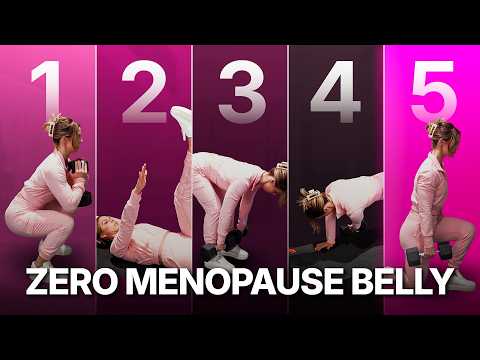
5 Dumbbell Exercises for Menopause Belly Fat at Home
Video · Feb 7, 2026