

From 1 episode and 1 video
Do I have to sweat for a workout to be effective?
Answered by Nikkiey Stott and her guests · Updated
The short answer
No. Nikkiey explains that sweat is your body regulating its temperature, not a measure of how effective your workout was. She barely sweats herself and still trains effectively. A good session is one where you executed with intention, challenged your muscles, and walked away feeling it was sustainable, not drenched or wrecked.
Hear Nikkiey answer it
Tap play to start right where it's answered. It keeps playing while you browse.
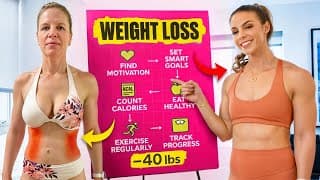
Nikkiey on why sweat and three-day soreness don't mean a workout worked
Plays from 5:17 · Video: Full Body Workout Routine for Women Over 40: 4-5 Days
Nikkiey explains that sweat is just your body cooling itself down
Plays from 13:46 · Ep. 85: How Exercise Works in Your Body, Explained Simply
Nikkiey on barely sweating and still having effective workouts
Plays from 14:37 · Ep. 85: How Exercise Works in Your Body, Explained Simply
Why training to the point of soreness kills consistency after 40
Plays from 3:09 · Video: Full Body Workout Routine for Women Over 40: 4-5 Days
The full answer
On Ep. 85, Nikkiey breaks down what sweat actually does. When you train, blood vessels move closer to your skin and widen to release heat, and sweat cools you down, like spraying water on something hot. That's all it is. In her words, it doesn't grade the type of workout you're having. Plenty of women finish a strong, productive session barely damp, and that includes Nikkiey.
In her full-body training video she adds soreness to the same myth. Feeling sore for three days isn't proof the workout worked. She says it's a sign your recovery is shot and your body is inflamed. After 40, with hormones fluctuating, stress stacking up and recovery slower than it used to be, hammering one muscle group until you limp around for days tends to backfire. You skip the next workouts because you're still sore, lose momentum, and then blame yourself for not being consistent, when the program is what isn't built for you.
Here's what Nikkiey uses to judge a workout instead:
- You executed each movement with intention
- You challenged your muscles
- You left feeling like you did something sustainable, not like you need a two-hour nap
- You're getting stronger, more consistent and more capable over time
She says the shift changed everything for her. When she stopped chasing soreness and started chasing strength, she had energy outside the gym, looked forward to training, and got leaner and stronger while being more consistent than ever. Progress is the measure, not sweat and not soreness.
From Nikkiey Stott and WarriorBabe's coaching. For education, not medical advice: talk to your doctor about your own health.
Women also ask
More questions →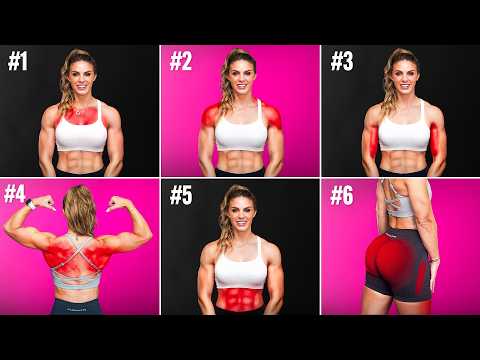
Strength Training for Women
Are full body workouts better than body part splits for women over 40?
For most women over 40, Nikkiey Stott recommends full body workouts over body part splits. One exercise per muscle group, four to five days a week, spreads the work out so you recover between sessions and stay consistent. She's clear that bro splits aren't bad, though. Progressive overload is what matters most.
Read the answer →
Strength Training for Women
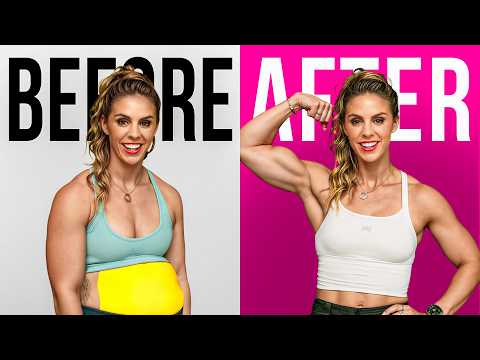
What exercises should a full body workout for women over 40 include?
Nikkiey's full body workouts draw from joint-friendly staples: Smith machine or pendulum squats, hip thrusts, Romanian deadlifts, seated leg curls, rows, lat pulldowns or assisted pull-ups, incline presses, cable lateral raises, overhead tricep extensions and curls. Each session you pick one per muscle group, usually six or seven exercises, and push each one hard.
Read the answer →
Strength Training for Women
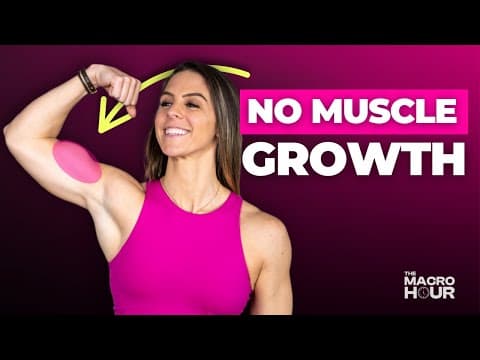
What is the mind-muscle connection?
The mind-muscle connection is your ability to tune into the specific muscle you're training, feel it working, and consciously engage it through the whole movement. Nikkiey compares it to focusing on one voice in a noisy room. She says feeling the muscle contract can be more transformative than chasing heavier weights.
Read the answer →
Watch or listen in full
More on this topic →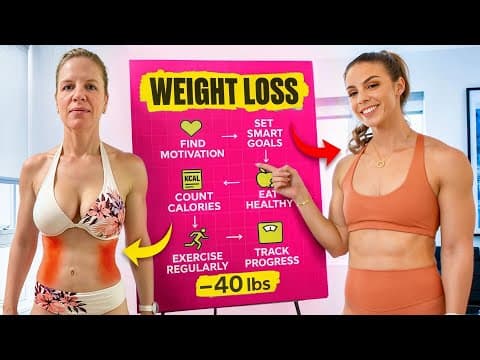 8 min
Full Body Workout Routine for Women Over 40: 4-5 Days
Video · Jul 3, 2025
 27 min
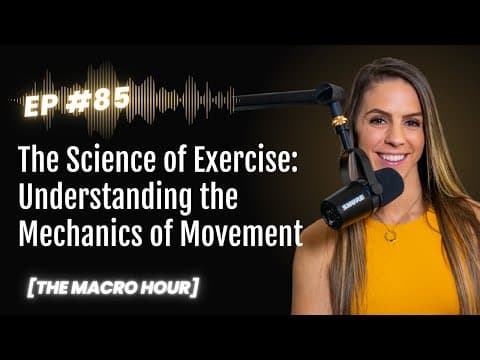
How Exercise Works in Your Body, Explained Simply
Episode 85 · Aug 14, 2023