

From 2 episodes and 1 video
What is the mind-muscle connection?
Answered by Nikkiey Stott and her guests · Updated
The short answer
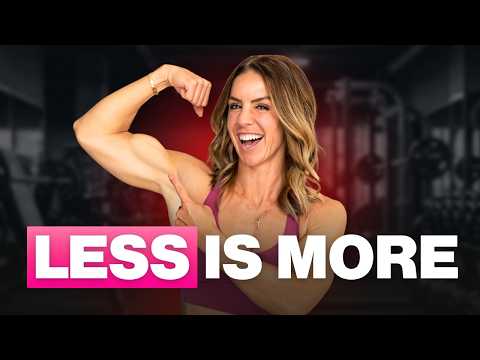
The mind-muscle connection is your ability to tune into the specific muscle you're training, feel it working, and consciously engage it through the whole movement. Nikkiey compares it to focusing on one voice in a noisy room. She says feeling the muscle contract can be more transformative than chasing heavier weights.
Hear Nikkiey answer it
Tap play to start right where it's answered. It keeps playing while you browse.
Nikkiey defines the mind-muscle connection in real-world terms
Plays from 3:55 · Ep. 267: Why Can't I Feel My Muscles Working When I Lift?
Why focusing on one muscle is like hearing one voice in a noisy room
Plays from 21:37 · Ep. 85: How Exercise Works in Your Body, Explained Simply
Why the mind-muscle connection is a sustainable strength concept, not a gimmick
Plays from 27:03 · Ep. 267: Why Can't I Feel My Muscles Working When I Lift?

What to do when you can't feel a muscle, and when the weight is too light
Plays from 3:47 · Video: Full Body Gym Workout With Squats, Dumbbells and Cables
The full answer
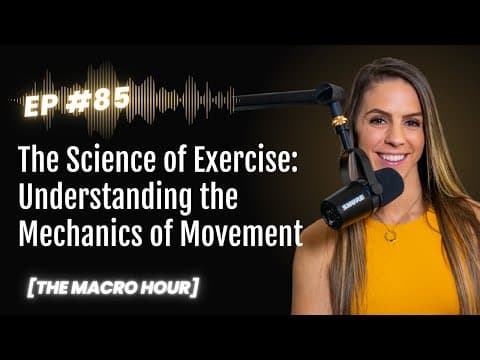
On Ep. 85, Nikkiey explains that your brain sends signals to your muscles through nerves, and more signals mean more strength. The mind-muscle connection is about focusing fully on the muscle you're working. If your head is on dinner, soccer pickup, work, or a fight with your husband, you aren't focused on the weight, the movement, or the muscle. When you really concentrate on contracting it, you feel it working harder. She learned this herself with her lats. She had never trained her back before fitness and had no idea how to connect to that muscle mentally.
On Ep. 267, Nikkiey says it isn't a fitness buzzword or a gimmick. She calls it a sustainable strength-building concept that helps you train smart, train consistently and train without ego. If you're lifting hard and maxing out sets but don't feel the muscle and aren't seeing results, adding 5 or 10 pounds isn't the fix. She says feeling the contraction does more for you and helps protect your joints. The FAQ for that episode adds that she recommends dropping the weight until you feel the target muscle, and not increasing it while you build the connection.
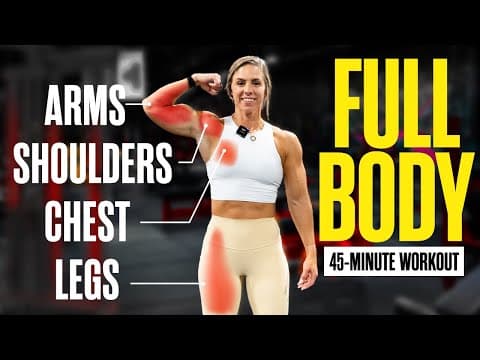
There is some nuance. In a workout video, Nikkiey struggles to feel her chest during incline presses even with good form. Her advice is to keep doing the exercises you find hard so your body gets used to them, the way she eventually learned to feel her lats on pulldowns. Then she adds that the weight may be too light. After she went heavier, she felt more activation. The common thread is that you shouldn't be going through the motions, whether that's because the load is too heavy or too light.
To practice it, Nikkiey suggests choosing one exercise each workout day, such as a squat, lat pulldown, lunge or glute bridge, and doing it with intention. Warm up feeling the muscle, then make your last tough reps, around 7 to 10, ones you actually feel burning.
From Nikkiey Stott and WarriorBabe's coaching. For education, not medical advice: talk to your doctor about your own health.
Women also ask
More questions →
Strength Training for Women
Is good form more important than lifting heavier?
Yes. Nikkiey's order is form first, then connection to the muscle, then weight. If you can't feel the target muscle working, adding weight doesn't make it stronger; other muscles take over and your joints pay for it. Drop the weight until you feel the right muscle, then build from there.
Read the answer →
Strength Training for Women
How should I warm up before lifting weights?
Warm up for 5 to 10 minutes, not 30, Nikkiey says. Do a few minutes of light cardio to raise your heart rate, some gentle mobility like arm circles or glute bridges, then one or two lighter, high-rep sets of your first exercise so your joints, muscles and movement pattern are ready before your working sets.
Read the answer →

Strength Training for Women
What is time under tension in weight training?
Time under tension is how long your muscle is working during a set. You increase it by slowing each rep down, especially the lowering portion. Nikkiey explains that taking 45 seconds instead of 30 to finish 12 reps maximizes muscle breakdown, which builds muscle when you follow it with good eating and recovery.
Read the answer →
Watch or listen in full
More on this topic →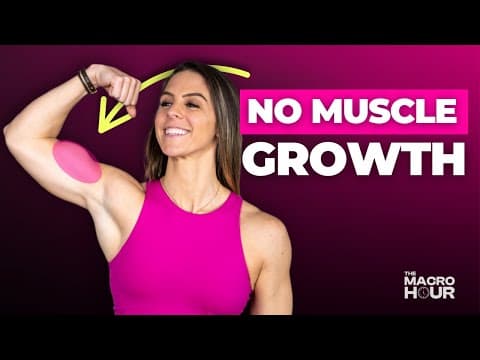 30 min
Why Can't I Feel My Muscles Working When I Lift?
Episode 267 · Jun 13, 2025
 11 min
Full Body Gym Workout With Squats, Dumbbells and Cables
Video · Sep 17, 2023
 27 min
How Exercise Works in Your Body, Explained Simply
Episode 85 · Aug 14, 2023