The short answer
Yes, your hormones change after 40, and those changes can make fat loss and building muscle harder. Nikkiey Stott explains that estrogen and progesterone decline, testosterone shifts, insulin resistance can show up and fat moves toward your middle. Her view is that you are not stuck. Eating enough, prioritizing protein, lifting with progressive overload and protecting your sleep and stress shape how those changes play out.
What to know
- Nikkiey Stott's view is that hormones do change in your 40s, but your daily habits shape how those changes play out, so you are not stuck with the symptoms.
- Dr. Jolene Brighten says progesterone, not estrogen, is often the first hormone to decline, showing up as worse PMS, irritability and early waking before your period.
- Nikkiey explains that chronic under-eating pushes your body into survival mode, which she says raises cortisol, slows thyroid function and breaks down muscle.
- Normal labs are not the same as optimal, so Nikkiey suggests asking your doctor about a full thyroid panel, sex hormones, cortisol, fasting insulin and more.
- Across the episodes, HRT is described as helpful for some women but not enough on its own to produce fat loss without nutrition, training and recovery.
- Dr. Morgan Nolte says muscle is the main reservoir for the glucose you eat, which makes strength training a core tool for insulin resistance.
On this page
- What happens to your hormones after 40?
- Progesterone: often the first hormone to change
- Estrogen and testosterone: what they do for muscle and belly fat
- What is cortisol, and what causes high cortisol levels?
- Insulin resistance after 40: how to know and what helps
- How to lower cortisol levels: daily habits that help
- Hormone balance: how food and training support your hormones
- Hormone test for women: what labs to ask your doctor for
- HRT: does hormone replacement therapy help with weight loss?
- More questions
What happens to your hormones after 40?
Several hormones shift at once, and you feel it in your energy, sleep, mood and where you store fat. In How Hormone Changes Affect Fat Loss and Muscle After 45, Nikkiey Stott explains that estrogen and progesterone decline, testosterone shifts, insulin resistance can show up and fat tends to settle around the abdomen.
You have probably been told it is just your age. Nikkiey pushes back on that. In How to Balance Hormones With Nutrition for Fat Loss, she says fatigue, unwanted weight gain and mood swings are not simply a normal part of aging and often point to something internally out of balance.
The show's view is that two things are true at once. Your body is changing, and a large share of what gets blamed on menopause is a plan that no longer fits it: too little food, too little protein, too much cardio and no progressive lifting. On The WarriorBabe Show, menopause weight gain is framed as mostly hormonal, not a willpower problem. It's the plan, not you.
Progesterone: often the first hormone to change
In Dr. Jolene Brighten's view, progesterone is often the first hormone to decline in perimenopause, before estrogen. On The WarriorBabe Show she explains that this can show up as worse PMS, irritability, breast tenderness and waking at 4 or 5 a.m. in the days before your period, sometimes starting in your mid-thirties.
That is why she says the first signs usually aren't hot flashes or missed periods. Menopause consultant Hatty McCafferty adds sleep disruption, skin changes, digestive shifts and fatigue to the list.
Integrative dietitian Esther Blum describes other symptoms women rarely hear about, including insomnia in the second half of the cycle, meno rage, heavy periods and a shift from a pear to an apple shape. If any of this sounds like you, write it down and bring it to your doctor rather than guessing.
Dr. Brighten's own approach includes a stress inventory, vagus nerve practices like humming and deep breathing, stepping back from people who drain you, and testing that actually looks at your hormones. You will find more on testing below.
Estrogen and testosterone: what they do for muscle and belly fat
According to the show, estrogen helps decide where you store fat and helps protect muscle. Nikkiey explains that estrogen helps steer fat toward the hips and thighs, so as it declines, storage shifts toward the abdomen and around the organs.
Muscle is the other piece. One WarriorBabe coach explains that estrogen used to quietly support muscle protein synthesis, and after menopause that support is gone, so the scale can stay the same while your body gets softer. Maggie Topham shares her view that declining testosterone and estrogen mean the same training effort now produces less of a muscle-building response, which is why she says training has to change.
Testosterone matters for women too. In How to Build Muscle and Lose Fat During Menopause, Nikkiey links declining estrogen and testosterone to the loss of muscle, strength and bone density, and she adds falling testosterone and growth hormone to what changes after 40. One WarriorBabe coach explains that alcohol can lower testosterone, making it harder to build muscle and recover, and that low testosterone can lower sex drive and leave you more tired.
Estrogen also changes how stress feels. Maggie explains that estrogen acts as a natural buffer against cortisol spikes, and after menopause that buffer is gone, so things you used to shrug off can sit and fester. She calls it a hormonal shift, not a personal failing.
What is cortisol, and what causes high cortisol levels?
On The WarriorBabe Show, cortisol is the hormone that rises with stress, and the concern is cortisol that stays high, not short spikes. Nikkiey explains that a hard strength session spikes cortisol during and right after the workout, then it drops back down, which she calls healthy stress. The real problem, she says, is chronic cortisol.
Stress isn't only emotional. Holistic health coach Jessica Suchan explains that skipped meals, aggressive calorie deficits, coffee on an empty stomach, sugar, nightly wine, too much HIIT and endocrine-disrupting chemicals in everyday products all add to your body's stress load. She describes the tired-but-wired pattern so many women live in. The sources point to these common drivers:
- Under-eating: Nikkiey explains that chronic under-eating pushes your body into survival mode, which she says raises cortisol and breaks down muscle.
- Blood sugar crashes: she says skipping breakfast and eating mostly carbs with no protein leads to crashes, and each crash releases cortisol that leaves you anxious and on edge.
- Poor sleep: Nikkiey explains it raises ghrelin, lowers leptin and raises cortisol.
- Too much cardio: WarriorBabe's coaches say it spikes cortisol and burns muscle, especially in a calorie deficit.
- Alcohol: one coach explains it disrupts sleep, which raises cortisol.
This is where cortisol belly comes from in the show's view. Nikkiey says chronic stress keeps cortisol elevated, which she says increases fat storage around the midsection and drives cravings for comfort foods. One coach adds that the usual fix of eating less and doing more cardio raises cortisol further, so the body holds on tighter.
Insulin resistance after 40: how to know and what helps
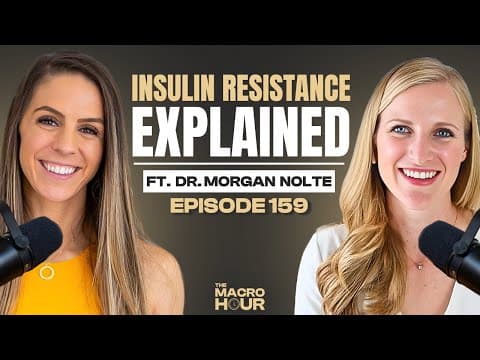
Insulin resistance can build quietly in perimenopause, and normal blood sugar doesn't rule it out. Dr. Morgan Nolte explains on the show that fasting insulin can rise 10 to 20 years before blood sugar does. Lara Briden explains why perimenopause pushes every woman toward insulin resistance as progesterone and estradiol drop.
To check, Dr. Nolte says the research gold standard is a HOMA-IR score, calculated from fasting glucose and fasting insulin. Lara Briden adds that a normal blood glucose or HbA1c can't rule it out. Nikkiey suggests asking your doctor for fasting insulin and HOMA-IR.
Muscle is the cornerstone. Dr. Nolte says muscle is the main reservoir for the glucose you eat, so more muscle means less glucose spilling into fat tissue and a lower insulin response. Maggie describes muscle as a disposal for glucose in menopause: you need carbs to fuel the muscle and muscle to handle the carbs. JJ Virgin adds that 30 to 60 air squats after eating works like a walk in pulling carbs into your muscles.
WarriorBabe lowers carbs moderately rather than cutting them out. Nikkiey explains that because insulin resistance changes how your body handles carbs, coaches use a split of 35% protein, 27% carbs and 38% fat in perimenopause and menopause, and she is clear it is not keto. On Ep. 200, Morgan adds that calories still matter: losing fat still requires a deficit, and lower-insulin eating can make it easier to stick with.
How to lower cortisol levels: daily habits that help
The show's answer is to remove the stress signals: eat enough, sleep deeply, recover and train smarter rather than harder. In How to Lose Menopause Belly in 30 Days: 3 Pillars, Nikkiey calls deep, uninterrupted sleep the fastest way to start lowering cortisol. She pairs it with true recovery days, no overtraining and fueling your body consistently through the day.
Small, specific changes from the episodes:
- Water before coffee: Jessica Suchan suggests about eight ounces of water when you wake, waiting 30 minutes, then having coffee with or after a full meal.
- Protein at breakfast: she builds every meal around at least 30 grams of protein.
- Carbs at dinner: Esther Blum says whole-food carbs like sweet potatoes, rice or potatoes at dinner help counter nighttime cortisol, and Nikkiey recommends carbs at dinner if you wake between 2 and 4 a.m.
- Walking: Nikkiey explains walking burns calories without spiking cortisol the way long or high-intensity cardio can.
- Sleep: aim for seven to nine hours, adding 15 to 30 minutes at a time if you are short now.
For mental stress, Dr. Brighten suggests a stress inventory: brain dump everything stressing you, offload what doesn't have to be yours and separate perceived stress from actual stress. She also uses humming, singing out loud and deep breathing to shift your body toward rest and digest.
On supplements, the sources share personal practice, not prescriptions. Nikkiey takes magnesium at night to help with cortisol, and one WarriorBabe coach links waking at 2 or 3 a.m. with a racing mind to cortisol and magnesium. Talk to your doctor before adding any supplement.
Hormone balance: how food and training support your hormones
Start with your plate: enough food, enough protein and enough fat. In Nikkiey's words, hormones are made from fats, so she typically sets women's fat at 55 to 85 grams a day, a little higher through menopause. She aims for about 30 grams of protein per meal and adds fiber to steady blood sugar.
Under-eating works against your hormones, including your thyroid. Nikkiey explains that long-term restriction and overtraining throw off leptin and ghrelin along with thyroid, testosterone, progesterone, estrogen and cortisol. Nutritional therapist Louise Digby describes what she sees when women under-eat and over-exercise: cortisol rises, thyroid function is suppressed and the body holds on to fat around the middle. Dr. Stacy Sims explains that 1,100 to 1,200 calorie days barely cover your resting metabolic rate.
Nikkiey recommends about one gram of protein per pound of body weight, so a 150-pound woman aims for roughly 150 grams a day. Dr. Brighten's daily structure is at least 30 grams of protein per meal, at least 25 grams of fiber and under 25 grams of added sugar, with cooked cruciferous vegetables most days to support estrogen metabolism.
Then lift heavier, do less cardio and recover. Dr. Sims makes the case for heavy compound lifting with real rest between sets, at least two to three full-body sessions a week. If you have been under-eating for years, raise food slowly, about 100 to 150 calories a week with protein first, as Nikkiey lays out in Reverse Dieting for Women Over 40: Do You Need One?
Hormone test for women: what labs to ask your doctor for
Ask for more than the basic panel, because normal isn't the same as optimal. Nikkiey explains that standard lab ranges come from population averages wide enough to include about 95% of people, including those who are unhealthy, insulin resistant, sedentary or already symptomatic. Basic panels also tend to leave out markers like a full thyroid panel or testosterone.
Nikkiey suggests bringing this list to your doctor and talking it through:
- A full thyroid panel: TSH, free T3, free T4, reverse T3 and antibodies
- Estrogen or estradiol, progesterone and testosterone
- Cortisol and DHEA-S
- Fasting insulin and A1C
- Vitamin D, B12, iron and ferritin
- For heart health: ApoB, high-sensitivity CRP and homocysteine
She also recommends keeping a weekly symptom log to bring to your appointment. Esther Blum describes the blood, DUTCH and GI-MAP testing she runs before anyone in her practice starts hormones, and Dr. Brighten talks about testing that looks at cortisol, testosterone, DHT and estrogen metabolites. These are their clinical approaches, so take them to a hormone-literate provider.
Nikkiey shares that after 10 years of tracking macros, her own hormones still needed attention. That is why she sees testing as the deeper layer if you are doing everything and still not seeing results, and why WarriorBabe now builds hormone testing into its coaching.
HRT: does hormone replacement therapy help with weight loss?
Across the episodes, the answer is consistent: HRT can help, but it doesn't produce fat loss on its own. Dr. Jolene Brighten says HRT is one option but not enough by itself, because how you eat and live every day has a tremendous impact on your outcomes. Alicia Erickson says you still have to do the work.
Maggie shares that HRT helped her, but it supported the muscle, nutrition and recovery she had already built rather than building it for her. Member Debra shares that working on her hormones with a functional medicine doctor helped her feel better but did not make the weight come off.
Nikkiey's advice is to run two tracks together. Get your hormones properly tested and have an informed conversation about HRT with your doctor, and rebuild your plan with more protein, real strength training and better sleep. Esther Blum shares her view on HRT and the Women's Health Initiative study, and Dr. Brighten talks through the HRT and breast cancer fear, so if those worries are holding you back, raise them directly with a hormone-literate provider.
Going in prepared helps. Amy paired her coaching with a functional medicine doctor and her GYN, and found that knowing what to ask, and explaining that what she felt was physical, got her the support she needed. Krista got her hormones checked and started treatment for low testosterone with her doctor; she felt like herself again, but the weight only moved once her coach cut back her overtraining.
Written from what WarriorBabe's coaches and guests say in the episodes, videos and answers linked above (how we write our guides). For education, not medical advice: talk to your doctor about your own health.
More questions
Is HIIT bad for cortisol in menopause?
Not necessarily. One WarriorBabe coach explains that what backfires is long, frequent, exhausting cardio, which keeps cortisol elevated, while short sprint intervals of 20 to 30 seconds with full rest are one of her core exercises.
Is it bad to work out in the evening if my cortisol is off?
Nikkiey says it depends on you and where your cortisol is. Morning or afternoon training can help regulate sleep, evening exercise may help some women who feel tired and wired, and intense workouts right before bed may have the opposite effect.
Can changing my diet help with hot flashes?
On Ep. 207, menopause consultant Hatty McCafferty explains that big blood sugar spikes and drops make hot flashes and night sweats more likely. Eating protein from breakfast on and dropping the sugary-snack pattern keeps blood sugar steadier, and which carbs you eat and when matters more than cutting them.
Do I need intermittent fasting to reverse insulin resistance?
Not necessarily. Nikkiey says that if your goal is to build muscle and lose fat and you have no underlying health issues, you don't need to fast, and she has worked with people reversing insulin resistance on macro-based meals that included carbs.
Is intermittent fasting a good idea if I have cortisol or thyroid issues?
It's individual. Dietitian Esther Blum says fasting may not suit women with hypothyroidism, cortisol or adrenal issues, chronic illness or a history of disordered eating, and Dr. Stephen Cabral warns it can become one more stressor on hormones, so talk it through with your doctor first.
Why does libido drop in perimenopause?
Dr. Jolene Brighten says it's rarely just hormones. She points to swinging then falling estrogen, lower progesterone, poor sleep, histamine, pain with sex, insulin resistance, inflammation, stress, body image and relationship strain, and her message is that you are not broken.
Is my thinning hair caused by hormones?
Dr. Brighten suggests looking at the whole picture rather than blaming hormones alone. She points to iron, ferritin, vitamin D, zinc, stress and testosterone conversion to DHT as common drivers worth raising with your doctor.
Can Pilates and yoga help with menopause stress?
Physiotherapist Philippa Butler says Pilates offers mindful, core-focused work that helps manage stress, and yoga adds breathing practices aimed at the nervous system. She sees both as partners to strength training, not replacements for it.