

 56 min
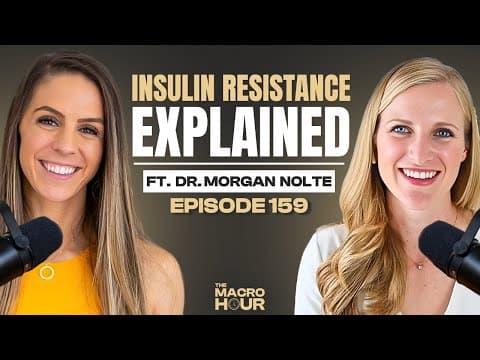
How to Reverse Insulin Resistance After 40
With Dr. Morgan Nolte
Guest on the show
56 minWith Dr. Morgan Nolte
 57 min
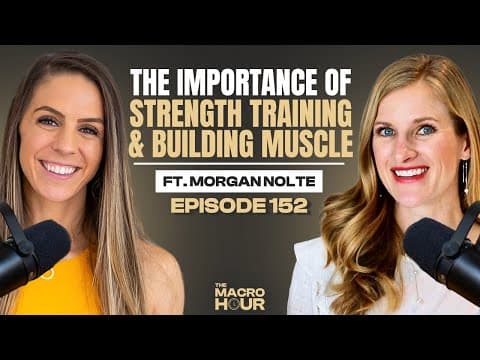
With Dr. Morgan Nolte
Insulin resistance can build quietly for years before your blood sugar or A1C ever looks off. Nikkiey Stott sits down with Dr. Morgan Nolte, a board-certified clinical specialist in geriatric physical therapy and founder of Zivli, to break down what insulin resistance is, why it sits at the root of so many chronic diseases, and why so many doctors miss it. Morgan explains why fasting insulin can rise 10 to 20 years before glucose does, how to check it yourself, and why looking thin or having normal labs can give you a false sense of security.
From there they get practical. Morgan walks through her habit hierarchy: mindset and sleep first, then water, protein, healthy fats, fiber, and carbohydrates matched to your activity and level of insulin resistance. She shares her view on why weight gain in menopause is driven more by insulin than by estrogen alone, how stress and cortisol fit in, and why she thinks hormone replacement therapy is worth exploring with your provider.
And if you have ever been told you are insulin resistant and decided lifting is not for you, this one is worth your time. Morgan explains why muscle is the biggest reservoir for the glucose you eat, why carbohydrate tolerance drops as muscle drops with age, and why strength training plus enough protein is the cornerstone of long-term health.
In this episode, Nikkiey Stott is the guest on Dr. Morgan Nolte's podcast, Reshape Your Health. Morgan, a physical therapist, asks the questions women keep asking: why muscle matters so much, why macros instead of just calories, and where to actually start when you have never tracked a thing. Nikkiey calls muscle the organ of longevity and walks through the WarriorBabe approach: track for seven days as you normally eat, then focus on protein only, building toward roughly a gram per pound of ideal body weight before fats and carbs come into play.
From there, the conversation gets into training. Nikkiey explains progressive overload, why doing the same boring lifts week after week builds muscle, and why program-hopping does not. She breaks down cutting, building and maintenance, and why many women should start by eating more at maintenance rather than cutting. She also shares her view that fasted strength training is counterproductive for building muscle, what she eats before and after lifting, and her full day of simple, repetitive meals.
The last stretch is about mindset. Nikkiey and Morgan talk about meeting women where they are, including those with a history of disordered eating, finding the deeper why behind a goal, and relying on discipline instead of motivation. If you have been stuck because you are afraid that eating more will make you gain, this one gives you a clear place to start: trust the process now, believe it later.

Menopause & Perimenopause Weight Loss
On The WarriorBabe Show, the answer is mostly hormonal, not a willpower problem. As estrogen declines, fat storage shifts from the hips and thighs to the belly and around the organs. Muscle also becomes easier to lose. Guests add that insulin and stress are major drivers, even when your eating and training stay the same.
Read the answer →
Strength Training for Women
Progressive overload is gradually increasing the stress you place on your muscles over time so they keep having a reason to adapt and grow. Nikkiey explains you do it by adding small amounts of weight, reps, sets, or changing tempo and rest, while sticking with the same exercises long enough to measure progress.
Read the answer →

Macros & Macro Tracking
Start by learning to track before chasing any numbers. Nikkiey has beginners log what they normally eat in MyFitnessPal for seven days, then focus on protein first and add fats and carbs later. Keep your meals simple and repetitive for the first few weeks so tracking becomes a skill, not a source of overwhelm.
Read the answer →

Hormones & Hormone Health
The clearest check is a fasting insulin test. On Ep. 159, Dr. Morgan Nolte says the research gold standard is a HOMA-IR score, calculated from fasting glucose and fasting insulin, and that fasting insulin alone should ideally be under six. On Ep. 211, Lara Briden adds that normal blood sugar or HbA1c can't rule it out.
Read the answer →

Meal Prep & Workout Nutrition
Yes. On The WarriorBabe Show, Nikkiey says to eat something before you lift, however early. A small protein-and-carb snack is enough, like a banana and a protein shake. Dr. Stacy Sims suggests about 15g protein and 30g carbs. Then have a real breakfast with protein and carbs 30 to 45 minutes after training.
Read the answer →
Dr. Morgan Nolte explains it is a condition where your cells become resistant to insulin, the hormone that pushes glucose into cells to regulate blood sugar. After years of repeated glucose and insulin spikes, often from a diet high in processed foods and refined carbohydrates, chronic stress or poor sleep, cells tune out insulin and blood sugar eventually rises.
Morgan says the research gold standard is a HOMA-IR score using fasting glucose and fasting insulin, and a simpler check is a fasting insulin level, ideally under six. Other signs she lists include a large waist circumference, elevated fasting blood sugar, high blood pressure, high triglycerides, low HDL and frequent carb and sugar cravings.
Morgan's view is that it is hormonal, but insulin rather than estrogen alone is what really drives the weight gain, prediabetes and high blood pressure seen in midlife. She explains estrogen is an insulin-sensitizing hormone, so as it drops, insulin rises, and chronic stress makes the body rely more on fat tissue to produce estrogen.
No. Morgan explains starches and sugars are built from simple sugars like glucose, while fiber is a completely different plant compound that slows the blood sugar and insulin response, feeds the gut microbiome and helps you feel full.
Morgan explains muscle is the main reservoir for the glucose you eat, so the more muscle you have, the more glucose can be stored as muscle glycogen before it spills over into fat tissue. She compares it to a bigger garage that can park more cars before they spill onto the driveway.
Morgan recommends about one gram of protein per pound of ideal body weight, with a starting goal of at least 30 grams of high-quality protein per meal. She notes that eating enough protein, sleeping well and hydrating naturally lowers carbohydrate cravings.