

 54 min
How Insulin Resistance Affects Women in Perimenopause
With Lara Briden
Guest on the show
54 minWith Lara Briden
If you have done everything right and your body still will not let go of fat, this conversation is for you. Nikkiey Stott sits down with naturopathic doctor and author Lara Briden to talk about metabolic health as a whole-body project. Lara explains insulin resistance as being trapped in carb burning, with chronically high insulin blocking your access to stored fat, which is why willpower runs out when your cells are starving for energy. She also explains why a normal blood glucose or HbA1c test cannot rule it out, and how gut problems like SIBO can quietly drive it.
They get into the paradigm that ovulation does not matter, why pill bleeds are not real menstrual cycles, and what to expect when coming off hormonal birth control. Lara walks through why perimenopause pushes every woman toward insulin resistance as progesterone and estradiol drop, testosterone shines through and fat shifts to the belly. She is clear that metabolic dysfunction is not your fault, given the modern food environment, toxins and what gets passed down through generations.
The episode closes with foundations you can start now: social connection, morning outdoor light, aligning meal timing with your day, getting enough protein, the five missing metabolic nutrients she names, and eating protein in the morning instead of fasting through it. Her core message is simple: trust your body and play the long game.
Hormones & Hormone Health
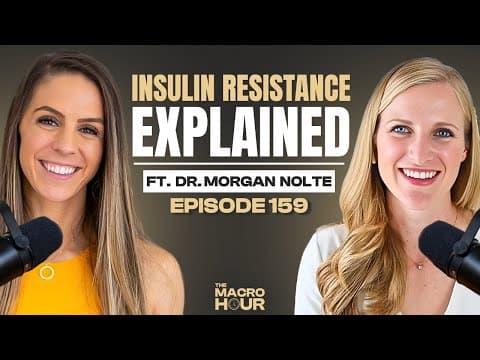
The clearest check is a fasting insulin test. On Ep. 159, Dr. Morgan Nolte says the research gold standard is a HOMA-IR score, calculated from fasting glucose and fasting insulin, and that fasting insulin alone should ideally be under six. On Ep. 211, Lara Briden adds that normal blood sugar or HbA1c can't rule it out.
Read the answer →
Lara explains that a normal blood glucose, even a normal HbA1c, cannot rule out insulin resistance because it is a condition of chronically elevated insulin. She says there are other ways to test for it.
Lara explains that chronically high insulin makes it much harder for the body to access body fat for energy, so it is harder to burn fat and harder to fuel yourself between meals. She describes it as being trapped in carb burning, which can show up as fatigue and carb snacking to get through the afternoon or night.
In Lara's view, the later stages of perimenopause push everyone toward insulin resistance as progesterone and then estradiol drop and testosterone shines through more. She says this promotes visceral belly fat and can increase intestinal permeability, with how far it goes depending on other risk factors.
Lara names magnesium, taurine, choline, inositol and glycine. She says they support mitochondria, metabolic health and sleep, and that many were traditionally found in organ meats and animal foods.
Lara says pill bleeds are not menstrual cycles, so stopping the pill lets you see what your real cycle is like, which may mean missing or irregular periods at first. She asks patients what their periods were like before the pill and how many years they cycled beforehand, since even two or three years of cycling often makes the road easier.
Lara is a little nervous about fasting through the morning because protein in the morning helps signal your circadian rhythm. She eats leftover meat for breakfast and suggests protein powder if you cannot face meat.