

Chapters
In this video
A few drinks can feel harmless, but if you're lifting to build muscle and lose fat, alcohol works against you in more ways than calories alone. In this video Nikkiey Stott walks through five facts about how drinking affects your body composition. She isn't saying alcohol is bad for you. She wants you to know what it does so you can decide how much fits your goals.
She covers how alcohol's calories add up fast and lower your inhibitions around food, how it slows muscle protein synthesis and increases muscle breakdown, and how it can lower testosterone and growth hormone while raising cortisol and interfering with insulin. She also explains how alcohol dehydrates you and throws off your electrolytes, and how it disrupts deep sleep, which she can see clearly in her Oura Ring data after drinking.
Her bottom line: stay hydrated and keep your alcohol intake low if you want to get the most from your workouts and see the body composition results you're working for.
Key takeaways
- Alcohol has seven calories per gram, close to fat's nine, and those calories offer little to no nutritional value.
- Drinking lowers your inhibitions, which can lead to overeating and poorer food choices that make a calorie deficit harder to hold.
- Alcohol slows muscle protein synthesis and increases muscle breakdown, making it harder to repair and build muscle after strength training.
- Nikkiey explains that alcohol can lower testosterone and growth hormone, raise cortisol and interfere with insulin's ability to deliver energy to your cells.
- Alcohol is a diuretic, and the resulting dehydration and electrolyte imbalance can bring fatigue, muscle weakness, cramps and reduced endurance and power.
- Alcohol interferes with deep sleep, the stage when muscle repair happens, and can cause wakefulness that cuts total sleep.
- Poor sleep after drinking raises ghrelin and lowers leptin, which can increase your appetite the next day and for several days after.
- To maximize workout performance and body composition results, stay hydrated and keep alcohol intake low.
Questions answered
How many calories are in alcohol?
Nikkiey explains that alcohol contains seven calories per gram, almost as much as pure fat at nine calories per gram. These are considered empty calories because they provide little to no nutritional value.
Does alcohol slow down muscle growth?
According to the video, alcohol slows muscle protein synthesis, the process that repairs and builds muscle tissue after strength training. It also increases muscle breakdown, so muscle can be broken down faster than it's repaired.
How does alcohol affect hormones related to muscle?
Nikkiey explains that alcohol can decrease testosterone and growth hormone, which are important for muscle growth, recovery and fat loss. It can also raise cortisol, which can lead to muscle breakdown, and interfere with insulin's ability to deliver energy to your cells.
Why do I feel hungrier the day after drinking?
Alcohol disrupts sleep, and the video explains that lack of sleep raises ghrelin, your hunger hormone, and lowers leptin, your fullness hormone. That can increase your appetite the next day and for several days after.
Can alcohol cause muscle cramps?
Nikkiey explains that alcohol is a diuretic, and dehydration can throw off electrolytes like sodium, potassium and chloride, which can lead to muscle cramps and spasms. Alcohol can also affect temperature regulation, and overheating can cause cramps and fatigue.
Ask Nikkiey
Questions this video helps answer, with what Nikkiey says across everything WarriorBabe teaches.
Hormones & Hormone Health
Does alcohol lower testosterone in women?
Yes, according to Nikkiey. She explains that alcohol can decrease testosterone levels, which makes it harder to build muscle and recover from strength training. She adds that low testosterone can also lower sex drive and leave you more tired, and that alcohol disrupts other hormones that matter for fat loss, including growth hormone and cortisol.
Read the answer →
Sleep, Recovery & Lifestyle
Does alcohol stop you from building muscle?
According to Nikkiey, alcohol works directly against building muscle. It slows muscle protein synthesis, the repair process after strength training, and increases muscle breakdown, so tissue can be broken down faster than it's rebuilt. The result is slower recovery, harder muscle gain and a less toned look, even when you're doing everything else right.
Read the answer →
Holidays, Travel & Social Life
How many calories are in alcohol?
Alcohol has seven calories per gram, nearly as much as fat at nine and almost double carbs and protein at four. Nikkiey explains that it's a macronutrient most people don't track, its calories are empty, and drink labels often hide them, so even a few drinks can quietly add up fast.
Read the answer →
Full transcript
Nikkiey: In this video, I'm going to share with you five surprising facts about alcohol and its impact on building muscle and losing fat. Today, I want to talk about something that's often misunderstood when it comes to fitness: alcohol. Now, I'm not saying that alcohol is bad for you, but it's important to be aware of these facts if you're trying to build muscle and or lose fat. A lot of people think that having a few drinks won't do any harm, but as you're about to see, that's not actually the case. So if you're curious to know more about how alcohol can sabotage your hard work in the gym and towards your body composition, then stick around.
Alcohol consumption is often seen as a social norm and is often consumed without a second thought. However, when it comes to fitness and health goals, regular or excessive alcohol can have a negative impact on building muscle and losing body fat. So in this video, I will explain the ways in which alcohol can affect your fitness goals and why it's important to consider moderation or avoidance when trying to reach your goals. Let's dive into these five surprising facts, starting with number one.
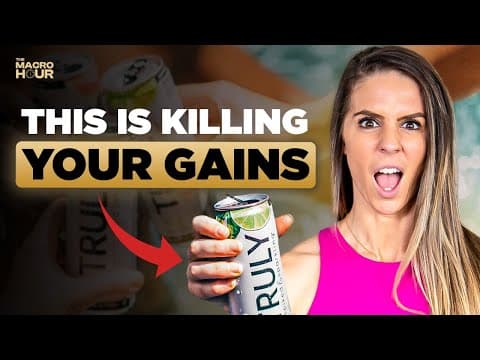
Alcohol is high in calories and can quickly add up. Consuming too many calories from alcohol can lead to weight gain and make it difficult to lose body fat. Alcohol contains seven calories per gram, which is almost as much as pure fat, which is nine calories per gram. Drinking alcohol can also lead to overeating or making poor food choices, as it can lower inhibitions and lead to less control over calorie intake. This can make it more difficult to create a calorie deficit, which is necessary for losing body fat. Additionally, the calories in alcohol are considered empty calories because they provide little to no nutritional value. This means that consuming alcohol can lead to an imbalance in calorie intake, with a high proportion of calories coming from alcohol, which can make it super difficult for you to meet your daily nutritional needs while you're trying to lose body fat.
Number two: alcohol can inhibit muscle protein synthesis, which is the process by which muscle tissue is repaired and built. This can make it harder to build muscle and recover from any type of strength training exercise. When you engage in strength training exercises, you create small tears in your muscle fibers. Your body then repairs those tears, which leads to muscle growth and strength. But alcohol consumption can interfere with this whole process by slowing down protein synthesis and making it harder for your body to repair and to build muscle. Additionally, alcohol also increases muscle breakdown, which means that the muscle tissue is broken down more than it can be repaired. This too can lead to muscle loss and make it harder to build muscle, which is your ultimate goal.
Number three: alcohol can disrupt the balance of hormones in the body, including testosterone and growth hormone, which are important for muscle growth and recovery. Testosterone is a key hormone that plays a critical role in muscle growth and recovery. However, alcohol consumption can decrease testosterone levels. This can make it harder to build muscle and to recover from strength training exercises. Growth hormone, on the other hand, is another hormone that plays a critical role in muscle growth and recovery. It also helps with fat loss, but alcohol can decrease growth hormone levels. This too can make it harder to build muscle, recover from strength training and lose body fat.
Alcohol also affects other hormones like insulin and cortisol, which can have a negative impact on muscle growth and recovery. Insulin is responsible for delivering glucose energy to your cells, and alcohol can interfere with insulin's ability to do so. This can lead to low energy levels and make it harder to engage in strength training exercises. Cortisol is a hormone that is released in response to stress, and alcohol can increase cortisol levels. High cortisol levels can lead to muscle breakdown and make it harder to build muscle.
Number four: alcohol can dehydrate the body. Alcohol is a diuretic, which means it can dehydrate the body. Dehydration can affect muscle function and recovery, making it harder to build muscle and to lose body fat. When your body is dehydrated, your body's ability to perform at its optimal level decreases, which can lead to fatigue and muscle weakness. This can make it harder to engage in strength training and recover from your workouts. Additionally, dehydration can also lead to a decrease in muscle endurance and power, which can make it harder to build muscle.
Dehydration also affects muscle recovery by altering the balance of electrolytes in the body. Electrolytes such as sodium, potassium and chloride are all important for muscle function and recovery. When the body is dehydrated, the levels of these electrolytes can become imbalanced, which can lead to muscle cramps and spasms. And this can make it harder to engage in strength training and to recover from your workouts. Alcohol also affects the body's ability to regulate temperature, which can lead to overheating, which can cause muscle cramps and fatigue as well, making it harder to engage in your strength training and to recover from your workouts.
Number five: alcohol can interfere with the quality of your sleep, which is crucial for muscle recovery and growth. Lack of sleep can also affect the hormones that regulate hunger and your metabolism, making it harder to lose body fat. During sleep, the body repairs and regenerates muscle tissue, and this process is essential for muscle growth and recovery. However, alcohol can interfere with the body's ability to enter deep sleep, which is the stage of sleep when muscle repair and recovery occur. This can make it harder to build muscle and recover from your strength training workouts.
If you want to see this actually happening and being tracked after you have a few drinks, buy an Oura Ring. It does so many other incredible things, but this one stat is so apparent after you drink alcohol: heart rate elevated, body temperature elevated, HRV super low, and deep sleep non-existent. I'll put my link in the description below. Check it out.
Alcohol can also affect the duration of your sleep, and it can lead to wakefulness during the night, which can reduce the total amount of sleep that you get. This can lead to fatigue and make it harder to engage in your strength training and recover from your future workouts. Additionally, lack of sleep can affect the balance of hormones in your body, including ghrelin and leptin, which regulate hunger and your metabolism. When you don't get enough sleep, the levels of ghrelin, your hunger hormone, increase, and leptin, your fullness hormone, decrease, which can lead to an increase in appetite the next day and for the several days after, and make it harder for you to lose body fat.
In conclusion, alcohol consumption can have a negative impact on building muscle and losing body fat. It can lead to an increase in calorie intake, inhibit muscle protein synthesis, disrupt hormone balance, cause dehydration and interfere with quality of sleep. All these factors make it difficult for individuals to achieve their goals when it comes to building muscle, recovering from strength training and losing body fat. So make sure you stay hydrated and keep your intake of alcohol low if you want to maximize your workout performance and the results that you want to see with your body composition.
I hope that you all enjoyed this video today and found it super helpful. I'd love to know what topics you're interested in learning more about, so do me a favor and comment below something you'd like me to talk about in future videos. Also, make sure to subscribe to this channel so you can watch all of the new videos to come. I'll be sharing videos every Thursday, and I'll see you in the next one.
Up next
Everything → 6 min
How Alcohol Affects Testosterone, Cortisol and Recovery
Video · Jan 22, 2024
 36 min
How Does Sleep Affect Fat Loss and Muscle After 40?
Episode 196 · Oct 7, 2024
 20 min
Is Walking Enough for Fat Loss After 40?
Episode 238 · Mar 3, 2025
Best of Sleep, Recovery & Lifestyle
All 98 → 29 min
Does Alcohol Stop Fat Loss and Muscle Gain After 40?
Episode 107 · Nov 27, 2023
 26 min
What Is Biofeedback? Signs Your Fat Loss Plan Is Off
Episode 295 · Sep 19, 2025
 29 min
Gained Weight at 40 Despite Working Out? What Worked
Episode 331 · Jan 26, 2026