

 1 hr 3 min
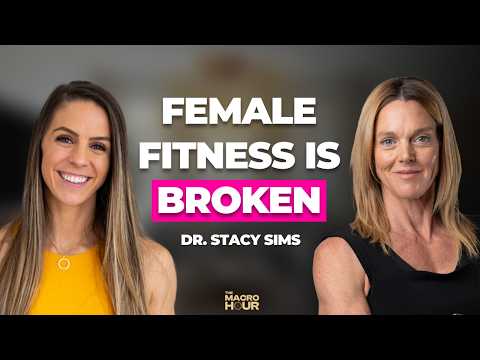
Why a 1200-Calorie Diet Fails Women Over 40
With Dr. Stacy Sims
Guest on the show
1 hr 3 minWith Dr. Stacy Sims
You've cut to 1,100 or 1,200 calories, you're doing cardio and HIIT, and the scale still won't move. Some women are even gaining belly fat and losing muscle. In this episode Nikkiey Stott sits down with exercise physiologist and nutrition scientist Dr. Stacy Sims, author of Roar and Next Level, to explain why. Her view is that 1,200 calories barely covers an average resting metabolic rate. The body reads that as a threat, breaks down lean mass and holds on to fat.
Dr. Sims explains why women in perimenopause and menopause need a different training stimulus: heavier compound lifts with full rest, two to three strength sessions a week, and true sprint intervals instead of moderate effort every day. She covers protein targets (about one gram per pound of body weight as the low end after 40), why carbs aren't the enemy, and how to fuel around morning workouts. She also names the three supplements she says most women benefit from: omega-3s, vitamin D and creatine monohydrate.
The conversation closes with recovery, cortisol and a rapid-fire myth-busting round. Topics include building muscle after 50, fasting in menopause, eating after 7 p.m., HRT and whether lifting makes you bulky. The message throughout is simple: you're not broken. You need to feed your body, train it with the right kind of stress and let it recover.
Strength Training for Women
Two to four sessions a week, depending on who you ask on The WarriorBabe Show. Esther Blum and Dr. Stacy Sims put the minimum at two full-body sessions, with three to build more muscle and bone. Nikkiey suggests about four, or three, up to an hour each. Everyone agrees: not every day, because recovery builds muscle.
Read the answer →
Protein for Women
Most guidance on The WarriorBabe Show lands at about 1 gram of protein per pound of body weight per day for women over 40, based on goal weight if you have a lot to lose. Nikkiey says strength-training women may need 1.2 or even 1.3. Some episodes and guests cite 0.7 grams as the floor.
Read the answer →
Diets, Fasting & Diet Culture
Eating 1,200 calories is often too little, not too much. Dr. Stacy Sims explains it sits around an average resting metabolic rate, so your body treats it as a threat, conserves energy and breaks down lean mass. Long-term dieting also adapts your metabolism down. Before cutting further, check your tracking is accurate.
Read the answer →
Meal Prep & Workout Nutrition
Yes. On The WarriorBabe Show, Nikkiey says to eat something before you lift, however early. A small protein-and-carb snack is enough, like a banana and a protein shake. Dr. Stacy Sims suggests about 15g protein and 30g carbs. Then have a real breakfast with protein and carbs 30 to 45 minutes after training.
Read the answer →
Dr. Sims explains that 1,100 to 1,200 calories is roughly an average resting metabolic rate, the energy you need lying in bed. When you eat that little, the body perceives a threat, conserves energy and breaks down lean mass. Women often see more belly fat, puffiness, poor sleep and no response to training.
Dr. Sims says that from your mid-40s you become more resistant to protein and exercise, so the low-end target is about one gram per pound of body weight. During heavy training, high stress or heavy travel, she suggests raising it to 1.1 to 1.2.
Dr. Sims says the minimum is two full-body strength sessions a week. To accumulate more muscle and bone, aim for three. She doesn't recommend training every day because you can't build without recovery, and 20 minutes three times a week can get a lot done.
Dr. Sims puts diet first and calls supplements the icing on the cake. She says most women benefit from three: omega-3s, vitamin D (especially postmenopause) and creatine monohydrate, which she describes at three to five grams a day, taken every day including rest days.
No. Dr. Sims explains that collagen is a structural protein for hair, nails and joints. It isn't the same as dietary protein for muscle and neurotransmitters, so it doesn't count toward your protein intake for the day.
Dr. Sims suggests a small snack of about 15 grams of protein and 30 grams of carbohydrate, like a couple of tablespoons of low-fat Greek yogurt with a little honey. Then eat a real breakfast with a good hit of protein and some carbohydrate 30 to 45 minutes after training.