The short answer
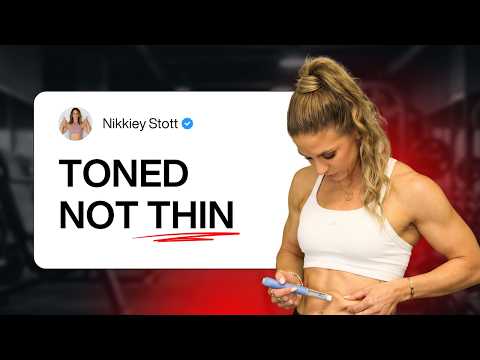
Yes, GLP-1 medications can cost you muscle. Nikkiey Stott shares that some analyses estimate up to 40% of the weight lost on GLP-1s can come from lean mass rather than fat, and women over 40 are already losing muscle with age. Her plan is to eat protein first every day, strength train with progressively heavier weights, measure more than the scale and plan for when the medication ends.
What to know
- Nikkiey Stott cites analyses estimating that up to 40% of the weight lost on GLP-1 medications comes from lean mass, not fat, and says the share may be higher for women in midlife.
- Nikkiey recommends at least 0.8 to 1 gram of protein per pound of your goal body weight every day while on a GLP-1, even when you're not hungry, and not letting calories drop too low.
- Strength training with compound lifts and weight that increases over time protects muscle, a focused 45-minute session is enough, and cardio doesn't replace it.
- The scale can't tell fat from muscle, so Nikkiey suggests tracking strength numbers, progress photos and monthly measurements of your waist, hips, arms and thighs.
- Nikkiey cites a study where people regained about two-thirds of the weight they lost within 12 months of stopping, which is why she recommends having an exit plan.
On this page
- Does Ozempic cause muscle loss?
- Why GLP-1 muscle loss matters more after 40
- Why do I look smaller but not toned on a GLP-1?
- How much protein should I eat on a GLP-1?
- What to eat on a GLP-1 when you're not hungry
- The GLP-1 diet: why eating enough still matters
- Strength training on a GLP-1: how often and what to do
- How do I know if I'm losing fat or muscle on a GLP-1?
- What happens when you stop taking Ozempic?
- More questions
Does Ozempic cause muscle loss?
It can, according to Nikkiey Stott. On The WarriorBabe Show she shares that some analyses estimate up to 40% of the weight lost on GLP-1 medications can come from lean mass rather than fat. She says the share may be higher for women in midlife.
She doesn't shame anyone who has used these medications, is on one now or is thinking about it. She says plainly that they work. Her point is that the scale going down and fat coming off are not the same thing.
Nikkiey explains why the muscle goes:
- Appetite drops so far that most women can't eat enough protein.
- Low energy pushes strength training aside.
- Less muscle then means a slower resting metabolism.
Questions about the medication itself, including whether it's right for you and how it's affecting you, belong with your doctor. What follows is the WarriorBabe view on protecting your muscle while you're on one.
Why GLP-1 muscle loss matters more after 40
Because women in their 40s and 50s are already losing muscle with age, Nikkiey calls GLP-1 muscle loss a compounding problem, not a small side effect. Sarcopenia, the age-related loss of muscle, starts in your 30s and speeds up in your 40s and 50s. Left unchecked, she says, women lose 3 to 8% of muscle per decade from age 30.
Nikkiey calls muscle the engine of your metabolism and, borrowing Dr. Gabrielle Lyon's phrase, the organ of longevity. Less of it means a slower metabolism. In Why Building Muscle Is Key to Aging Well After 40, JJ Virgin explains that muscle improves insulin sensitivity and gives carbs somewhere to go besides your fat cells and liver.
Your body also gets worse at turning protein into muscle as you age, which Nikkiey calls anabolic resistance. You need more protein, not less, to get the same muscle-building response. That's hard to manage when your appetite has been turned down.
Why do I look smaller but not toned on a GLP-1?
Because weight loss on its own doesn't create a toned look. In "How to Look Toned on a GLP-1, Not Just Smaller," Nikkiey explains that toned is what your body looks like when there's enough muscle underneath a reduced layer of body fat.
When weight comes off without a plan to protect muscle, a meaningful share of what you lose can be muscle. Nikkiey describes the result as a smaller version of the same shape. In How to Get Toned After 40 Without Getting Bulky, she puts it simply: a toned body is developed muscle plus body fat low enough for that muscle to show.
Her framing is clear. The medication is very good at suppressing appetite and creating a calorie deficit. Building and keeping the muscle is your job. If you've ended up softer than you hoped, nothing is wrong with you. The plan was missing a piece.
How much protein should I eat on a GLP-1?
Nikkiey recommends at least 0.8 to 1 gram of protein per pound of your goal body weight every day while on a GLP-1, even when you're not hungry. For a goal weight of 140 pounds, that works out to roughly 112 to 140 grams.
If you're far below that now, build up instead of jumping. Nikkiey suggests adding about 5 grams of protein per meal, aiming for 100 grams first and holding it for one to two weeks before climbing. "How to Look Toned on a GLP-1, Not Just Smaller" also includes her quick 90-gram protein strategy for getting started.
Spread your protein across the day. Nikkiey explains that muscle protein synthesis has a per-meal ceiling of roughly 30 to 50 grams, so saving most of your protein for dinner only triggers it once. She returns to about 25 to 30 grams per meal, and suggests 20 to 25 grams across four or five meals if you're starting low.
Keep the target the same on rest days. Nikkiey explains that muscles rebuild in the 24 to 48 hours after training, so rest days are when your body uses protein for repair.
What to eat on a GLP-1 when you're not hungry
Eat protein first, every day, even when food doesn't appeal to you. That's Nikkiey's rule for women on GLP-1s. JJ Virgin gives the same advice on The WarriorBabe Show: eat your protein first at each meal so you get it in before you fill up.
Build meals around lean, simple protein. Sources that come up again and again on the show:
- Chicken, lean ground beef or 93% lean ground turkey
- Whole eggs and egg whites
- Fish
- Greek yogurt and cottage cheese
- Tofu or protein powder
Choose complete proteins as your base. Nikkiey explains that foods like peanut butter, almonds, oatmeal and chickpeas contain protein but are incomplete, so they shouldn't be your main protein. Avocado is a fat, not a protein.
Shakes can help on low-appetite days. Nikkiey sees them as a useful tool, not a replacement for whole food, and suggests about 80% of your protein from whole foods and roughly 20% from shakes and bars. If whey leaves her bloated, she uses a plant-based protein instead.
Raising protein can upset your stomach at first. Nikkiey says that's normal and suggests holding at 100 grams a day for 7 to 14 days before going higher.
The GLP-1 diet: why eating enough still matters
Even when your appetite is low, Nikkiey recommends not letting calories drop too low. It's part of her answer to how to avoid losing muscle on Ozempic.
The reasons come from across the show. In Why a 1200-Calorie Diet Fails Women Over 40, Dr. Stacy Sims says eating 1,100 to 1,200 calories a day barely covers an average resting metabolic rate, so the body treats it as a threat and starts breaking down lean mass. Nikkiey explains that chronic undereating pushes your body into survival mode, where it breaks down muscle for fuel.
Carbs belong on your plate too. Nikkiey says carbohydrates help build and repair muscle and fuel hard workouts, and cutting them too low drains your energy and hurts your recovery. She also advises against lifting on an empty stomach, because in her view your body taps into muscle for energy when glycogen from carbs is depleted.
If nausea, low appetite or anything else is making it hard to eat, talk with your doctor. They know your medication and your health.
Strength training on a GLP-1: how often and what to do
Lift on a set schedule with challenging weight that increases over time. In "How to Look Toned on a GLP-1, Not Just Smaller," Nikkiey recommends 3-4 days a week. In "Does Ozempic Cause Muscle Loss in Women Over 40?" she recommends two to three times a week. Either way, she says not to stop when your energy dips.
Focus on compound lifts like squats, deadlifts, rows and presses. Nikkiey says it doesn't need to take over your life: a focused, planned 45-minute session is enough. Cardio doesn't replace it.
Make the weight count. Nikkiey says to increase the weight when the last two to three reps of a set stop feeling challenging. Maggie Topham suggests picking a weight where 12 reps is a real fight, then going heavier, even by two and a half pounds, when 12 gets easy.
If you're starting from scratch, 6 Dumbbell Exercises to Build Muscle During Menopause lays out a simple plan: goblet squats, Romanian deadlifts, bent-over rows, overhead presses, chest presses and hip thrusts, split into two workouts and alternated three days a week, with walking on off days.
Recovery finishes the work. Nikkiey explains that muscles grow during rest, fueled by enough food, sleep and recovery, and she suggests seven to eight hours of sleep a night.
How do I know if I'm losing fat or muscle on a GLP-1?
The scale can't tell you, so track other markers. Nikkiey suggests watching:
- Your strength numbers
- Consistent progress photos
- Waist, hip, arm and thigh measurements about once a month
If your strength drops or your measurements stall while the scale keeps falling, you may be losing muscle. DEXA or InBody scans show lean mass versus fat mass.
Nikkiey also reminds women that a pound of muscle and a pound of fat weigh the same, but muscle takes up far less space. When you're lifting and eating enough protein, you can look leaner even when the number moves slowly. Her goal is fat loss, not weight loss.
What happens when you stop taking Ozempic?
Your appetite comes back, Nikkiey explains. If you lost muscle while on the medication, your body now burns fewer calories at rest than before you started, so the weight tends to return, often faster. In "Do GLP-1s Cause Muscle Loss in Women Over 40?" she cites a study showing participants regained an average of two-thirds of the weight they lost within 12 months of stopping.
That's why she recommends having a plan for what comes after. She suggests treating the medication as a temporary bridge and describes your time on it as a window. The muscle and habits you build during it are what you keep when the prescription changes or ends.
Any decision about stopping or changing a medication is one to make with your doctor. Your part is the habits Nikkiey's framework covers: protein, progressive strength training, eating enough, sleep and stress management, and awareness of the habits that got you here.
Written from what WarriorBabe's coaches and guests say in the episodes, videos and answers linked above (how we write our guides). For education, not medical advice: talk to your doctor about your own health.
More questions
I've already lost muscle on a GLP-1. Is it too late?
No. Nikkiey says muscle loss on a GLP-1 is fixable with the right strategy: protein, progressive strength training, eating enough, sleep and stress management, and tracking body composition instead of just weight.
Can I build muscle in a calorie deficit?
Yes, some, especially if you're newer to strength training or have more fat to lose, though not as much as at maintenance or in a surplus. Nikkiey explains that a modest deficit, enough protein and a real lifting program work, while crash-level calories like 1,200 don't.
Can you build muscle in your 60s?
Yes. Nikkiey shares clients who did it: Cheryl added muscle and lost fat between 57 and 60, Sandra hit 90-pound lunges at 61, and Michelle got stronger at 67, with hard work, consistency and patience.
Will lifting heavy weights make me bulky?
Nikkiey explains that significant size takes heavy weights, high training volume and a significant calorie surplus, and women have naturally lower testosterone than men. Most women training for fat loss or maintenance build definition rather than size.
Is a high-protein diet bad for my kidneys?
For healthy women with no existing kidney condition, Nikkiey says the research does not support high protein causing kidney damage. If you have a known kidney condition, she says to work with your doctor or a nutritionist on your protein intake.
How long does it take to build muscle after 40?
Think in years, not weeks. Nikkiey says visible changes may show in six months to two years depending on where you start, as long as training, protein and recovery stay consistent.