

Chapters
In this video
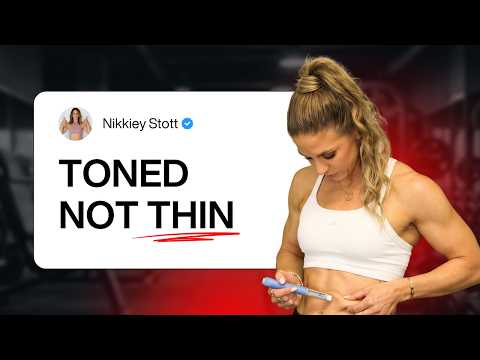
Weight loss medications are everywhere, but popular doesn't mean they're being used well. In this video, Nikkiey Stott explains why muscle has to come first for women over 40. Muscle shapes your body, drives your metabolism and helps with blood sugar and insulin sensitivity, and she explains that it declines as estrogen drops through perimenopause and menopause. She points to research suggesting that up to 40% of the weight lost on GLP-1 drugs can come from muscle, especially without strength training and protein.
She then lays out the wrong way to use these drugs: severely under-eating, skipping strength training, treating the medication as a miracle fix and having no exit plan. The right way, in her view, is to use it as a jump start rather than a crutch. Pair it with high-protein nutrition and resistance training, track your food and body composition, work with a coach, physician or registered dietitian, and plan to wean off once the habits are in place.
She finishes with a six-step blueprint for women over 40: high-protein nutrition, consistent strength training, eating enough to fuel your body, prioritizing recovery and hormone health, tracking what actually matters instead of obsessing over the scale, and using GLP-1s only as a support tool inside that strategy.
Key takeaways
- Protect your muscle before you think about weight loss drugs, because Nikkiey explains that muscle declines faster after 40 as estrogen drops.
- Do consistent, progressive resistance training two to three times a week. You don't need to lift heavy or spend hours in the gym.
- If you use a GLP-1, pair it with strength training and plenty of protein, since the research Nikkiey cites found up to 40% of the weight lost can come from muscle.
- Avoid the common mistakes: severely under-eating, missing protein, skipping strength training, treating the drug as a miracle fix and having no exit plan.
- Use the medication as a jump start, not a crutch, and only start it if you're already committed to the basics.
- Build sustainable habits while on the drug, like choosing whole foods, eating more frequently and moving from a sedentary to an active lifestyle, then lean on those habits as you wean off.
- Eat enough to fuel your body, because Nikkiey explains that under-eating doesn't speed up weight loss and can make it worse by burning muscle.
- Track energy, strength and feedback from your body instead of obsessing over the scale, and prioritize sleep, stress and recovery.
Questions answered
How much of the weight lost on GLP-1 drugs is muscle?
Nikkiey cites studies that found up to 40% of the weight lost on GLP-1 drugs can come from muscle rather than fat. She notes that even in clinical trials people lose lean body mass, especially without training or eating enough protein.
Why do people regain weight after stopping weight loss drugs?
According to the video, losing muscle means you burn fewer calories at rest, which is why so many people gain the weight back once they stop taking the drugs.
What is the wrong way to use Ozempic or other GLP-1s?
Nikkiey describes the wrong way as relying on the drug alone: severely under-eating, missing protein, skipping strength training, having no exit plan and treating it like a miracle fix that works without effort or consequences.
Should I stay on a weight loss drug forever?
Nikkiey's view is that you should have a plan to wean off rather than stay on it forever. Use it temporarily while you build habits like eating whole foods and staying active, then lean on those habits as you come off.
Do I need to lift heavy to protect my muscle after 40?
No. Nikkiey says you don't need to lift heavy or spend hours in the gym. Consistent, progressive resistance training two to three times a week can completely change your body.
Full transcript
Nikkiey: Weight loss medications are everywhere right now and more accessible than ever, but just because they're popular doesn't mean they're being used the right way. In this video, I'm going to break down the truth about weight loss drugs: what they're really for, how they actually work, and the critical difference between using them the right way versus the wrong way. Because if you don't use them the right way, you could end up feeling more exhausted, frustrated and stuck than when you started.
And this isn't just another opinionated YouTube video. I'll be backing it all with real research and expert insights, so by the end, you'll have a clear strategy built for women over 40 who want to lose belly fat and keep it off. Let's get into it.
Before we even talk about weight loss drugs, we need to talk about muscle. After 40, you start losing it faster than you realize, and it's something you simply can't ignore. When people talk about fat loss, they always focus on the fat, but the real secret is the muscle underneath. Muscle is what gives your body shape, strength, energy and that healthy, toned look that you're working for. Without it, you're not just losing weight. You're losing your metabolism. You're losing your power. And keeping fat off becomes 10 times harder.
Muscle declines in menopause because the hormone estrogen starts to decline, and that is the number one reason why you will have a hard time retaining or even building muscle. And the second thing is that you just don't listen to your body. Some studies show that as you move through menopause, you lose muscle faster than you think. Women in late perimenopause and postmenopause have significantly less muscle than their premenopausal peers. That's because your estrogen levels drop, which affects how your body builds and repairs muscle. And less muscle equals slower metabolism, less energy and more stubborn fat that won't budge, even if you're eating clean.
Here's why muscle matters so much. It's not just a side note. It's a key part of the fat loss equation, especially after 40. Muscle is your metabolic engine. It's what keeps your metabolism firing. It helps to control your blood sugar, and it improves your insulin sensitivity, which is crucial in menopause. It keeps you strong, mobile and independent as you age.
Now, here's the good news. Even in midlife, resistance training works. An analysis found that women over 40 can still build muscle and gain strength with the right kind of training. You don't need to be lifting heavy or spending hours in the gym. Just consistent, progressive resistance training two to three times a week can completely change your body. So, to sum everything up, if you start using a weight loss drug like Ozempic, but you don't support your muscle with strength training and protein, you're not just losing fat. You're losing muscle too.
But you're probably wondering, okay, how bad is it? Now, let's look at what the research actually says about weight loss drugs and muscle loss. We're about to break down research that's often overlooked in doctors' offices, specifically on how weight loss drugs affect your muscle. And it matters more than you might realize. Studies found up to 40% of the weight loss on GLP-1 drugs comes from muscle, not just fat. Even in clinical trials, people lose lean body mass, especially without training or eating protein. Muscle loss means you burn fewer calories at rest, which is why so many people gain the weight back once they stop taking the drugs.
So, here's the bottom line. These weight loss drugs that everyone's talking about don't just burn fat. They can also burn a lot of muscle, especially if your nutrition and training aren't in place to protect it. That's why, whether you're on GLP-1s or not, your training and nutrition are the foundation. They are the one thing that always stays consistent. And they're the real reason women over 40 lose fat, build lean muscle and actually keep the results.
But that doesn't mean you have to skip dinners with friends, run 10 miles every morning or give up your favorite foods. In fact, it's the opposite. We've helped thousands of women feel like themselves again: more energized, stronger and finally confident in their bodies. They simply followed our ultimate guide to macronutrients. No starving, no overtraining, just real food and real results.
Take Karen, for example. At 47, she was exhausted, overworked and frustrated. But once she started applying our macro guide, she began eating more, feeling better and losing fat in the process. Now she says she feels more confident and energized than she did in her 30s. Or Kathy, who started at 73 and lost 12 pounds in 12 weeks without cutting carbs or living on salads. She rebuilt her strength, fixed her sleep, and now lifts heavier at 74 than she ever did in her 40s. So if you're ready to start making a real change to eat better, feel better and still enjoy your life, click the first link in the description to get access to our ultimate guide to macronutrients. It could be the first step in finally getting your body and energy back.
But for now, let's break down what actually works. Because there's a right way to use weight loss drugs, and there's a wrong way that's setting a lot of people up for failure. If you're set on using GLP-1s like Ozempic or Wegovy, you need to treat them as just one piece of the puzzle and not your entire plan. Relying on the drug alone without building the right habits won't just slow your progress. Over time, it can completely throw off how your body functions, making it harder to maintain results once the drug stops working.
You start doing things like severely under-eating and missing the protein your body desperately needs to protect muscle. Skipping strength training, which leads to faster muscle loss and a slower metabolism. Having no exit plan, so you stay on the drug without a long-term strategy. Treating it like a miracle fix, assuming it works without effort or consequences.
But here's the good news. There's a right way to approach weight loss drugs, especially for women after 40. And it's the way that experts continue to stand behind. Use it as a jump start, not a crutch. Pair it with high-protein nutrition and resistance training. Track your food and your body composition. Only start the drug if you're already committed to the basics. Have a plan to wean off, not stay on it forever. Work with a coach, a physician or a registered dietitian. The drug can help you, but it can also harm you. You need to know how to stack the results in your favor and use it as a tool and not the entire solution.
What I've seen work is women that are on GLP-1s or Ozempic are using it because they know that they're overweight. They understand that they have these tendencies to eat the wrong types of foods that have caused them to be where they are with gaining the weight. So they are taking or using the drug, but at the same time, they're exploring avenues and habits that are going to lead them to a sustainable result and success. Meaning, they understand that they need to eat better. They need to throw away the old habits of choosing bad foods and replace them with whole foods, and eat more frequently throughout the day. They understand that they need to go from a sedentary lifestyle to more of an active lifestyle, whether it's starting to walk or starting to get into strength training. And then, once they have these habits ingrained in their life, they can start to wean off of these GLP-1s and the Ozempic drugs, and they can start to lean more on the habits that they've been working to build.
Now, let me give you the exact blueprint that actually works for women over 40. I've coached women through every stage of midlife. And the ones who keep the fat off, feel strong and stay consistent are not relying on quick fixes. They follow a focused, actionable framework, one that's backed by real research and built to work for women over 40. And here it is, step by step, for you to follow.
Number one, high-protein nutrition. Start by increasing your protein intake daily, especially during and after menopause. Think more than you think you need, every single day. Quality, timing and consistency matter more than perfection.
Number two, strength training. Next, you need to lift. Not heavy, just consistently. Strength training is the most powerful way to protect your muscle and your metabolism as you age. You'll feel stronger, you'll look leaner and you'll be more energized.
Number three, eat enough to fuel your body. This is where most women go wrong. Under-eating doesn't speed up weight loss. It actually makes it worse by burning muscle. You need enough calories to support your body, especially if you're strength training.
Number four, prioritize your recovery and your hormone health. Training and nutrition won't work if your recovery is trash. Poor sleep, high stress and hormone imbalance will stall your progress. Support your nervous system. It's just as important as lifting weights.
Number five, track what actually matters. Stop obsessing over the scale. What really matters is: are you building muscle? Are you feeling better? Are you getting stronger? Track your energy, your progress and feedback from your body. That's how you adjust smartly.
Number six, use GLP-1s the right way. If you're going to use a drug like Ozempic, treat it like a support tool, not a magic fix. It should fit into this strategy, not replace it. Use it temporarily, monitor your results and always have a plan to come off.
When women follow this strategy, they don't just lose belly fat. They gain energy, confidence and control over their body. And that doesn't come from a prescription bottle. Weight loss drugs like Ozempic aren't magic. Yes, they can help, but they can also strip away the one thing that makes fat loss after 40 even possible: your muscle. So if you've been frustrated with stubborn belly fat, low energy or feeling stuck no matter what you do, consider this your wake-up call. Protect your metabolism, protect your strength, and most importantly, protect you. All the research and sources that I mentioned are linked in the description below.
We've helped thousands of women feel like themselves again: stronger, more energized and finally confident in their bodies, by simply following our ultimate guide to macronutrients. No starving, no overtraining, just real food and real results. Take Amy, who dropped from a size 12 to a size 6 while easing her menopause symptoms and joint pain, just by learning how to fuel her body right. Or Savannah, who lost 45 pounds, gained muscle and said goodbye to the all-or-nothing mindset that was holding her back. And Elisa, who built 15 pounds of muscle and completely transformed her hormones, now feeling stronger at 45 than she ever did in her 20s.
If you're ready to start feeling like yourself again, click the link and grab the ultimate guide to macronutrients. It could be the first step in finally getting your body and your energy back. Thanks for watching. I'll see you in the next video.
Up next
Everything → 29 min
Do GLP-1s Cause Muscle Loss in Women Over 40?
Episode 358 · May 4, 2026
 30 min
Why Am I Lifting Weights But Not Seeing Muscle?
Episode 281 · Aug 1, 2025
 26 min
Getting Rid of Cellulite After 40 by Building Muscle
Video · May 27, 2026
Best of GLP-1s & Muscle
All 4 → 31 min
Does Ozempic Cause Muscle Loss in Women Over 40?
Episode 301 · Oct 10, 2025
 21 min
How to Look Toned on a GLP-1, Not Just Smaller
Episode 403 · Oct 9, 2026