

From 2 episodes and 3 videos
What macros should I eat for body recomposition after 40?
Answered by Nikkiey Stott and WarriorBabe's coaches · Updated
The short answer
Start with protein at about one gram per pound of body weight daily, then let carbs and fats fill in the rest in a balanced way. Nikkiey says recomposition takes strength training and eating at or near maintenance, not a steep deficit. Some WarriorBabe coaches prefer separate build and fat loss phases instead.
Hear it answered
Tap play to start right where it's answered. It keeps playing while you browse.
Nikkiey on protein, total calories and fat for building lean muscle after 40
Plays from 15:41 · Ep. 402: How to Get Lean After 40: What Actually Works for Women
Nikkiey on setting protein by body weight and balancing carbs and fats
Plays from 18:34 · Ep. 86: How to Balance Protein, Carbs and Fat for Fat Loss

A coach on the one gram per pound protein rule and why to cycle phases
Plays from 4:35 · Video: 4-Step Plan to Eat More and Lose Fat After 40

A coach on whether you can build muscle while cutting fat
Plays from 6:48 · Video: Fat Loss Q&A: Hunger, Protein Limits and Fasted Lifting
The full answer
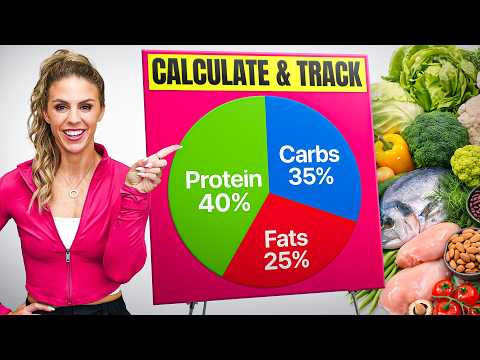
On Ep. 86, Nikkiey argues you need all three macronutrients to change your body composition. Cutting one out may work for a short time, but it isn't sustainable. Her approach is to set protein from your body weight in grams per day, then let carbs and fats move around in a healthy, balanced way. She specifically pushes back on fearing carbs so much that you drop to about 10% carbs and push fats to 60%. She is clear she's speaking broadly, and exact splits depend on your body composition, lifestyle and goals. On Ep. 402 she adds that fat matters too, as part of protecting your hormonal environment along with sleep and stress management.
Calories matter as much as the split. Nikkiey explains that to build muscle and lose fat together, you have to be strength training and eating at or near maintenance, with enough total calories to fuel training and recovery. Very low calories signal scarcity, so your body protects fat and burns muscle, leaving you lighter and smaller but not leaner. Your training also has to progress, with the weight going up over time. She notes some women need to focus on building muscle first, because definition comes from muscle underneath.
The episodes add nuance on doing both at once:
- One WarriorBabe coach says recomposition is technically possible, especially for beginners or women returning after a break, but slow and hard to track. Often there are too few calories to build and too small a deficit to lose fat, so WarriorBabe coaches one goal at a time.
- Another coach says you gain a little muscle in a deficit, but mostly existing muscle shows as fat drops. Maintenance or a surplus builds the most.
- In a member Q&A, Nikkiey said building lean muscle means eating more and putting on some body fat in the process.
If you've been under-eating protein or calories, the stall is the plan, not you. Get protein in, eat enough, train progressively, then decide between maintenance-level recomposition and dedicated phases.
From WarriorBabe's coaches (how we write our answers). For education, not medical advice: talk to your doctor about your own health.
Part of
Macros & Macro Tracking →Women also ask
More questions →
Macros & Macro Tracking
How do I read a nutrition label to track my macros?
Find the grams of protein, carbs and fat per serving, then convert them: protein and carbs give about four calories per gram, fat about nine. So 35 grams of carbs is 35 times four. Alcohol adds about seven calories per gram but isn't listed as a macro, and label numbers are estimates.
Read the answer →
Macros & Macro Tracking
How many calories are in a gram of protein, carbs and fat?
Protein and carbs each have about 4 calories per gram, and fat has about 9, more than twice as much. Nikkiey also flags alcohol: it isn't a macronutrient, but it carries about 7 calories per gram, which is why drinks can hold far more calories than their nutrition labels seem to show.
Read the answer →

Macros & Macro Tracking
Do I have to track macros forever?
No. Nikkiey is clear that you don't have to track macros for the rest of your life. Tracking and weighing your food is a temporary, educational phase that teaches you what real portions of protein, carbs and fat look like. Do it consistently for a couple of years and it becomes second nature.
Read the answer →
Watch or listen in full
More on this topic → 20 min
How to Get Lean After 40: What Actually Works for Women
Episode 402 · Oct 5, 2026
 20 min
How to Balance Protein, Carbs and Fat for Fat Loss
Episode 86 · Aug 18, 2023
 7 min
4-Step Plan to Eat More and Lose Fat After 40
Video · Jul 22, 2025