

From 7 episodes
How long does it take to get good at tracking macros?
Answered by Nikkiey Stott · Updated
The short answer
Expect a learning curve of about three to four months, with tracking feeling noticeably easier somewhere between six months and a year. Nikkiey's first planning sessions took up to an hour and a half; years later she logs a full day in about two minutes. Some women, like guest Valerie, hit their numbers within two weeks.
Hear it answered
Tap play to start right where it's answered. It keeps playing while you browse.
Nikkiey on the three-to-four-month learning curve and when tracking gets easy
Plays from 20:31 · Ep. 80: Is Tracking Macros Too Restrictive for Women Over 40?
Why you'll be much faster at tracking within six months to a year
Plays from 13:17 · Ep. 72: How to Track Macros and Beat Gym Anxiety as a Beginner
Nikkiey's hour-long first nights of tracking and how she pushed through
Plays from 12:44 · Ep. 144: Is Tracking Macros Worth It When It Feels Too Hard?
Valerie on going from overwhelmed to plus or minus five in two weeks
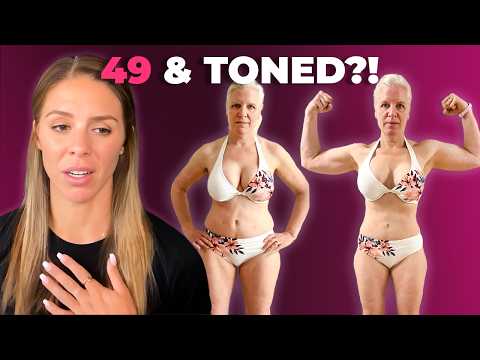
Plays from 21:12 · Ep. 270: How to Get Toned at 49 After Years of Dieting
Why tracking gets faster with practice, like riding a bike
Plays from 14:03 · Ep. 164: What Are Macros? A Beginner's Guide for Women Over 40
The full answer
Nikkiey compares learning to track macros to riding a bike with training wheels. It's a skill: you're learning what's in your food, what portions look like, and how to fit everything into your day like a game of Tetris. On Ep. 80 she says the first three to four months may be a learning curve, and by five or six months to a year it gets easier. On Ep. 72 she says you'll look back at day one after six months to a year and see how much faster you've become. On Ep. 164 she notes the activity starts feeling faster and easier even three or four weeks in, and WarriorBabe treats fully tracking all three macros as the goal after about a year in the program.
Timelines vary. On Ep. 270, Valerie found macros overwhelming at first and spent hours figuring out recipes, but she got close within the first week and was hitting plus or minus five by week two. Nikkiey herself quit after her first hour-long planning nights, came back, and pushed through. Now, after seven-plus years, she says inputting her food takes about a minute and a half to two minutes, and she can look at a plate and know what's on it.
What speeds it up:
- Plan a full day, then repeat it for about a week so you're not starting from scratch every day.
- Swap in one or two new meals at a time once you feel confident.
- Aim for repetition, not perfection. Nikkiey says expecting perfect macros on day one is probably what's tripping you up.
- Track every day, not two or five days out of seven.
If it feels slow, that's the normal curve of learning a new skill, not a sign you can't do it.
From WarriorBabe's coaches (how we write our answers). For education, not medical advice: talk to your doctor about your own health.
Women also ask
More on Macros & Macro Tracking →
Macros & Macro Tracking
How close do I need to get to my macro targets?
Nikkiey's target is within plus or minus five grams of each macro: protein, fat and carbs. Land there and you've nailed your macros for the day. You don't have to hit it every day, especially in your first few weeks; hitting your targets most of the time is what counts.
Read the answer →
Macros & Macro Tracking
Should I only track protein when I first start counting macros?
Mostly, yes. Nikkiey suggests focusing only on hitting your protein number for the first couple of weeks, then gradually adding carbs and fats to what you track. That doesn't mean eating only protein. Keep eating carbs and fats from good-quality food, you just aren't putting much emphasis on their numbers yet.
Read the answer →

Macros & Macro Tracking
Why do I always go over my macros at the end of the day?
You usually go over because you're tracking as you go. Nikkiey explains that logging meals as you eat them leaves you at night with leftover protein, carbs and fats and no meal that fits. Planning and logging your food the night before, or the morning of, lets you nail your numbers before the day starts.
Read the answer →
Macros & Macro Tracking
How do I track macros when eating out?
Order simple dishes you can estimate, like salmon with rice and vegetables, ask for sauce on the side, ballpark the portion, find something similar in your app, log it and move on. Weighing food at home trains your eye, and asking for extra protein keeps you on track. The goal is consistency and awareness, not perfection.
Read the answer →

Macros & Macro Tracking
What are macros?
Macros, short for macronutrients, are the three nutrients that make up everything you eat: protein, carbohydrates and fat. Calories are just the unit of energy they provide. Nikkiey explains that tracking macros shows what your calories are actually made of, so you get the balance your body needs instead of mostly carbs and fat.
Read the answer →

Macros & Macro Tracking
Do I have to track macros forever?
No. Nikkiey is clear that you don't have to track macros for the rest of your life. Tracking and weighing your food is a temporary, educational phase that teaches you what real portions of protein, carbs and fat look like. Do it consistently for a couple of years and it becomes second nature.
Read the answer →
Watch or listen in full
More on this topic →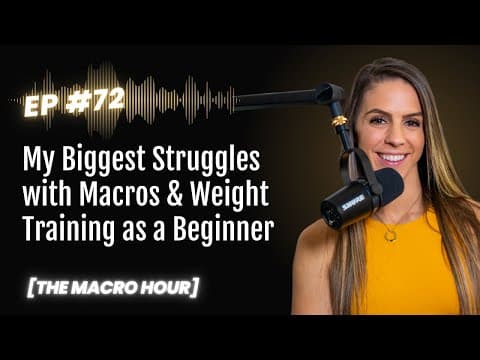 25 min
How to Track Macros and Beat Gym Anxiety as a Beginner
Episode 72 · Jun 26, 2023
 47 min
How to Get Toned at 49 After Years of Dieting
Episode 270 · Jun 23, 2025
 26 min
Is Tracking Macros Too Restrictive for Women Over 40?
Episode 80 · Jul 21, 2023