

The short answer
No. Nikkiey is clear that you don't have to track macros for the rest of your life. Tracking and weighing your food is a temporary, educational phase that teaches you what real portions of protein, carbs and fat look like. Do it consistently for a couple of years and it becomes second nature.
Hear it answered
Tap play to start right where it's answered. It keeps playing while you browse.
Nikkiey on why tracking becomes second nature by year three, four or five
Plays from 13:57 · Ep. 372: How to Retrain Your Metabolism After Years of Dieting
Nikkiey on how she stopped needing to track after years of weighing portions
Plays from 14:14 · Ep. 347: What Are Macros and How Do I Start Tracking Them?
How Nikkiey tracks part of the week now and eats at maintenance on weekends
Plays from 8:05 · Ep. 74: Can You Stop Tracking Macros and Still Keep Results?
Why the first couple of years of work come before you can stop tracking
Plays from 20:02 · Ep. 145: How to Stay Lean Year-Round Without Always Dieting
Nikkiey on a client taking two weeks off tracking after learning her meals
Plays from 10:50 · Ep. 341: How to Rebuild Your Body After 50 When You're Under-Eating
The full answer
Nikkiey frames tracking as a skill, not a diet. On Ep. 335 she describes logging your food in an app while looking at the plate, so your brain learns what a good portion of protein, carbs and fat looks like. Once you can see portions, you stop guessing, and fat loss stops feeling so confusing. On Ep. 372 she adds that weighing your food often shows you how much more you should be eating than you thought.
The episodes differ a little on timing. On Ep. 74 and Ep. 145, Nikkiey says to plan on a couple of years of consistent tracking and weighing before coming off it, and on Ep. 145 she says you'll likely need to go through coming out of a cut, and getting it a bit wrong, a couple of times before it clicks. On Ep. 347 she notes that most women who have been at it for a few months can eyeball their macros pretty accurately. On Ep. 341, client Leynise, a year and seven months in, took two weeks off tracking, which Nikkiey calls a huge testament to how well she understands her meals.
The off-ramp doesn't have to be all or nothing. On Ep. 74 Nikkiey shares that she tracks three or four days a week while in a deficit and lives at maintenance Friday through Sunday. On Ep. 347 she says that years in, she no longer needs to track at all because she knows portions through and through.
If you've resisted tracking because it feels obsessive, Nikkiey's point is that it's a short learning season that serves you for life. What you're doing now hasn't worked, so the answer is learning something new, not trying harder at the old plan.
From WarriorBabe's coaches (how we write our answers). For education, not medical advice: talk to your doctor about your own health.
Women also ask
More on Macros & Macro Tracking →
Macros & Macro Tracking
How long should I track macros before switching to intuitive eating?
Nikkiey's answer is at least a year of consistent tracking, and often longer. Across episodes she gives ranges from one to three years, and her own journey took six to ten years. The finish line isn't a date. You keep tracking until you can eyeball a plate and estimate its protein, carbs and fat without weighing.
Read the answer →
Macros & Macro Tracking
What is intuitive eating?
Intuitive eating means eating by your body's hunger and fullness cues instead of strict rules or logging every meal. Nikkiey says it isn't eating whenever you feel like it. It's an informed, respectful relationship with food: you can roughly tally your day, prioritize protein, stop when satisfied, and trust your signals because you've done the work.
Read the answer →
Macros & Macro Tracking
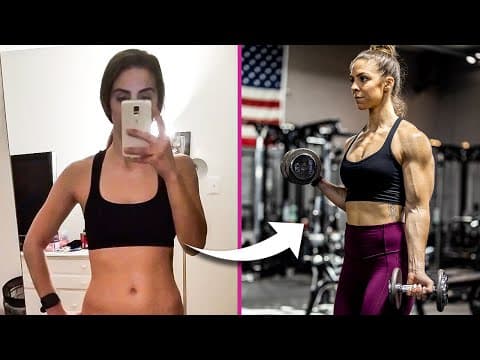
How long does it take to get good at tracking macros?
Expect a learning curve of about three to four months, with tracking feeling noticeably easier somewhere between six months and a year. Nikkiey's first planning sessions took up to an hour and a half; years later she logs a full day in about two minutes. Some women, like guest Valerie, hit their numbers within two weeks.
Read the answer →
Macros & Macro Tracking
How do I stop tracking macros without regaining weight?
Ease off gradually rather than quitting all at once. Nikkiey suggests tracking your core meals while leaving one meal, usually dinner, flexible, then swapping one structured meal a week, staying structured about 80% of the time, keeping protein the priority, and returning to tracking for a week whenever you feel off.
Read the answer →
Macros & Macro Tracking
What are macros?
Macros, short for macronutrients, are the three nutrients that make up everything you eat: protein, carbohydrates and fat. Calories are just the unit of energy they provide. Nikkiey explains that tracking macros shows what your calories are actually made of, so you get the balance your body needs instead of mostly carbs and fat.
Read the answer →
Macros & Macro Tracking
How do I make tracking macros less overwhelming?
Make the job smaller at first. The women on the show who stuck with it started small: tracking only protein, planning one day and repeating it, or picking a few meals from a sample plan. Nikkiey says week one might take half an hour a day, but by week three or four it takes five to ten minutes.
Read the answer →
Watch or listen in full
More on this topic → 32 min
How to Stay Lean Year-Round Without Always Dieting
Episode 145 · Apr 8, 2024
 26 min
What Are Macros and How Do I Start Tracking Them?
Episode 347 · Mar 27, 2026
 44 min
How to Retrain Your Metabolism After Years of Dieting
Episode 372 · Jun 22, 2026