

The short answer
Not in any meaningful way once you're past beginner level. Nikkiey explains that Pilates can help you maintain muscle and is great for mobility, flexibility and balance, but it can't grow new muscle the way strength training can. Building muscle takes progressive overload with dumbbells and barbells, and Pilates classes don't provide that kind of load.
Hear it answered
Tap play to start right where it's answered. It keeps playing while you browse.
Nikkiey, Maggie and Andrea on maintaining muscle versus growing new muscle with Pilates
Plays from 7:32 · Ep. 389: Does Pilates Build Muscle for Women Over 40?
Nikkiey on why reformer spring resistance isn't real progressive overload
Plays from 10:31 · Ep. 382: Does Reformer Pilates Build Muscle After 40?
JJ Virgin on why Pilates only builds muscle if you're deconditioned
Plays from 25:41 · Ep. 371: Why Building Muscle Is Key to Aging Well After 40
Nikkiey on why Pilates, walking and yoga can't prevent muscle loss after 40
Plays from 15:15 · Ep. 337: Why Women Over 40 Are Losing Muscle and How to Stop It
Johanna on being told Pilates six days a week wasn't enough
Plays from 5:06 · Ep. 336: Weight Loss at 62 After Menopause and Knee Replacements
The full answer
The issue is load. On Ep. 382, Nikkiey breaks down reformer classes: the resistance comes from springs, and moving through spring settings gets called progressive overload, but she says that's a marketing term. True progressive overload means the stimulus exceeds what your neuromuscular system can currently handle, creating enough mechanical tension to trigger muscle growth. For most regularly active women, springs don't come close. The burn you feel is metabolic stress, which builds some muscular endurance but, without that tension, produces only limited and temporary adaptation.
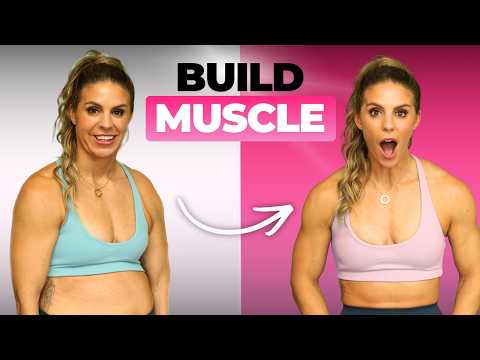
Guest JJ Virgin puts it plainly on Ep. 371: if you're building muscle with Pilates or yoga, it's because you're deconditioned. Once you're well conditioned, you need resistance training. On Ep. 337, Nikkiey, who does Pilates herself, adds that Pilates, walking and yoga are all great but are not enough to prevent the muscle loss that comes with age.
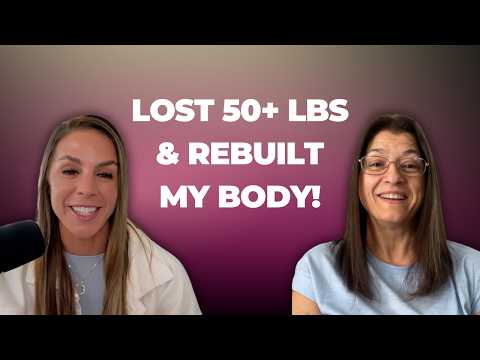
If you've been doing classes five days a week and your body hasn't changed, Nikkiey says that's not your fault, your diet or your genetics. You've been moving, not building muscle. On Ep. 336, WarriorBabe member Johanna shares that she was doing Pilates five or six times a week, and her coach told her it wasn't enough. She believes her lack of muscle was a big part of why she couldn't hold the weight she wanted.
You don't have to quit Pilates. Nikkiey calls it a tool, not the mechanism. Keep it for flexibility, mobility and balance, and add real strength training:
- Pick up dumbbells and a barbell, working in roughly 8 to 15 reps where the last three reps are challenging, with proper form (Ep. 337)
- Start with two or three sessions a week if you're new
- Support it with more protein and enough recovery (Ep. 373)
From WarriorBabe's coaches (how we write our answers). For education, not medical advice: talk to your doctor about your own health.
Women also ask
More on Strength Training for Women →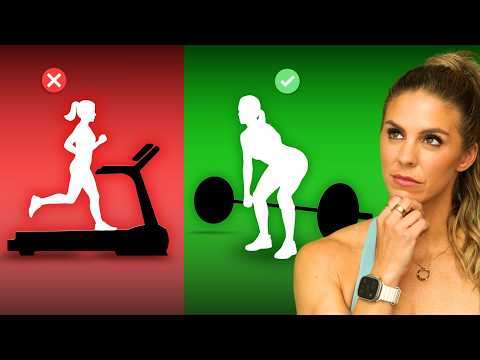
Strength Training for Women
Will lifting weights make me bulky?
No. Nikkiey explains that building significant muscle as a woman takes years of intentional, progressive heavy training plus eating in a calorie surplus. It does not happen from lifting three days a week. What you get instead is a leaner, more defined, stronger body that is more metabolically efficient.
Read the answer →
Strength Training for Women
What is progressive overload?
Progressive overload is gradually increasing the stress you place on your muscles over time so they keep having a reason to adapt and grow. Nikkiey explains you do it by adding small amounts of weight, reps, sets, or changing tempo and rest, while sticking with the same exercises long enough to measure progress.
Read the answer →
Strength Training for Women
Are classes like F45 or Orangetheory enough to build muscle?
Not on their own. Nikkiey explains that F45, Orangetheory and CrossFit include strength work but don't prioritize muscle growth the way a progressive overload program does, because everyone in the room does the same workout. Keep the classes if you love them, but make them about 20% of your training and progressive lifting the other 80%.
Read the answer →
Strength Training for Women
How long should a strength workout be?
Nikkiey Stott says 45 to 60 minutes of focused, progressive strength work is enough for women over 40 to change their body composition. Unless you're a competitive athlete, sessions of 90 minutes or more add fatigue and recovery demand without adding results. Short on time? A 20 to 30 minute session with fewer sets and heavier weights still counts.
Read the answer →
Strength Training for Women
How should a beginner start strength training after 40?
Start small and start now. Nikkiey says you don't need to go full bore in week one: get to the gym twice a week or buy dumbbells for home, then train about three times a week doing 8 to 15 reps, with the last three reps challenging and proper form. A plan or coach helps.
Read the answer →

Strength Training for Women
How many days a week should I lift weights?
Three to four days a week is Nikkiey's core recommendation for women over 40: 30 to 45 minutes per session, built on compound lifts and progressive overload, with walking on off days and seven to eight hours of sleep. Lifting six or seven days a week, she says, breaks down muscle faster than you can rebuild it.
Read the answer →
Watch or listen in full
More on this topic → 1 hr 1 min
Why Building Muscle Is Key to Aging Well After 40
With JJ Virgin
 20 min
Why Women Over 40 Are Losing Muscle and How to Stop It
Episode 337 · Feb 16, 2026
 57 min
Does Pilates Build Muscle for Women Over 40?
Episode 389 · Aug 21, 2026