

From 6 videos
How can I work up to doing a pull-up?
Answered by Nikkiey Stott and her guests · Updated
The short answer
Work up to a pull-up in stages. Nikkiey recommends starting with inverted pull-ups until they feel comfortable, then jumping up to the bar and slowly lowering yourself (negatives), then banded or machine-assisted pull-ups, and finally full bodyweight pull-ups. Each stage builds the back, arm and core strength the next one needs.
Hear Nikkiey answer it
Tap play to start right where it's answered. It keeps playing while you browse.

Nikkiey on starting with inverted pull-ups before jump, banded and bodyweight pull-ups
Plays from 4:55 · Video: 45-Minute Full Body Gym Workout With Dumbbells and Barbell

How to use a box for jump-up negatives, then move to banded and full pull-ups
Plays from 11:29 · Video: Full Body Gym Workout for Women With Pull-Up Progressions
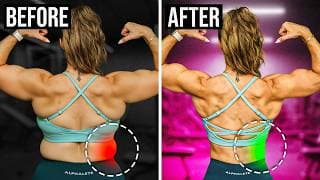
Why inverted pull-ups are the safe, scalable way to build toward a full pull-up
Plays from 2:42 · Video: 6 Joint-Friendly Exercises to Build Muscle After 40
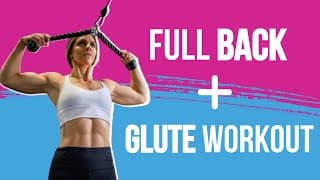
Using the assisted machine or bands, aiming for 3 sets of at least 5 reps
Plays from 1:46 · Video: Back and Glute Gym Workout for Women: 7 Exercises
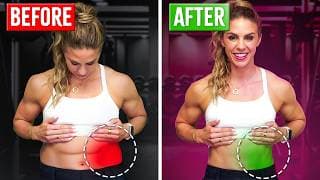
Nikkiey on assisted pull-ups and not letting ego stop you from modifying
Plays from 3:50 · Video: Best Strength Exercises for Women Over 40: 10 Key Moves
The full answer
If a pull-up feels impossible right now, that isn't a verdict on you. It means you need a progression. Nikkiey lays out the order she uses:
- Inverted pull-ups: she calls them the perfect starting point for beginners because they build back, arm and core strength in a way that's safe and scalable. Do 3 rounds of one minute of max reps with one minute of rest. Quick mini breaks inside the minute are fine as long as you get right back to it.
- Jump pull-ups with negatives: use a small box or bench to jump up into the top of the pull-up, then lower yourself down slowly. Nikkiey explains that holding yourself up and controlling the descent is what builds back strength for full pull-ups in the long run.
- Banded or assisted pull-ups: once negatives get stronger, use a band or your gym's assisted pull-up machine. Start with a stronger band so it's easier.
- Full bodyweight pull-ups: the last stage.
How you train depends on where you are. On one workout video, Nikkiey says beginners should do all their reps banded, and if banded is still too hard, go back to jumping up and lowering down. If you're more advanced, do as many bodyweight reps as you can, then finish the set with the band. In another workout she aims for 3 sets toward failure, focusing on hitting at least 5 reps, using the assisted machine or bands as needed.
The lat pulldown is useful back work too. Nikkiey swaps it in for banded pull-ups on one back day, doing 3 sets of 10, and calls it her favorite back exercise, with wide, reverse and close grip variations.
Above all, she says not to let ego stop you from modifying. Progress is progress, and the plan does the work if you follow the stages.
From Nikkiey Stott and WarriorBabe's coaching. For education, not medical advice: talk to your doctor about your own health.
Women also ask
More questions →
Strength Training for Women
Is good form more important than lifting heavier?
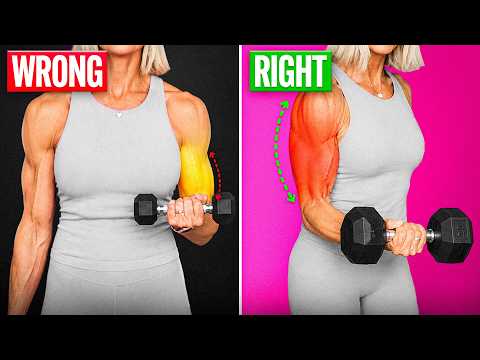
Yes. Nikkiey's order is form first, then connection to the muscle, then weight. If you can't feel the target muscle working, adding weight doesn't make it stronger; other muscles take over and your joints pay for it. Drop the weight until you feel the right muscle, then build from there.
Read the answer →
Strength Training for Women
When should I increase the weight I lift?
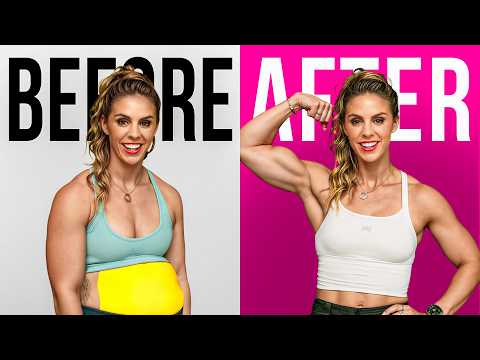
Go up when you can do 12 reps with perfect form and feel like you could do more. Nikkiey's rule: the last two to three reps of every set should feel hard, not painful. When they stop feeling hard, add a small amount, two and a half to five pounds, and build from there.
Read the answer →
Strength Training for Women
What exercises should a full body workout for women over 40 include?
Nikkiey's full body workouts draw from joint-friendly staples: Smith machine or pendulum squats, hip thrusts, Romanian deadlifts, seated leg curls, rows, lat pulldowns or assisted pull-ups, incline presses, cable lateral raises, overhead tricep extensions and curls. Each session you pick one per muscle group, usually six or seven exercises, and push each one hard.
Read the answer →
Watch or listen in full
More on this topic → 7 min
6 Joint-Friendly Exercises to Build Muscle After 40
Video · Sep 4, 2025
 6 min
Best Strength Exercises for Women Over 40: 10 Key Moves
Video · Oct 12, 2025
 9 min
45-Minute Full Body Gym Workout With Dumbbells and Barbell
Video · Jun 11, 2023