

Chapters
In this video
If you've been following random workouts from Instagram or doing the same five exercises every week with nothing changing, this video gives you a structure to follow instead. Nikkiey Stott walks through the full-body framework she has used on herself and with more than 20,000 women: cover all five movement patterns, pick one strong exercise per muscle group, and push it close to failure. She explains why this matters more after 40. Muscle keeps your metabolism running, resistance training helps fight bone density loss, and hormonal shifts make it easier to hold on to fat and lose muscle.
From there she covers the rule that separates progress from spinning your wheels: progressive overload, and tracking your weight, sets and reps every session so you can beat them next week. She shares why she built most of her muscle in her first two years using machines rather than barbells, how to use machines properly, and how her ACL surgeries left one quad visibly smaller. That experience is why she trains her weaker side first with matched weight and reps.
She finishes with exercise order. Start with a warmup movement, then heavy lower body compounds, then lower body isolation, then upper body compounds, and finish with accessory work. Done with focus and tight rest periods, the whole session takes about 45 to 60 minutes.
Key takeaways
- Make every full-body workout cover five categories: lower body push (squats, lunges, leg press), lower body pull (deadlifts, RDLs, good mornings), upper body push (chest press, overhead press, push-ups), upper body pull (rows, pull-ups, lat pulldowns) and accessory work (biceps, triceps, abs).
- Pick one strong exercise per muscle group and go all in, pushing close to failure, rather than doing several exercises for the same body part.
- Nikkiey trains legs, glutes, back, chest, shoulders, triceps and biceps in that order, rotating abs in every other session, for about six to seven exercises in 45 to 60 minutes.
- Write down your weight, sets and reps every session and try to beat them the next week, because even five pounds or one more rep counts as progress.
- A weight is too light when the last rep feels the same as the first, and it's right when the last two to three reps are challenging but your form holds.
- Use machines like the leg press, seated row, leg curl, lat pulldown and leg extension to build mind-muscle connection, and slow each rep down and squeeze at the top.
- To fix imbalances, do unilateral exercises starting with your weaker side, then match the same weight and reps on your stronger side.
- Do heavy compound lifts before isolation work so smaller muscles like your triceps aren't already tired when you get to the bigger movements.
Questions answered
How many exercises should a full-body workout have?
Nikkiey says the minimum is about five to seven movements. Her own workouts usually come to six or seven exercises, one per muscle group, with abs rotated in every other session. With focus and tight rest periods, that takes 45 to 60 minutes.
Why are full-body workouts good for women in menopause?
Nikkiey explains that muscle keeps your metabolism running and resistance training helps fight bone density loss. Hormonal shifts also make it easier to hold on to fat and lose muscle. Full-body training gives each muscle consistent stimulation and recovery time across the week instead of extreme workouts followed by long gaps.
How do I know if I'm lifting a heavy enough weight?
If the last rep feels the same as the first, the weight is too low. It's right when the last two to three reps feel challenging but you can still keep good form. If you've used the same weight for months, add five pounds or one more rep.
Are weight machines cheating or less effective than free weights?
No. Nikkiey says machines are one of the best tools for learning to feel your muscles work, and she built most of her muscle in her first two years barely touching barbells. She recommends them for learning a movement, isolating a muscle, working through an imbalance or coming back from an injury, and uses them alongside free weights.
Why is one side of my body bigger or more defined than the other?
Your dominant side does more work in everyday life and in the gym, so it takes over in bilateral exercises like squats and leg presses. Nikkiey's fix is unilateral work: start with the weaker side, then match the same weight and reps on the stronger side.
Should I do compound or isolation exercises first?
Compound exercises first. If you tire out smaller muscles with isolation work first, you end up lifting lighter and doing fewer reps on the bigger movements that build strength and muscle.
Ask Nikkiey
Questions this video helps answer, with what Nikkiey says across everything WarriorBabe teaches.
Strength Training for Women
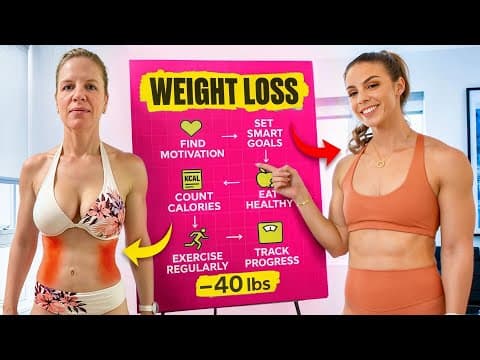
Are full body workouts better than body part splits for women over 40?
For most women over 40, Nikkiey Stott recommends full body workouts over body part splits. One exercise per muscle group, four to five days a week, spreads the work out so you recover between sessions and stay consistent. She's clear that bro splits aren't bad, though. Progressive overload is what matters most.
Read the answer →
Strength Training for Women
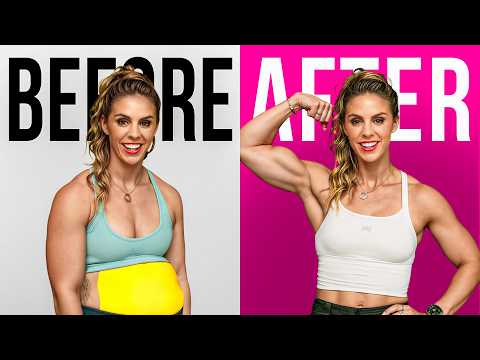
What exercises should a full body workout for women over 40 include?
Nikkiey's full body workouts draw from joint-friendly staples: Smith machine or pendulum squats, hip thrusts, Romanian deadlifts, seated leg curls, rows, lat pulldowns or assisted pull-ups, incline presses, cable lateral raises, overhead tricep extensions and curls. Each session you pick one per muscle group, usually six or seven exercises, and push each one hard.
Read the answer →
Strength Training for Women
Are weight machines as good as free weights for building muscle?
For building muscle, yes. Nikkiey says machines are not cheating and are one of the best tools for feeling your muscles work. She built most of her muscle in her first two years barely touching barbells. She still recommends a blend, because free weights build coordination, balance and core control that machines don't.
Read the answer →
Full transcript
Nikkiey: Today, I'm going to walk you through the exact framework that took me from no structure, no plan, and no results to competing on stage and building the most lean muscle of my life. So if you're a woman over 40 who goes to the gym and follows random workouts from Instagram that don't fit your situation, or you've been doing the same five exercises every week, wondering why nothing is changing with your body, this video is going to fix that. I've used the same structure to help over 20,000 women feel strong and confident again without lifting heavy weights. So make sure you watch until the end so you can apply everything you learn in this video for yourself.
The first thing that you need to understand is that every full body workout you do should hit all your major movement patterns. And even if you've been going to the gym for years, most people have no idea what that actually means. This matters because there are five categories you need to cover. And if you're missing even one of them, you're neglecting an entire muscle group without even realizing it.
There's lower body push, which is squats, lunges, and leg presses. Lower body pull, which is deadlifts, RDLs, and good mornings. Upper body push, which is chest press, overhead press, and push-ups. You've got upper body pull, which is rows, pull-ups, and lat pulldowns. And you've got accessory work, which is biceps, triceps, and abs.
Now, that might seem like a lot, but for women over 40, it is important to hit all of these categories because it supports your body in ways that matter more as you age. And it optimizes recovery in a smarter, more sustainable way. Muscle is what keeps your metabolism running. The more muscle you maintain, the more calories your body burns at rest. Bone density also starts to drop with age, and resistance training is one of the best ways to fight that and to keep your body strong long-term. On top of that, hormonal shifts make it easier for your body to hold on to fat and let go of muscle, which is why strength training becomes even more important. And if you're not using your full body consistently, balance and mobility start to decline too. That's why I personally love full body structure and full body workouts.
The way that I like to train is by picking one strong exercise per muscle group and taking it very seriously. So I'm not doing five leg exercises in one day or destroying one area for an hour straight. I'm choosing one movement for each area, pushing it hard, and truly challenging myself with the weight and intensity, because I know that's the main stimulus that muscle is going to get that day. And because that is the only exercise I'm doing for that muscle group in that workout, I'm going to go all in. I'm going to be focused. I'm going to be pushing close to failure. I'm not holding back thinking I still have four more exercises for that same body part, knowing eventually I'm going to get fatigued at some point. This allows me to get a really strong training effect without overdoing the volume part.
The other huge benefit is recovery. So instead of training legs on Monday and completely exhausting them with 10 to 12 exercises and then not hitting them again for another six to seven days, this full body work spreads it out. So you hit legs, glutes, chest, back, shoulders, and arms in one session. Then over the course of the next four to five days, each muscle group gets that in-between recovery time before being stimulated again. This rhythm is so powerful, especially as we get older, because your body responds really well to consistent stimulation and consistent recovery instead of extreme workouts followed by long gaps in between. It keeps your metabolism active. It helps to preserve muscle. It supports your hormones, and it keeps your body moving well.
And to make it simple, these are the muscle groups that I like to hit in a full body structure. I'll hit legs first, then glutes, then back, then chest, then shoulders, then triceps and biceps. All in that order, one exercise per muscle group. And then I'll do abs, but not every day, just rotated in. So you can pick one strong exercise per area. You focus, you push yourself, and then you move on. You fit it all in by choosing one quality movement per muscle group. That usually ends up being about six to seven exercises total in a day. And if you stay focused and keep rest periods tight, you can get an incredibly effective full body workout done in 45 to 60 minutes.
Now, the minimum number of exercises someone needs is about five to seven total movements. One for legs, one for glutes, one for upper body push, one for lower body pull, shoulders and arms. And again, abs can be rotated in every other session. What I would say to the woman that might be feeling overwhelmed by me saying this is that this actually simplifies everything. Instead of trying to plan a full leg day, a back day, a shoulder day, you just check the boxes each workout. One movement per area, you stay focused, you challenge yourself, you recover, and you repeat.
So now you know what to hit. But there's one non-negotiable rule that separates people who actually build muscle from those who don't see any progress. Think about it like this. It's like watering a plant, but pouring it all on the leaves instead of the roots. You're putting in the work. It looks like you're doing everything right, but nothing's actually growing.
So in order for your body to actually build muscle, every single workout the goal is to do more than the last time. That's progressive overload. And without it, your body has zero reason to change. Take it for example: there was a moment today when I increased weight when I was doing my RDLs, because last week the last few reps felt strong and controlled. If I can finish a set and feel like I could still do more, that tells me it's time to challenge my body more, so it has a reason to actually grow.
You know weight is too low when the last rep feels the same as the first rep. A challenging weight is just right when those last two to three reps feel the challenge, but you can still maintain good form. So my advice for someone who's been lifting the same weight for months is to make a small increase. Even five pounds or one more rep is progress. Your body will adapt fast. And if nothing is changing, there's no reason for it to grow.
So here's what I need you to start doing today. I need you to track your workouts. I need you to write down your weight, your sets, and your reps every single session. Then next week, try to beat it. Even five pounds or one more rep counts as progress. If you're not tracking, you are just guessing. And guessing is not going to help you build muscle or the body that you want.
Now, this is exactly what we go through when working directly with women in order to put them through a transformation. For example, we've been able to take Savannah from being overweight and dealing with severe back pain to following personalized workout programs in order to lose over 45 pounds. And not only that, we help you dial in your nutrition so your training actually produces results, because without proper nutrition, none of what you do in the gym will actually take effect. So she went from eating like crap and being on the brink of divorce to putting on so much muscle, quitting alcohol, and transforming her entire life. Over 20,000 women in their 40s, 50s, and 60s have been able to feel like themselves again without strict dieting or heavy workouts. So if you want to get started yourself, make sure to click the link in the description below this video.
Now, let's get back into this full body workout, because there's a huge misconception that actually holds a lot of women back. This is something that might surprise you. For the first two years of my fitness journey, where I built most muscle, I barely touched barbells. And the reason why you should sometimes prioritize machines is because you're getting a better mind-muscle connection, which is the most important part of growing muscle. So I use machines for good mornings instead of a barbell sometimes, because it allows me to focus more on my hamstrings and my glutes without worrying about balance or setup. It helps me to really slow down and feel the muscle working.
So I'm going to really prioritize machines when someone is learning a movement, trying to isolate a muscle, working through an imbalance or coming back from an injury. Free weights are great when building overall strength and coordination and stability. They both have a place and should be used together. But when you're trying to work on these things, or refining the process of feeling the mind-muscle connection, using machines can really help that.
And the biggest misconception that I hear about machines is that they're cheating or they're less effective. In reality, they're one of the best tools for learning how to actually feel your muscle working. But in order to actually see growth, you need to understand how to properly use the machine. Because if you don't, it defeats the whole purpose, and you could just be wasting weeks of progress without even knowing it.
So my top go-to machines are leg press, seated row, leg curl, lat pulldown, and leg extension, because they allow you to isolate muscles safely and really focus on activation. The main cue that I focus on with each machine is slowing down the rep and squeezing the muscle at the top so I can feel exactly where the tension is. Now, the biggest mistake that I see women make on machines is going way too fast, using way too much weight, and/or not adjusting the setup properly for their body. You know that you have a good mind-muscle connection when you feel the target muscle working through the entire movement, instead of just going through the motions or feeling like you're fatiguing way too early.
Now, next is something nobody really talks about and could be the reason one side of your body looks completely different from the other. The reason you might notice your right arm is bigger than your left, or one leg looks more defined than the other, is because your dominant side does more work in everyday life and in the gym. So every time you do a bilateral exercise like a barbell squat or a regular leg press, your stronger side is naturally going to take over. And over time, that imbalance just gets worse and worse.
Personally, I first noticed the size difference between my legs after my ACL surgeries. My left quad started to noticeably atrophy because I couldn't use it the same way during recovery. And there was a period of time when I started to get back into lifting that I couldn't load up that leg as much. I couldn't push off of it properly, and naturally my body started compensating with my right side. And it didn't take long before you could really see the difference in my legs. I remember looking in the mirror and noticing that one quad had shape and definition and the other just looked smaller and flatter. And it wasn't just something that I felt. It was totally visible. That was the moment it really hit me how quickly muscle can be lost when it's not being activated the same way.
It affected my training a lot, because I had to slow down and relearn how to properly engage that left side again. I had to be more intentional with unilateral work, focus on the mind-muscle connection with my quad, and really pay attention to form so that my stronger side didn't start taking over. It took a lot of time, a lot of patience, a lot of consistency, and a lot of mental focus to bring that balance back. And honestly, it really affected my confidence too. When you train hard and you take pride in your physique, noticing an imbalance like that can really mess with your head. It made me very aware of how important it is to train each side evenly and not just rely on bilateral movements, where the stronger side can totally overcompensate without you even knowing it.
But the solution to this is simple, and it's something that you should be practicing every single time you step into the gym. The structure that I follow is starting with the weaker side first, then matching the same reps and same weight on the stronger side so everything stays balanced. I start with the weaker muscle because that's when I have the most energy and focus to help it catch up. And I keep the weight the same on both sides because the goal is balance, not letting the stronger side keep getting stronger. So there will be times where my right side is like, wow, this is way too easy. But that's the point. You've got to have the weaker side catch up. Great unilateral exercises to add are single leg lunges, split squats, step-ups, single arm rows, single leg extensions, and single leg hamstring curls.
Now, to complete this full body workout structure, there's one more thing that you need to know that's going to save you a ton of time and keep your results coming. The order of your exercises sounds simple, but it's something that matters way more than you think. A lot of people like to mindlessly switch up their exercises every session with no plan behind what comes first, what comes second, or why they're doing things in that sequence.
When someone does isolation work first before compound lifts, they end up tiring out the smaller muscles first. And that takes away from their performance on the bigger, more important compound movements. For example, if you exhaust your triceps on a machine first, then go to do push-ups or chest press, those triceps are already fatigued. So now your chest and your shoulders can't be trained as effectively, because one small muscle group is holding everything back. You end up lifting lighter, doing fewer reps, and missing out on the kind of stimulus that actually builds strength and muscle.
A mistake that I see all the time is women jumping from one machine to another randomly without any plan for what should come first. They'll do a little bit of legs and a little bit of arms and a little bit of back and a little bit of the back of the legs, whatever's open or whatever catches their eye. And while they're technically moving and they're getting a workout in, there's no structure behind it, which makes it really hard to progress or see consistent change.
Now, I personally notice a huge difference when I prioritize compound lifts first, because that's when I have the most energy, the most strength, and the most focus. When I start with the bigger movements like RDLs or squats or lunges or presses or rows, I can push more weight. I can get more quality reps, and I actually challenge my body. Then I use the isolation work afterward to target specific muscles and finish them off. A wasted gym session, in my opinion, looks like doing random exercises with no order, getting tired too early, and never really pushing your body where it matters the most. You leave feeling like you did something, but not feeling like you made progress. And over time, those kinds of workouts add up to staying stuck instead of actually building strength and changing your body.
So as soon as I arrive at the gym, I like to follow a planned structure that over time will become second nature, but will actually help me progress when trying to build more muscle. This is what I do. I start with a warmup movement, something lighter and controlled. For me today, it was reverse lunges. Then I move into heavy compound movements, things that hit multiple muscle groups at once, like squats, deadlifts, good mornings, RDLs. And then I move into the isolation work, targeting specific muscles, like leg extensions or hamstring curls or glute kickbacks. Then compound upper body: rows, push-ups. And then finally accessory work and burnouts, like your biceps, triceps, and your shoulder press.
I start with the movements that need the most energy, because those are the ones that build the most muscle and require the most strength and focus. When someone does the isolation work first, they burn out smaller muscles and then can't perform as well on the exercises that actually drive results.
So I structured today's workout by starting with a warmup movement, then heavy lower body compounds, then isolation legs, then moving into the upper body compounds, and finishing with the accessory work. The whole session took about 45 to 60 minutes. And that's what my entire full body workout looks like. If you follow this structure, you'll be able to walk into the gym and apply it for yourself with the same routine and the same system.
But here's the thing. You need something that works for your body and for your goals. And that's exactly why in the description, you can apply to work directly with us and get a fully personalized plan. Take Amber, for example. She came to us with no time, no structure, and no idea what to do inside the gym or with her diet. She was tired of trying to come up with the programs herself and didn't know how to actually do macros. So then she started working with us. She applied our systems and was able to get lean, see her muscles pop, and feel better than she ever imagined while actually enjoying the process. She said it felt like a 12-month class of learning.
So if you're still changing your workout every single week with no routine, no structure, or no progression, check out the link in the description and let's build your real plan. I hope you guys enjoyed this video and you have a lot of takeaways. I'll see you in the next one.
Up next
Everything → 14 min
6 Dumbbell Exercises to Build Muscle During Menopause
Video · Oct 3, 2026
 7 min
5-Move No-Equipment Home Workout for Women Over 40
Video · Nov 1, 2025
 14 min
At-Home Dumbbell Workout After Menopause: 4 Key Moves
Video · Sep 16, 2026
Best of Strength Training for Women
All 266 → 1 hr 1 min
Why Building Muscle Is Key to Aging Well After 40
With JJ Virgin
 30 min
Why Am I Lifting Weights But Not Seeing Muscle?
Episode 281 · Aug 1, 2025
 31 min
Full Body Workouts vs Bro Splits: Which Is Better After 40?
Episode 64 · Jun 5, 2023