

From 1 episode
Why does my weight jump around more on the scale in perimenopause?
Answered by Nikkiey Stott · Updated
The short answer
In perimenopause, the scale jumps around more because hormonal variability adds water-retention swings on top of everyday noise. Nikkiey Stott explains that luteal-phase bloat can feel like five pounds, and with irregular cycles you can't compare the same phase month to month. She recommends judging progress over a longer window.
Hear it answered
Tap play to start right where it's answered. It keeps playing while you browse.
Nikkiey on how hormonal shifts and luteal water retention add a layer to the scale
Plays from 7:38 · Ep. 413: Why Won't the Scale Move After 40? Plateau or Just Noise
Why irregular cycles make phase comparisons unreliable, and why to widen your window
Plays from 7:59 · Ep. 413: Why Won't the Scale Move After 40? Plateau or Just Noise
Nikkiey breaks the scale number into layers, starting with water and glycogen
Plays from 5:50 · Ep. 413: Why Won't the Scale Move After 40? Plateau or Just Noise
How new or harder training causes fluid retention that can last for weeks
Plays from 6:54 · Ep. 413: Why Won't the Scale Move After 40? Plateau or Just Noise
The full answer
On Ep. 413 of The WarriorBabe Show, Nikkiey describes the scale number as the sum of several layers, and only one of them is fat. Perimenopause doesn't replace the usual noise. It stacks another layer on top of it:
- Water and glycogen: every gram of stored glycogen carries roughly three to four grams of water, so more carbs, a harder training week, a refeed, a bigger meal, sodium, sugar or starting creatine can move the scale a couple of pounds with no change in body fat.
- Training inflammation: a new program, a jump in volume or coming back after a break can cause muscle damage and fluid retention that lasts for weeks. The scale may sit flat or go up while real change happens underneath.
- Hormonal variability: the luteal phase brings water retention and abdominal discomfort that can feel like five pounds. Nikkiey is clear that this is water, not fat.
The perimenopause-specific problem is unpredictability. When cycles are irregular, or you go months without a normal period, you can't line up the same phase against the same phase to get a fair comparison. Nikkiey's fix is to extend your evaluation window, because shorter windows will mislead you.
She also warns against the reflex most women have. In her experience, about 90% jump straight to cutting calories or adding cardio when the number looks wrong, and they end up fixing problems that don't exist. Her approach is to first ask whether this is a real plateau or just noise, then decide whether anything needs to change. A jumpy scale in perimenopause usually means the plan needs more patience. It doesn't mean the plan has failed, or that you have. If your cycle changes worry you, bring them to your doctor.
From WarriorBabe's coaches (how we write our answers). For education, not medical advice: talk to your doctor about your own health.
Women also ask
More on Menopause & Perimenopause Weight Loss →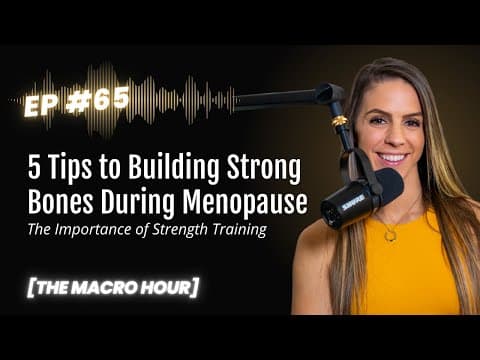
Menopause & Perimenopause Weight Loss
What are the best exercises for bone health during menopause?
Compound strength exercises are best for bone health during menopause, Nikkiey Stott explains on Ep. 65. That means squats, lunges, deadlifts, chest presses and shoulder presses. Walking, jogging and stair climbing also stress the bones, but strength training should make up most of your exercise, ideally with free weights, barbells or resistance bands.
Read the answer →

Menopause & Perimenopause Weight Loss
Should I do intermittent fasting during menopause?
Maybe, but it's individual. On Ep. 130, dietitian Esther Blum says menopausal women in her practice tolerate fasting best, though it may not suit women with hypothyroidism, cortisol or adrenal issues, chronic illness, or disordered eating history. On Ep. 117, Dr. Stephen Cabral warns fasting can become one more stressor on hormones. If you try it, start with 12 hours.
Read the answer →
Menopause & Perimenopause Weight Loss
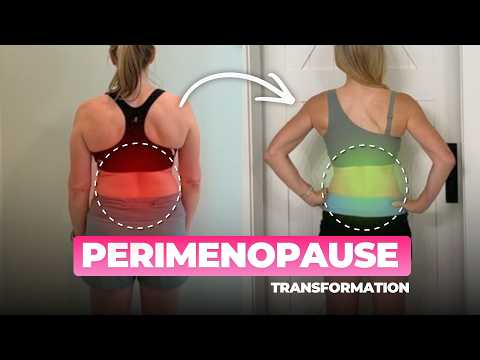
Can you still lose weight during perimenopause?
Yes. The show's view is that perimenopause makes fat loss harder, not impossible. Shifting hormones can push your body toward insulin resistance and belly fat, so the old approach of eating less and doing more cardio tends to backfire. What works for the women on the show is eating enough, prioritizing protein and lifting heavier.
Read the answer →

Menopause & Perimenopause Weight Loss
How can I lower cortisol during menopause?
On The WarriorBabe Show, Nikkiey Stott's answer is to remove the stress signals keeping cortisol high: prioritize deep sleep, build in real recovery days, eat enough consistently, skip fasted lifting, and favor steady-state cardio over HIIT when you're stressed or under-fueled. Talk with your doctor about hormone questions.
Read the answer →

Menopause & Perimenopause Weight Loss
Should I change my workouts as I go through menopause?
Yes. Nikkiey says that during menopause, less is more. One WarriorBabe coach recommends three to four strength sessions a week, intentional walking, and one or two short conditioning sessions if recovery supports it. Nikkiey also recommends fewer supersets and more straight sets with rest. What worked at 20 or 30 isn't the plan for your body now.
Read the answer →

Menopause & Perimenopause Weight Loss
How do I lose weight after menopause?
Stop eating less and doing more cardio, and start building muscle while eating enough. Nikkiey Stott explains that after menopause you lose roughly 1% of your muscle a year, so strength training, fueled by enough protein, carbs and fats, is what changes your body. Kelly stalled on 1,200 calories, while Annette and Maggie lost weight eating more.
Read the answer →
Watch or listen in full
More on this topic →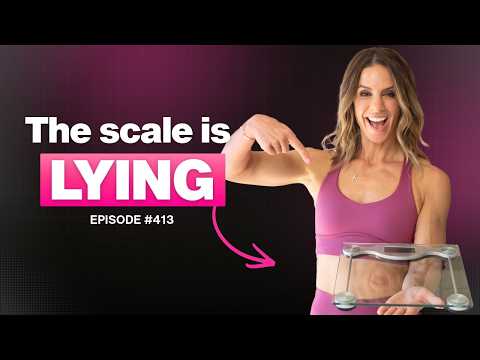 29 min
Why Won't the Scale Move After 40? Plateau or Just Noise
Episode 413 · Nov 13, 2026