

From 1 episode and 4 videos
What does a weekly strength training schedule look like for a woman over 50?
Answered by Nikkiey Stott and WarriorBabe's coaches · Updated
The short answer
On The WarriorBabe Show, Nikkiey Stott recommends about four strength days a week for women over 50, sometimes five or even three, rather than six. A typical week pairs lower body, upper body and full body sessions with lighter movement like Pilates or walking, plus real rest days. Less training stress, she says, often brings better results.
Hear it answered
Tap play to start right where it's answered. It keeps playing while you browse.

Nikkiey on why she recommends a four-day split for women 50 and older
Plays from 3:04 · Video: Toned at 60 After Years in the Gym: Why Less Training Works
Johanna, 62, walks through her weekly lifting, Pilates and rest-day schedule
Plays from 25:38 · Ep. 336: Weight Loss at 62 After Menopause and Knee Replacements

Nikkiey on training four or five days and a member who cut back one day
Plays from 14:42 · Video: Lifting After Menopause: Rest, Reps and Fewer Training Days

What to include in your 50s: weights, bands, balance work and progressive overload
Plays from 3:07 · Video: Getting Lean in Your 50s During Menopause: 3 Key Strategies
Nikkiey on why walking and steady-state cardio beat HIIT for women 50 and older
Plays from 5:22 · Video: Toned at 60 After Years in the Gym: Why Less Training Works
The full answer
On Ep. 336, Johanna, 62 and past menopause and two knee replacements, shares the week that works for her:
She also walks her dogs two or three times a day. Before WarriorBabe, she says, she trained six or seven days a week and went from intense spin classes straight into Pilates, feeling she wasn't doing enough unless she pushed.
- Monday: lower body
- Tuesday: Pilates
- Wednesday: upper body
- Thursday: Pilates
- Friday: full body
- Saturday and Sunday: off
Nikkiey explains why fewer days can work better. In her view, the body at 50 or 60 tolerates less stress, and piling on more raises cortisol, which she calls a fat-storing hormone. She recommends a four-day split for women 50 and older. In another video she says four or five days, maybe even three. She tells the story of a member over 50 training six days, exhausted and not seeing changes, who dropped to five with no change to her macros and saw her weight drop and her energy improve. Her advice: pull back a day, then reassess your energy and recovery.
As for what goes into those sessions, one WarriorBabe coach suggests exercises that build muscle and bone density using free weights, resistance bands and bodyweight, plus flexibility and balance work and enough recovery time. Progress gradually by adding weight, changing routines or adjusting rest periods, and choose fewer reps with good form over more reps done poorly. For cardio, Nikkiey favors steady-state work like walking over HIIT because it adds less stress, and she stresses eating enough to fuel recovery. If you have joint replacements or other health conditions, work out the specifics with your doctor.
If six days has left you tired and stuck, that is a plan problem, not an effort problem.
From WarriorBabe's coaches (how we write our answers). For education, not medical advice: talk to your doctor about your own health.
Women also ask
More on Strength Training for Women →
Strength Training for Women
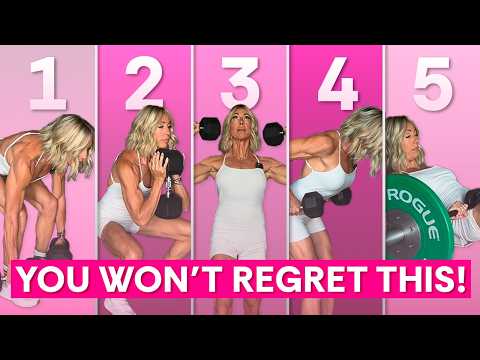
Does Pilates build muscle?
Not in any meaningful way once you're past beginner level. Nikkiey explains that Pilates can help you maintain muscle and is great for mobility, flexibility and balance, but it can't grow new muscle the way strength training can. Building muscle takes progressive overload with dumbbells and barbells, and Pilates classes don't provide that kind of load.
Read the answer →
Strength Training for Women
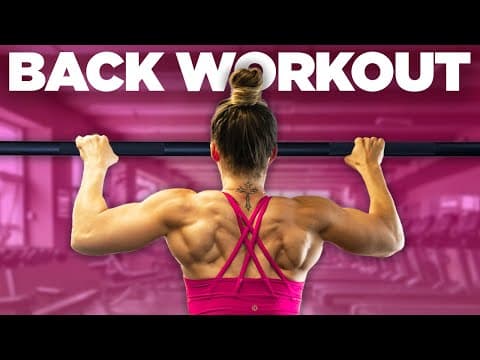
Are squats bad for your knees after 40?
No. Maggie explains that knees usually hurt because the muscles around them are weak, and the squat is the single best exercise for strengthening the quads, glutes and the whole chain that supports the knee. Avoiding squats doesn't protect your knees; it lets them get worse. Her own knee pain eased within weeks of goblet squatting.
Read the answer →
Strength Training for Women
What should training to failure feel like?
Training to failure should feel like you physically cannot complete another rep with control. One WarriorBabe coach describes it as the last rep or two of a set, when you can't pull, push or keep control of the movement. It shouldn't look pretty. If you can breeze through the set, the weight is too light.
Read the answer →

Strength Training for Women
How long until I see results from lifting weights after 40?
Most women feel changes from lifting within the first weeks and see them later. Nikkiey says energy, mood, sleep and gym strength improve first, while visible change usually starts around weeks four to six of consistent training and nutrition, sometimes not until day 90. After years of dieting, it can take six months to a year.
Read the answer →
Strength Training for Women
What are the different ways to do progressive overload?
Nikkiey's progressive overload methods are adding weight, adding reps or sets, shortening rest between sets, changing tempo, switching equipment, varying exercises with techniques like drop sets, and eccentric training with more time under tension. Her advice is to add them one at a time, starting with weight, rather than changing everything at once.
Read the answer →

Strength Training for Women
How many days a week should I lift weights?
Three to four days a week is Nikkiey's core recommendation for women over 40: 30 to 45 minutes per session, built on compound lifts and progressive overload, with walking on off days and seven to eight hours of sleep. Lifting six or seven days a week, she says, breaks down muscle faster than you can rebuild it.
Read the answer →
Watch or listen in full
More on this topic → 9 min
Toned at 60 After Years in the Gym: Why Less Training Works
Video · Jan 21, 2022
 19 min
Lifting After Menopause: Rest, Reps and Fewer Training Days
Video · Aug 16, 2020
 5 min
Getting Lean in Your 50s During Menopause: 3 Key Strategies
Video · Dec 31, 2023